To amend the Department of Agriculture Reorganization Act of 1994 to establish the Rural Innovation and Partnership Administration and to amend the Consolidated Farm and Rural Development Act to establish the Rural Future Partnership Fund to invest in the rural areas of the United States to achieve their preferred future while maximizing their contribution to the well-being of the United States, and for other purposes.
Analysis under review: This bill has generated analysis that may be too generic or incomplete. Clause-level evidence remains available below.
Summary
What This Bill Does
This bill creates a major new federal investment in rural America through the Rural Future Partnership Fund, authorizing $10 billion per year for five years (2022-2026). Rural communities can form regional councils to develop comprehensive plans and receive flexible block grants for economic development, infrastructure, and community services.
Who Benefits and How
Rural communities and local governments gain access to substantial flexible federal funding for locally-determined priorities. Land-grant universities and cooperative extension services benefit as eligible technical assistance providers. Rural businesses, healthcare providers, childcare centers, and nonprofits can receive direct assistance through the block grants.
Who Bears the Burden and How
USDA must establish a new Rural Innovation and Partnership Administration and hire at least 3 new employees per state office. Federal taxpayers fund the $10 billion annual appropriation. Rural partnership councils face planning, reporting, and performance requirements.
Key Provisions
- Authorizes $10 billion annually for the Rural Future Partnership Fund (2022-2026)
- Creates the Rural Innovation and Partnership Administration within USDA
- Establishes 5-year renewable block grants allocated by population with 3x bonus for high-poverty areas
- Requires rural partnership councils to develop comprehensive plans and meet performance benchmarks
Evidence Chain:
This summary is generated from the full bill text using AI analysis. Expand "Detailed Analysis" below for identified beneficiaries/burden bearers.
At a Glance
What This Bill Does
Establishes the Rural Innovation and Partnership Administration and the Rural Future Partnership Fund to provide $10 billion annually in flexible block grants for comprehensive, locally-driven rural community and economic development.
Key Policy Areas
Rural Development, Economic Development, Agriculture, Infrastructure
Primary Purpose
Establishes the Rural Innovation and Partnership Administration and the Rural Future Partnership Fund to provide $10 billion annually in flexible block grants for comprehensive, locally-driven rural community and economic development.
Policy Domains
Rural Future Partnership Fund (Section 4)
Identified Gains
Contextual inference, no direct clause citation- Local governments in micropolitan areas
- High-poverty rural census tracts
- Land-grant universities and extension services
- Rural businesses and nonprofits
- Federally recognized Indian Tribes
Contextual inference, no direct clause citation
Identified Costs
Contextual inference, no direct clause citation- Federal taxpayers
- Rural partnership councils (planning/reporting requirements)
Contextual inference, no direct clause citation
Purposes (Section 2)
Identified Gains
Contextual inference, no direct clause citation- Rural communities
- Rural population centers
Contextual inference, no direct clause citation
Identified Costs
Contextual inference, no direct clause citation- Federal taxpayers
Contextual inference, no direct clause citation
Rural Innovation and Partnership Administration (Section 3)
Identified Gains
Contextual inference, no direct clause citation- USDA Rural Development employees
- Rural partnership councils
Contextual inference, no direct clause citation
Identified Costs
Contextual inference, no direct clause citation- USDA
- Federal budget
Contextual inference, no direct clause citation
Sponsors

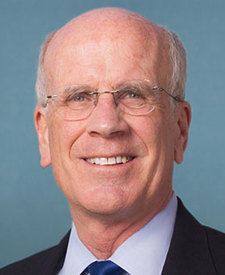
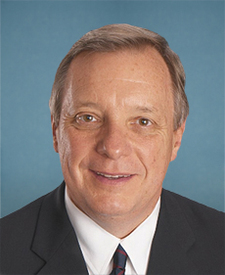

Legislative Progress
IntroducedMrs. Gillibrand (for herself, Mr. Durbin, Ms. Smith, and Mr. …
Stakeholder Effects
cui bono?How this legislation distributes effects. Mention counts reflect frequency, not effect magnitude.
Local governments in micropolitan statistical areas, Rural partnership council members, Rural partnership councils
Rural partnership councils faces effects in multiple directions
Positive-direction: Local governments in micropolitan statistical areas, Rural partnership council members
Negative-direction: State rural development offices
Congress, USDA Rural Development, USDA Rural Development mission area
Positive-direction: Congress, USDA Rural Innovation and Partnership Administration
Negative-direction: USDA Rural Development, USDA Rural Development mission area, USDA state offices
Contiguous rural census tracts outside metro areas, Rural communities and regions, Rural communities eligible for block grants
Land-grant colleges and universities, Workforce development providers
Eligible technical assistance providers, Private organizations in rural planning
Rural broadband and telecommunications providers
Bill Structure & Actor Mappings
Who is "The Secretary" in each section?
- "the_secretary"
- → Secretary of Agriculture
- "the_administrator"
- → Administrator of Rural Innovation and Partnerships
- "the_secretary"
- → Secretary of Agriculture
Key Definitions
Terms defined in this bill
A rural partnership council established under section 385C(a)
An entity with demonstrated national or regional capacity to deliver rural planning activities, including federally recognized Indian Tribes, institutions of higher education, nonprofit organizations, or private organizations
The Rural Future Partnership Fund established under section 385B
As defined in Higher Education Act, including land-grant colleges and universities and associated cooperative extension services
A rural partnership plan established under section 385E(a)
Indian country as defined in 18 USC 1151, including land held by Native groups, Regional Corporations, or Village Corporations under ANCSA
A grant awarded under section 385D
We use a combination of our own taxonomy and classification in addition to large language models to assess meaning and potential beneficiaries. High confidence means strong textual evidence. Always verify with the original bill text.
Learn more about our methodology