Election Worker Protection Act of 2025
Analysis under review: This bill has generated analysis that may be too generic or incomplete. Clause-level evidence remains available below.
Summary
What This Bill Does
The Election Worker Protection Act of 2025 creates a comprehensive federal framework to protect election workers -- officials, poll workers, and volunteers -- from harassment, threats, and intimidation. It amends the Help America Vote Act of 2002 to establish two new grant programs through the Election Assistance Commission: one for recruiting and training poll workers and election volunteers, and one for providing physical security services and social media threat monitoring for election workers. It also creates a Department of Justice grant program to help states and localities protect the personally identifiable information (PII) of election workers by redacting or removing it from public records and databases.
On the criminal side, the bill adds a new federal crime (18 USC Section 612) making it illegal to intimidate, threaten, or coerce election workers, with penalties of up to $100,000 in fines and 5 years imprisonment. It requires the FBI to assign a special agent in each field office dedicated to investigating threats against election workers. It extends existing federal doxxing protections (18 USC Section 119) to cover election workers. It criminalizes intimidation of ballot tabulation, canvassing, and certification activities under the National Voter Registration Act. Finally, it authorizes state and local election officials to remove poll observers who engage in intimidation or disrupt voting operations.
Who Benefits and How
Election workers (officials, poll workers, and volunteers) are the primary beneficiaries, gaining federal criminal protections against harassment and threats, physical security services, social media threat monitoring, and PII protection programs. States and local governments benefit from three grant programs that fund worker recruitment, training, safety services, and PII protection infrastructure improvements. Voters benefit indirectly from a better-protected election workforce and the ability to remove disruptive poll observers. The Department of Justice training programs benefit federal, state, local, and Tribal law enforcement by providing resources for detecting and investigating election threats. Security companies and social media monitoring firms would see increased demand from government-funded security contracts.
Who Bears the Burden and How
The federal government bears the primary cost burden through appropriations for the three grant programs (EAC recruitment/training grants, EAC safety grants, and DOJ PII protection grants). The FBI bears additional staffing costs for dedicated special agents in each field office. The Department of Justice must develop and provide training resources within 180 days. The Election Assistance Commission must administer two new grant programs and develop training materials. States must submit grant applications and comply with reporting requirements. The Comptroller General must produce biennial reports on PII protection spending. Individuals who threaten or intimidate election workers face new federal criminal liability (up to $100,000 fine, 5 years imprisonment). Poll observers lose some latitude, as election officials gain explicit authority to remove observers who engage in intimidation or disruption.
Key Provisions
- EAC grants to states for poll worker and election volunteer recruitment and training, with emphasis on culturally competent methods and diversity in recruitment (Sec. 3/297)
- EAC grants to states for election worker physical security and social media threat monitoring, allocated by voting-age population (Sec. 3/298)
- DOJ training resources for federal, state, local, and Tribal law enforcement on detecting and investigating threats to election workers (Sec. 4)
- DOJ grants to protect PII of election workers through redaction, database modification, and opt-out systems (Sec. 5)
- New federal crime (18 USC 612) for harassment of election workers, with $100,000 fine and 5 years imprisonment (Sec. 6)
- FBI special agent assigned to each field office for election worker threat investigations (Sec. 6)
- Criminalizes intimidation of ballot tabulation, canvassing, and certification (Sec. 7)
- Extends federal doxxing protections to election workers (Sec. 8)
- Authorizes removal of disruptive or intimidating poll observers (Sec. 9/303A)
Evidence Chain:
This summary is generated from the full bill text using AI analysis. Expand "Detailed Analysis" below for identified beneficiaries/burden bearers.
At a Glance
What This Bill Does
Creates a comprehensive federal framework to protect election workers from harassment, threats, and intimidation through new grant programs for recruitment, training, and safety; new federal criminal penalties for threatening election workers; FBI investigative resources; PII protection programs; anti-doxxing protections; and authority to remove disruptive poll observers.
Key Policy Areas
Election Administration, Criminal Justice, Public Safety
Primary Purpose
Creates a comprehensive federal framework to protect election workers from harassment, threats, and intimidation through new grant programs for recruitment, training, and safety; new federal criminal penalties for threatening election workers; FBI investigative resources; PII protection programs; anti-doxxing protections; and authority to remove disruptive poll observers.
Policy Domains
Criminal Protections and Enforcement
Identified Gains
Contextual inference, no direct clause citation- Election workers (criminal protection, anti-doxxing, FBI investigation)
- Federal prosecutors and law enforcement (clearer statutory authority)
Contextual inference, no direct clause citation
Identified Costs
Contextual inference, no direct clause citation- FBI (staffing dedicated special agents in each field office)
- Department of Justice (prosecution resources)
- Individuals who threaten election workers (criminal liability)
Contextual inference, no direct clause citation
Grants and Training Programs
Identified Gains
Contextual inference, no direct clause citation- Election workers (security services, threat monitoring, PII protection)
- States and local governments (grant funding for election administration)
- Voters (better-staffed, better-protected elections)
- Security and social media monitoring companies (new government contracts)
Contextual inference, no direct clause citation
Identified Costs
Contextual inference, no direct clause citation- Federal government (grant appropriations)
- Election Assistance Commission (program administration)
- Department of Justice (training development, grant administration)
- Comptroller General (biennial reporting)
- States (application and reporting requirements)
Contextual inference, no direct clause citation
Poll Observer Interference Prevention
Identified Gains
Contextual inference, no direct clause citation- Election workers (protection from observer intimidation)
- State and local election officials (clear removal authority)
- Voters (protection from disrupted polling places)
Contextual inference, no direct clause citation
Identified Costs
Contextual inference, no direct clause citation- Poll observers (subject to removal for intimidation or disruption)
- EAC (must develop recommendations by January 1, 2026)
Contextual inference, no direct clause citation
Sponsors
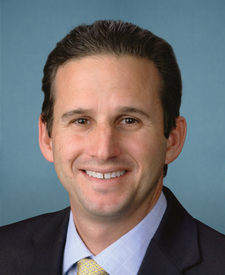
Legislative Progress
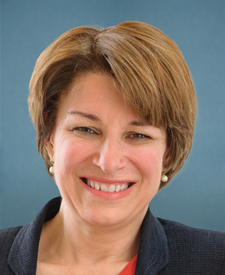
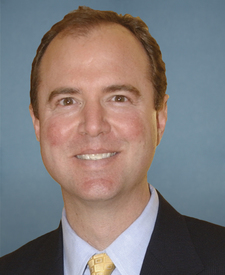
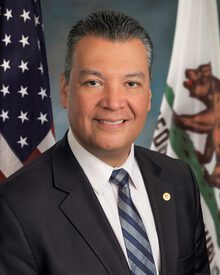
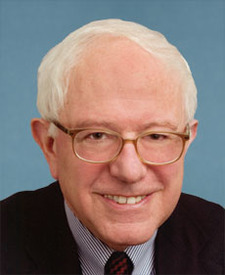
In CommitteeMs. Klobuchar (for herself, Mr. Durbin, Mr. Padilla, Mrs. Shaheen, …
Read twice and referred to the Committee on Rules and …
Introduced in Senate
Stakeholder Effects
cui bono?How this legislation distributes effects. Mention counts reflect frequency, not effect magnitude.
Comptroller General / GAO, Department of Justice, Election Assistance Commission
Positive-direction: Election workers, Election workers (officials, poll workers, volunteers), Election workers (poll workers and volunteers), Election workers at polling and counting locations, Election workers at polling locations, Poll workers and election volunteers, State and local election officials, State election agencies
Negative-direction: Comptroller General / GAO, Department of Justice, Election Assistance Commission, Federal Bureau of Investigation, Federal government (appropriations)
Individuals who threaten or intimidate election workers, Poll observers, Poll observers engaging in intimidation or disruption
Positive-direction: Voters at polling locations
Negative-direction: Individuals who threaten or intimidate election workers, Poll observers, Poll observers engaging in intimidation or disruption
Social media threat monitoring companies, Social media threat monitoring firms, Third-party PII redaction and data services companies
Physical security services providers, Security services companies
Bill Structure & Actor Mappings
Who is "The Secretary" in each section?
- "the_commission"
- → Election Assistance Commission (EAC)
- "the_attorney_general"
- → Attorney General of the United States
- "the_comptroller_general"
- → Comptroller General of the United States
- "the_director"
- → Director of the Federal Bureau of Investigation
- "the_attorney_general"
- → Attorney General of the United States
- "state_or_local_election_official"
- → State or local election official
Key Definitions
Terms defined in this bill
An individual who is an election official, poll worker, or an election volunteer in connection with the administration of an election for a Federal office
Has the meaning given the term 'restricted personal information' in section 119 of title 18, United States Code (includes SSN, home address, phone number, etc.)
We use a combination of our own taxonomy and classification in addition to large language models to assess meaning and potential beneficiaries. High confidence means strong textual evidence. Always verify with the original bill text.
Learn more about our methodology