SUPPORT for Patients and Communities Reauthorization Act of 2025
Analysis under review: This bill has generated analysis that may be too generic or incomplete. Clause-level evidence remains available below.
Summary
What This Bill Does
The SUPPORT for Patients and Communities Reauthorization Act of 2025 extends and expands funding for programs addressing substance use disorders, mental health, overdose prevention, and addiction recovery through fiscal years 2026-2030. It reauthorizes the original 2018 SUPPORT Act while updating programs to address emerging challenges, including expanding coverage from opioid-specific programs to all substances causing overdose and adding new provisions for fetal alcohol spectrum disorders.
Who Benefits and How
- Mental health and addiction treatment providers receive significantly increased grant funding - over $500 million annually for overdose prevention alone, plus expanded grants for FASD services, child trauma initiatives, recovery centers, and workforce development programs.
- Substance use disorder treatment professionals benefit from expanded loan repayment programs (increased from $25M to $40M annually) and new training opportunities.
- Individuals in recovery gain better access to treatment through expanded recovery center eligibility, new recovery housing programs, and workforce reintegration support including transportation assistance.
- State, Tribal, and local governments receive expanded grant opportunities across multiple public health programs with more flexibility in how funds can be used.
- Peer support specialists receive enhanced professional development and can now provide services in nonclinical community settings.
Who Bears the Burden and How
- Federal taxpayers fund approximately $2.5-3 billion in authorized appropriations over the five-year period across all programs.
- 988 Suicide Prevention Lifeline operators face new cybersecurity compliance and reporting requirements.
- Pharmaceutical opioid manufacturers may face increased regulatory scrutiny through new FDA assessment requirements.
Key Provisions
- Extends overdose prevention funding at $505.6 million annually and broadens scope from opioids to all overdose-causing substances
- Creates new $12.5 million annual program for fetal alcohol spectrum disorders (FASD) prevention and services
- Reauthorizes National Child Traumatic Stress Initiative at approximately $99-100 million annually with expanded scope
- Increases substance use disorder workforce loan repayment from $25 million to $40 million annually
- Expands CAREER Act workforce reintegration program from $5 million to $12 million annually with recovery housing pilot
- Directs HHS to review potential rescheduling of buprenorphine-naloxone products to improve medication-assisted treatment access
- Expands controlled substance prescriber training organizations to include podiatrists, optometrists, and pharmacists
Evidence Chain:
This summary is generated from the full bill text using AI analysis. Expand "Detailed Analysis" below for identified beneficiaries/burden bearers.
At a Glance
What This Bill Does
Reauthorizes and extends funding for the SUPPORT for Patients and Communities Act programs through fiscal years 2026-2030, addressing substance use disorder treatment, mental health services, overdose prevention, recovery support, and workforce development.
Who Benefits
- Individuals with substance use disorders and their families
- Mental health and addiction treatment providers
- Community recovery organizations
Who Bears Costs
- Federal taxpayers (through authorized appropriations)
- DEA-registered prescribers (additional training requirements)
- Pharmacies (compliance with controlled substance delivery rules)
Key Policy Areas
Healthcare, Mental Health, Substance Use Disorder Treatment, Public Health, Workforce Development
Primary Purpose
Reauthorizes and extends funding for the SUPPORT for Patients and Communities Act programs through fiscal years 2026-2030, addressing substance use disorder treatment, mental health services, overdose prevention, recovery support, and workforce development.
Policy Domains
Legislative Strategy
"Extend and expand existing SUPPORT Act programs with increased funding authorizations, broadened definitions (e.g., expanding from opioids to all substances causing overdose), and enhanced state/tribal capacity building"
Identified Gains
- Individuals with substance use disorders and their families
- Mental health and addiction treatment providers
- Community recovery organizations
- Healthcare workforce (addiction medicine providers, peer support specialists)
- States and Tribal governments receiving grant funding
- Academic and research institutions studying SUD and mental health
- Nonprofit treatment and recovery organizations
- First responders receiving overdose training
Identified Costs
- Federal taxpayers (through authorized appropriations)
- DEA-registered prescribers (additional training requirements)
- Pharmacies (compliance with controlled substance delivery rules)
Sponsors


Legislative Progress
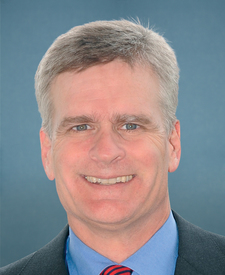
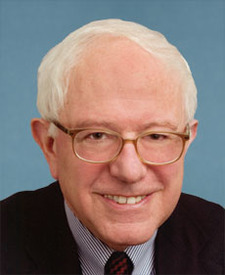
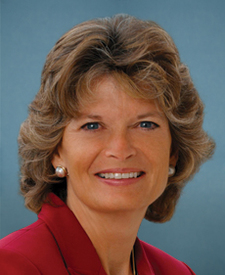
In CommitteeMr. Cassidy (for himself, Mr. Sanders, Ms. Murkowski, Ms. Baldwin, …
Read twice and referred to the Committee on Health, Education, …
Introduced in Senate
Stakeholder Effects
cui bono?How this legislation distributes effects. Mention counts reflect frequency, not effect magnitude.
988 Lifeline network administrator, Behavioral health workforce trainees, Comprehensive opioid recovery center grantees
Positive-direction: Behavioral health workforce trainees, Comprehensive opioid recovery center grantees, First episode psychosis programs, Health IT vendors, NCTSI grantees and coordinating centers, Opioid use disorder treatment providers, Peer support specialists and organizations, Pharmacies delivering controlled substances, Podiatrists and optometrists prescribing controlled substances, Prescribing practitioners administering REMS drugs, Public health surveillance technology providers, SUD treatment facilities in underserved areas, SUD treatment grant applicants, SUD treatment service contractors, Substance use disorder treatment professionals
Negative-direction: 988 Lifeline network administrator, Local and regional crisis centers
FASD grant recipients, Nonprofit FASD organizations, Nonprofit FASD service organizations
CDC trauma monitoring programs, Individuals and families affected by FASD, Individuals in recovery seeking employment
Positive-direction: CDC trauma monitoring programs, Individuals and families affected by FASD, Individuals in recovery seeking employment, Patients with opioid use disorder
Negative-direction: Taxpayers
Local educational agencies and consortia, Medical and pharmacy schools, Mental health education and training programs
At-home drug disposal product manufacturers, Buprenorphine-naloxone product manufacturers, Pharmaceutical manufacturers of REMS controlled substances
Indian Tribes and Tribal organizations, State PDMP administrators, Tribal organizations serving youth
Bill Structure & Actor Mappings
Who is "The Secretary" in each section?
- "the_secretary"
- → Secretary of Health and Human Services
- "the_secretary"
- → Secretary of Health and Human Services
- "the_attorney_general"
- → Attorney General (for scheduling reviews)
- "the_secretary"
- → Secretary of Health and Human Services
- "the_secretary"
- → Secretary of Health and Human Services
Key Definitions
Terms defined in this bill
With respect to support or an intervention program, means that such support or intervention program uses culturally and linguistically informed evidence-based or practice-based interventions and appropriate resources to support an improved quality of life for an individual with FASD and the family of such individual.
Have the meanings given such terms in section 4 of the Indian Self-Determination and Education Assistance Act (25 U.S.C. 5304).
Has the meaning given such term in section 8101 of the Elementary and Secondary Education Act of 1965 (20 U.S.C. 7801).
We use a combination of our own taxonomy and classification in addition to large language models to assess meaning and potential beneficiaries. High confidence means strong textual evidence. Always verify with the original bill text.
Learn more about our methodology