To amend title 5, United States Code, to increase death gratuities and funeral allowances for Federal employees, and for other purposes.
Summary
What This Bill Does
The bill creates amendment to Title 5 USC Chapter 55 creating new Section 5571 for employee death gratuity payments of $100,000 (inflation-adjusted) for federal employees killed in line of duty, with order of payment precedence, creates new Section 5571 establishing the detailed framework: $100,000 base gratuity adjusted annually by PCE Price Index, exclusions for willful misconduct and intoxication, special rules for Foreign Service local, and creates amendment to 5 USC 8102a removing the "up to" qualifier on the $100,000 death gratuity for civilian employees killed in connection with Armed Forces service, adding annual PCE inflation adjustment, preventing. It relies on grants, definition changes, compliance mandates, and appropriations. The main policy areas are Labor and Foreign Policy.
Who Benefits and How
Surviving families of federal employees killed in line of duty could gain revenue opportunities, Families and survivors of federal employees killed in line of duty could gain revenue opportunities, and Families of civilian federal employees killed in connection with military service could gain revenue opportunities.
Who Bears the Burden and How
Federal agencies as employers could face higher costs, Federal agencies could face higher costs, and Federal government could face higher costs.
Key Provisions
- Creates amendment to Title 5 USC Chapter 55 creating new Section 5571 for employee death gratuity payments of $100,000 (inflation-adjusted) for federal employees killed in line of duty, with order of payment precedence...
- Creates new Section 5571 establishing the detailed framework: $100,000 base gratuity adjusted annually by PCE Price Index, exclusions for willful misconduct and intoxication, special rules for Foreign Service local...
- Creates amendment to 5 USC 8102a removing the "up to" qualifier on the $100,000 death gratuity for civilian employees killed in connection with Armed Forces service, adding annual PCE inflation adjustment, preventing...
- Creates amendment to Foreign Service Act Section 413 updating death gratuity for employees killed abroad to align terminology with new Title 5 framework, expanding coverage to uncompensated individuals serving...
- Provides emergency supplemental appropriation authorization for agencies unable to cover death gratuity payments due to natural disasters, terrorism, or other incidents; requires OMB concurrence and Sense of Congress...
Evidence Chain:
This summary is generated from the full bill text using AI analysis. Expand "Detailed Analysis" below for identified beneficiaries/burden bearers with clause-level evidence links.
At a Glance
What This Bill Does
The bill creates amendment to Title 5 USC Chapter 55 creating new Section 5571 for employee death gratuity payments of $100,000 (inflation-adjusted) for federal employees killed in line of duty, with order of payment precedence, creates new Section 5571 establishing the detailed framework: $100,000 base gratuity adjusted annually by PCE Price Index, exclusions for willful misconduct and intoxication, special rules for Foreign Service local, and creates amendment to 5 USC 8102a removing the "up to" qualifier on the $100,000 death gratuity for civilian employees killed in connection with Armed Forces service, adding annual PCE inflation adjustment, preventing.
Key Policy Areas
Labor, Foreign Policy
Primary Purpose
The bill creates amendment to Title 5 USC Chapter 55 creating new Section 5571 for employee death gratuity payments of $100,000 (inflation-adjusted) for federal employees killed in line of duty, with order of payment precedence, creates new Section 5571 establishing the detailed framework: $100,000 base gratuity adjusted annually by PCE Price Index, exclusions for willful misconduct and intoxication, special rules for Foreign Service local, and creates amendment to 5 USC 8102a removing the "up to" qualifier on the $100,000 death gratuity for civilian employees killed in connection with Armed Forces service, adding annual PCE inflation adjustment, preventing.
Policy Domains
Section 2 - New Death Gratuity for Federal Employees (5 USC 5571)
Identified Gains
- Surviving families of federal employees killed in line of duty
- Families and survivors of federal employees killed in line of duty
- Families of civilian federal employees killed in connection with military service
- Families of Foreign Service and diplomatic mission employees killed abroad
- Federal agencies facing mass-casualty events
Identified Costs
- Federal agencies as employers
- Federal agencies
- Federal government
- Federal agencies making death gratuity payments
- Government Accountability Office
Sponsors


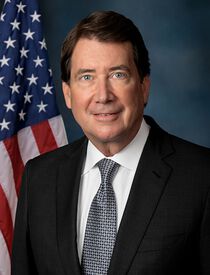

Legislative Progress
IntroducedMr. Fetterman (for himself, Mr. Hagerty, Mr. Padilla, and Mr. …
Stakeholder Effects
cui bono?How this legislation distributes effects. Mention counts reflect frequency, not effect magnitude.
Department of State, Executive agencies with employees abroad, Federal agencies
Positive-direction: Federal agencies facing mass-casualty events
Negative-direction: Department of State, Executive agencies with employees abroad, Federal agencies, Federal agencies as employers, Federal agencies making death gratuity payments, Federal government, Federal government (fiscal exposure), Government Accountability Office, Secretary of Labor
Families and survivors of federal employees killed in line of duty, Families of Foreign Service and diplomatic mission employees killed abroad, Families of civilian federal employees killed in connection with military service
Bill Structure & Actor Mappings
Who is "The Secretary" in each section?
- "the_secretary"
- → Secretary of Labor (determination of employee status and inflation adjustment)
- "the_secretary"
- → Secretary of Labor (inflation adjustment)
- "the_secretary"
- → Secretary of Labor
- "the_secretary"
- → Secretary of State
Key Definitions
Terms defined in this bill
An individual determined by the Secretary of Labor to be an employee within the meaning of section 8101(1), excluding individuals described in subparagraph (D) of section 8101(1)
Includes a natural child and an adopted child, but does not include a stepchild
We use a combination of our own taxonomy and classification in addition to large language models to assess meaning and potential beneficiaries. High confidence means strong textual evidence. Always verify with the original bill text.
Learn more about our methodology