Disaster Relief Medicaid Act
Analysis under review: This bill has generated analysis that may be too generic or incomplete. Clause-level evidence remains available below.
Summary
This bill creates a permanent Disaster Relief Medicaid program that would automatically provide health insurance to disaster survivors for up to two years. When a major disaster, national emergency, or public health emergency is declared, people in the affected area with incomes up to 133% of the poverty line (200% for pregnant women, children, and people with disabilities) would qualify for Medicaid through a simplified self-attestation process with no documentation required. The federal government would pay 100% of the costs. The bill also provides grants for states to set up Home and Community-Based Services emergency response teams, extends 100% federal funding for all Medicaid in direct impact areas, protects disaster survivors from Medicare late enrollment penalties, and requires a multi-year evaluation of the program.
Evidence Chain:
This summary is generated from the full bill text using AI analysis. Expand "Detailed Analysis" below for identified beneficiaries/burden bearers.
At a Glance
What This Bill Does
Establishes a comprehensive Disaster Relief Medicaid program providing automatic Medicaid eligibility and 100% federal funding for disaster survivors, including presumptive eligibility, simplified applications, extended mental health services, and home and community-based services.
Who Benefits
- Disaster survivors who lack health insurance
- Low-income families in disaster areas
- People with disabilities affected by disasters
Who Bears Costs
- Federal government (bears 100% of costs)
- CMS (administrative burden of new program)
Key Policy Areas
Healthcare, Emergency Management, Social Safety Net
Primary Purpose
Establishes a comprehensive Disaster Relief Medicaid program providing automatic Medicaid eligibility and 100% federal funding for disaster survivors, including presumptive eligibility, simplified applications, extended mental health services, and home and community-based services.
Policy Domains
Legislative Strategy
"Create a permanent federal framework for disaster Medicaid that eliminates need for ad hoc waivers, with 100% federal funding to remove state fiscal barriers to coverage expansion during disasters."
Sponsors
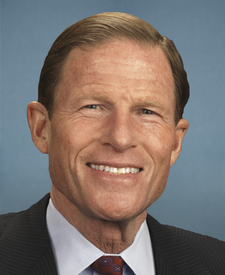
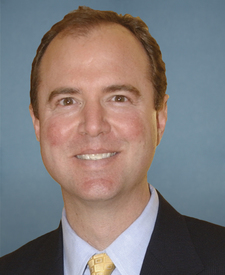
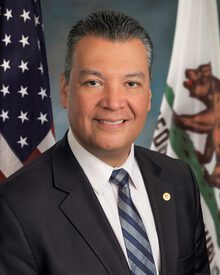
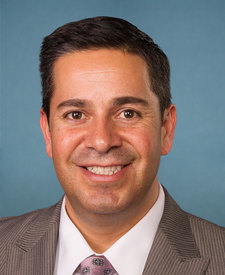
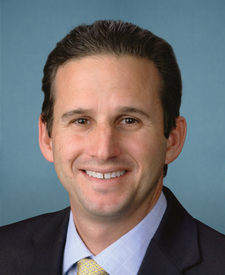
Legislative Progress
In CommitteeMr. Blumenthal (for himself, Mr. Schatz, Mr. Schiff, Mrs. Gillibrand, …
Read twice and referred to the Committee on Finance.
Introduced in Senate
Stakeholder Effects
cui bono?How this legislation distributes effects. Mention counts reflect frequency, not effect magnitude.
Federal government, State Medicaid agencies, State Medicaid programs
Positive-direction: State Medicaid programs, State governments in disaster areas, U.S. territories
Negative-direction: Federal government, State legislatures
All Medicaid/CHIP enrollees in direct impact areas, Disaster evacuees in receiving communities, Disaster survivors and evacuees
Healthcare providers in disaster areas, Healthcare providers in evacuee-receiving areas, Home and community-based service providers
Independent nonprofit evaluation entities, Nonprofit service providers
Bill Structure & Actor Mappings
Who is "The Secretary" in each section?
- "the_secretary"
- → Secretary of Health and Human Services
- "the_secretary"
- → Secretary of Health and Human Services
- "the_secretary"
- → Secretary of Health and Human Services
- "the_secretary"
- → Secretary of Health and Human Services
Key Definitions
Terms defined in this bill
A major disaster declared by the President under the Stafford Act, a national emergency under the National Emergencies Act, or a public health emergency declared by the HHS Secretary.
The geographic area in which the disaster exists, as posted by CMS and FEMA.
The period from the date the disaster is declared through 2 years after that date.
A disaster survivor whose family income does not exceed the higher of 133% (200% for pregnant, children, disabled) of the poverty line or the applicable State Medicaid income standard.
We use a combination of our own taxonomy and classification in addition to large language models to assess meaning and potential beneficiaries. High confidence means strong textual evidence. Always verify with the original bill text.
Learn more about our methodology