Keeping Obstetrics Local Act
Summary
What This Bill Does
The bill requires states to conduct cost studies every 5 years on maternity service costs at applicable hospitals, submit data to HHS. Appropriates $10M for grants to hospitals for data collection and $3M for HHS implementation, amends Medicaid to require minimum payment rates for maternity services at eligible hospitals starting FY2027: 150% of Medicare rates initially, then cost-based rates informed by state studies. Defines eligible, and provides 100% federal match for enhanced maternity payment amounts above base rates, and enhanced FMAP (CHIP rate) for base payment amounts. Excludes these payments from territorial caps. It relies on compliance mandates, grants, reporting requirements, and price controls. The main policy areas are Healthcare and Science & Space.
Who Benefits and How
States with Medicaid maternity programs could see lower costs, Rural hospitals providing obstetric care could gain revenue opportunities, and Pregnant individuals seeking Medicaid coverage could face fewer barriers.
Who Bears the Burden and How
State Medicaid programs could face higher costs, HHS Secretary would take on compliance duties, and Federal government (increased spending) could face higher costs.
Key Provisions
- Requires states to conduct cost studies every 5 years on maternity service costs at applicable hospitals, submit data to HHS. Appropriates $10M for grants to hospitals for data collection and $3M for HHS implementation.
- Amends Medicaid to require minimum payment rates for maternity services at eligible hospitals starting FY2027: 150% of Medicare rates initially, then cost-based rates informed by state studies. Defines eligible...
- Provides 100% federal match for enhanced maternity payment amounts above base rates, and enhanced FMAP (CHIP rate) for base payment amounts. Excludes these payments from territorial caps.
- Amends Medicaid to require hospital payment rates account for low-volume obstetric hospitals, requiring state plan amendments for anchor payments by October 2026.
- Creates new Section 1923A establishing anchor payments for low-volume obstetric hospitals (<300 births/year). Sets standby capacity at $1.2M and per-delivery at $10,000 for FY2028, indexed to CPI. Hospitals must...
Evidence Chain:
This summary is generated from the full bill text using AI analysis. Expand "Detailed Analysis" below for identified beneficiaries/burden bearers with clause-level evidence links.
At a Glance
What This Bill Does
The bill requires states to conduct cost studies every 5 years on maternity service costs at applicable hospitals, submit data to HHS. Appropriates $10M for grants to hospitals for data collection and $3M for HHS implementation, amends Medicaid to require minimum payment rates for maternity services at eligible hospitals starting FY2027: 150% of Medicare rates initially, then cost-based rates informed by state studies. Defines eligible, and provides 100% federal match for enhanced maternity payment amounts above base rates, and enhanced FMAP (CHIP rate) for base payment amounts. Excludes these payments from territorial caps.
Key Policy Areas
Healthcare, Science & Space
Primary Purpose
The bill requires states to conduct cost studies every 5 years on maternity service costs at applicable hospitals, submit data to HHS. Appropriates $10M for grants to hospitals for data collection and $3M for HHS implementation, amends Medicaid to require minimum payment rates for maternity services at eligible hospitals starting FY2027: 150% of Medicare rates initially, then cost-based rates informed by state studies. Defines eligible, and provides 100% federal match for enhanced maternity payment amounts above base rates, and enhanced FMAP (CHIP rate) for base payment amounts. Excludes these payments from territorial caps.
Policy Domains
Title I - Medicaid Payment Improvements
Identified Gains
- States with Medicaid maternity programs
- Rural hospitals providing obstetric care
- Pregnant individuals seeking Medicaid coverage
- Low-volume obstetric hospitals (<300 births/year)
- Critical access hospitals
Identified Costs
- State Medicaid programs
- HHS Secretary
- Federal government (increased spending)
- States without presumptive eligibility for pregnant individuals
- States (Medicaid programs)
Sponsors
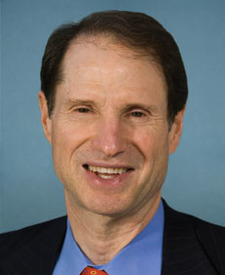
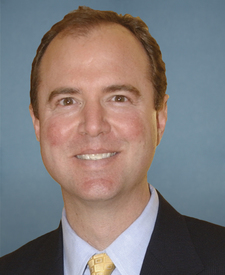

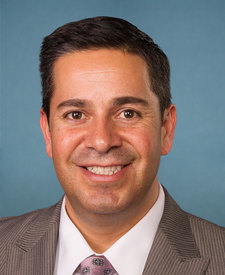

Legislative Progress
In CommitteeMr. Wyden (for himself, Ms. Hassan, Ms. Cantwell, Mr. Bennet, …
Read twice and referred to the Committee on Finance.
Introduced in Senate
Stakeholder Effects
cui bono?How this legislation distributes effects. Mention counts reflect frequency, not effect magnitude.
Birthing centers and maternity group practices, Care coordination providers (FQHCs, birthing centers, midwives), Certified midwives
Positive-direction: Birthing centers and maternity group practices, Care coordination providers (FQHCs, birthing centers, midwives), Certified midwives, Certified nurse-midwives and certified midwives, Critical access hospitals, Doulas, FQHCs providing maternity care, Healthcare providers serving Medicaid postpartum patients, Healthcare providers serving uninsured pregnant patients, Hospitals providing CHIP-covered maternity services, Hospitals receiving both maternity and DSH payments, IHS and Tribal hospitals, Low-volume obstetric hospitals, Low-volume obstetric hospitals (<300 births/year), Mental health providers serving perinatal patients, Out-of-state maternity care providers, Rural and low-volume hospitals (data collection grants), Rural hospitals providing obstetric care
Negative-direction: Hospitals planning to close obstetric units, Hospitals providing labor and delivery services
State CHIP programs, State Medicaid programs, State health departments
Positive-direction: State health departments, States calculating supplemental payments, States implementing perinatal mental health screening, States opting to establish maternity health homes, States with Medicaid maternity programs
Negative-direction: State CHIP programs, State Medicaid programs, States (Medicaid agencies), States (Medicaid credentialing programs), States (Medicaid programs), States administering anchor payment contracts, States without presumptive eligibility for pregnant individuals
Federal government (increased spending), HHS Secretary, HHS Secretary (data collection)
HHS Secretary faces effects in multiple directions
Positive-direction: Public Health Service Commissioned Corps, U.S. Territories with Medicaid programs
Negative-direction: Federal government (increased spending), HHS Secretary (data collection)
Communities at risk of losing obstetric services, Communities facing obstetric workforce shortages, Rural communities at risk of losing obstetric services
Pregnant and postpartum individuals, Pregnant individuals seeking Medicaid coverage, Pregnant individuals with complex health needs
Bill Structure & Actor Mappings
Who is "The Secretary" in each section?
- "the_secretary"
- → Secretary of Health and Human Services
Key Definitions
Terms defined in this bill
Inpatient and outpatient hospital services related to maternity care or labor and delivery, identified by ICD and CPT codes specified by the Secretary
Rural hospitals, critical access hospitals, IHS/Tribal hospitals, or hospitals where at least 50% of births are Medicaid/CHIP/Medicare/uninsured
An eligible hospital with fewer than 300 births per year on average over the preceding 3 fiscal years
$10,000 for FY2028, indexed annually to medical care CPI, representing marginal cost of a birth or antenatal transfer
$1,200,000 for FY2028, indexed annually to medical care CPI, representing minimum expenditures for personnel/equipment/facilities
Annual payment to low-volume obstetric hospitals equal to Medicaid labor and delivery revenue floor minus actual Medicaid/CHIP payments received
We use a combination of our own taxonomy and classification in addition to large language models to assess meaning and potential beneficiaries. High confidence means strong textual evidence. Always verify with the original bill text.
Learn more about our methodology