To promote ethics and prevent corruption in Department of Defense contracting and other activities, and for other purposes.
Analysis under review: This bill has generated analysis that may be too generic or incomplete. Clause-level evidence remains available below.
Summary
What This Bill Does
This bill significantly tightens ethics rules for Department of Defense officials and major defense contractors. It extends the revolving door cooling-off period from 2 to 4 years before former senior officials can work for defense contractors, expands stock ownership bans, requires contractors to publicly disclose former DoD officials they employ and their lobbying activities, and mandates financial transparency from large contractors.
Who Benefits and How
Smaller defense contractors face fewer restrictions than giant contractors receiving over $1 billion annually. Taxpayers benefit from increased transparency about contractor performance, costs, and lobbying. Government watchdog and accountability organizations gain access to comprehensive data on defense contractor practices. DoD Inspector General receives expanded oversight authority.
Who Bears the Burden and How
Major defense contractors face 4-year hiring bans on senior DoD officials, mandatory annual disclosure of former officials employed and lobbying expenditures, and potential suspension for non-compliance. Senior DoD officials face expanded stock ownership prohibitions (anyone receiving $100M+ from DoD) and 4-year post-employment restrictions. Former procurement officials face 4-year employment bans at contractors they oversaw.
Key Provisions
- Extends revolving door cooling-off period from 2 to 4 years with biannual IG audits (Section 101)
- Bans giant contractors (over $1B annually) from hiring senior DoD officials for 4 years (Section 104)
- Requires contractors to annually disclose former DoD officials and lobbying activities (Section 102)
- Expands stock ownership ban to cover companies receiving $100M+ from DoD (Section 107)
- Mandates public disclosure of contractor performance records (Section 301)
Evidence Chain:
This summary is generated from the full bill text using AI analysis. Expand "Detailed Analysis" below for identified beneficiaries/burden bearers with clause-level evidence links.
At a Glance
What This Bill Does
Strengthens ethics and anti-corruption requirements for Department of Defense contracting by extending revolving door restrictions, expanding recusal requirements, mandating disclosure of contractor lobbying and former official employment, and prohibiting stock ownership in defense contractors
Key Policy Areas
Defense, Government Ethics, Federal Procurement
Primary Purpose
Strengthens ethics and anti-corruption requirements for Department of Defense contracting by extending revolving door restrictions, expanding recusal requirements, mandating disclosure of contractor lobbying and former official employment, and prohibiting stock ownership in defense contractors
Policy Domains
Title I - Revolving Door and Recusal Requirements
Identified Gains
- Government accountability advocates
- Smaller defense contractors
- DoD Inspector General
Identified Costs
- Major defense contractors
- Senior DoD officials
- Defense industry lobbyists
Title III - Contractor Transparency
Identified Gains
- Taxpayers
- Government watchdog organizations
- Congress
Identified Costs
- Large defense contractors
- General and flag officers
Legislative Progress
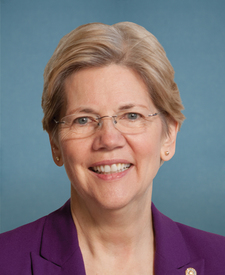
IntroducedMs. Warren introduced the following bill; which was read twice …
Stakeholder Effects
cui bono?How this legislation distributes effects. Mention counts reflect frequency, not effect magnitude.
Competitor contractors, Defense contractors hiring acquisition professionals, Defense contractors hiring former officials
Positive-direction: Competitor contractors, Mid-tier defense contractors, Small defense contractors (under $10M), Smaller contractors competing for contracts
Negative-direction: Defense contractors hiring acquisition professionals, Defense contractors hiring former officials, Defense contractors seeking to protect proprietary information, Defense contractors with contracts over $10 million, Defense contractors with major contracts, Defense contractors with performance issues, Giant defense contractors (Lockheed, Boeing, Raytheon, etc.), High-paid contractor executives, Large defense contractors
Congressional oversight, Congressional oversight committees, Department of Defense contracting offices
Positive-direction: Congressional oversight, Congressional oversight committees, Government ethics oversight
Negative-direction: Department of Defense contracting offices, DoD Inspector General, DoD officials owning defense contractor stocks, DoD officials with private sector backgrounds, Former DoD procurement officials, General and flag officers, Military department administrative offices, Senior DoD officials planning private sector careers, Senior DoD officials seeking private sector employment
Government accountability advocates, Government ethics advocates, Government transparency advocates
Bill Structure & Actor Mappings
Who is "The Secretary" in each section?
- "the_secretary"
- → Secretary of Defense
- "inspector_general"
- → Inspector General of the Department of Defense
- "the_secretary"
- → Secretary of Defense
Key Definitions
Terms defined in this bill
A contractor (other than higher education institution) that received more than $1 billion in DoD contracts in any of the previous 3 fiscal years
Contractor receiving $10M+ annually from federal contracts or earning 20%+ of revenue from federal contracts
Former DoD officer/employee or retired Armed Forces member who served in Executive Schedule, SES, O-6+, or supervisory GS-15+ position
We use a combination of our own taxonomy and classification in addition to large language models to assess meaning and potential beneficiaries. High confidence means strong textual evidence. Always verify with the original bill text.
Learn more about our methodology