To strengthen the national security of the United States by decreasing the reliance of the Department of Defense on critical minerals from the People’s Republic of China, the Russian Federation, the Islamic Republic of Iran, the Democratic People’s Republic of North Korea, and other geostrategic competitors and adversaries of the United States, and for other purposes.
Sponsors


Legislative Progress
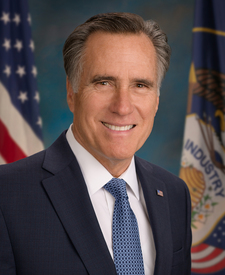
IntroducedMr. Romney (for himself, Mr. Sullivan, and Mr. Peters) introduced …
Summary
What This Bill Does
The Critical Mineral Independence Act of 2023 requires the Pentagon to create a plan within one year to stop relying on China, Russia, Iran, and North Korea for critical minerals needed in defense equipment by 2035. Critical minerals include materials like lithium, rare earth elements, and cobalt that are essential for manufacturing military technology, from fighter jets to missile systems.
Who Benefits and How
U.S. mining and mineral processing companies benefit significantly, as the bill directs the Pentagon to shift procurement away from Chinese and Russian suppliers and toward domestic sources. The strategy could unlock government support through the Defense Production Act, providing loans, grants, or purchase guarantees to expand U.S. mining and refining capacity. Allied countries like Australia and Canada with critical mineral deposits also stand to gain as alternative suppliers to the Department of Defense.
Who Bears the Burden and How
Defense contractors currently sourcing critical minerals from China, Russia, or other adversarial countries face increased costs and compliance requirements. They will need to restructure their supply chains, potentially paying more for minerals from U.S. or allied sources. The Department of Defense itself faces administrative burdens to develop the strategy, rewrite acquisition rules, and monitor contractor compliance. Chinese and Russian critical mineral exporters lose access to the lucrative U.S. defense market.
Key Provisions
- Mandates a comprehensive strategy from the Under Secretary of Defense for Acquisition and Sustainment identifying vulnerabilities in defense contractor supply chains that rely on adversarial countries for critical minerals
- Requires evaluation of using the Defense Production Act to expand domestic and allied critical mineral mining and processing capacity
- Directs the Pentagon to recommend changes to acquisition laws and regulations to ensure contractors use non-adversarial supply chains
- Instructs the Department to identify partnership opportunities with allied governments to jointly reduce dependence on Chinese and Russian critical minerals
- Sets a target date of 2035 for achieving complete independence from adversarial countries for critical minerals in the defense supply chain
Evidence Chain:
This summary is derived from the structured analysis below. See "Detailed Analysis" for per-title beneficiaries/burden bearers with clause-level evidence links.
Primary Purpose
Requires the Department of Defense to develop a strategy by 2024 to eliminate dependence on critical minerals from China, Russia, Iran, North Korea, and other adversarial countries by 2035.
Policy Domains
Legislative Strategy
"Strengthen national security by reducing dependence on adversarial nations for critical minerals; expand domestic and allied critical mineral supply chains"
Likely Beneficiaries
- U.S. critical mineral mining companies
- U.S. mineral processing companies
- Allied countries with critical mineral resources
- Defense contractors using domestic/allied minerals
Likely Burden Bearers
- Defense contractors currently using Chinese/Russian minerals
- Companies with existing supply chains in covered countries
- Department of Defense (compliance costs)
Bill Structure & Actor Mappings
Who is "The Secretary" in each section?
- "the_secretary"
- → Secretary of Defense
- "the_under_secretary"
- → Under Secretary of Defense for Acquisition and Sustainment
Key Definitions
Terms defined in this bill
The Committee on Armed Services of the Senate and the Committee on Armed Services of the House of Representatives
A covered nation as defined in section 4872, title 10, United States Code (China, Russia, Iran, North Korea), and any other country determined by the Secretary of Defense to be a geostrategic competitor or adversary of the United States
A critical mineral (as defined in section 7002(a) of the Energy Act of 2020 (30 U.S.C. 1606(a))) that the Secretary of Defense determines to be important to national security
Materials determined to be in shortfall in the most recent report on stockpile requirements under section 14 of the Strategic and Critical Materials Stock Piling Act (50 U.S.C. 98h-5)
We use a combination of our own taxonomy and classification in addition to large language models to assess meaning and potential beneficiaries. High confidence means strong textual evidence. Always verify with the original bill text.
Learn more about our methodology