National Prescribed Fire Act of 2025
Summary
What This Bill Does
Creates a national prescribed-fire policy package by allowing up to 15 percent of National Forest System hazardous-fuels funds for prescribed-fire activities, requiring expanded federal burning over ten fiscal years, creating a Collaborative Prescribed Fire Program, authorizing cooperative agreements and contracts, improving workforce pay and training, limiting liability for prescribed-fire managers, aligning environmental-review policy, and requiring annual accomplishment reports.
Who Benefits and How
At-risk communities benefit if increased prescribed fire reduces fuel loads before catastrophic wildfires. Prescribed-fire managers, fire departments, Tribes, counties, municipalities, nonprofits, and private prescribed-fire contractors benefit from cooperative agreements, contracts, collaborative program funding, clearer liability rules, and more federal use of intentional burning. Federal wildland fire employees benefit from differential-pay eligibility tied to prescribed-fire work. State and local smoke-management planners benefit from environmental-review guidance that explicitly accounts for public-health impacts of prescribed fire versus uncontrolled wildfire smoke.
Who Bears the Burden and How
Forest Service fire staff and Interior fire staff must conduct more prescribed fire, administer collaborative projects, issue cooperative agreements or contracts, revise training and policies, and report annual accomplishments. Federal budget accounts for hazardous fuels management may be redirected up to 15 percent toward prescribed-fire work. Property owners near burn units bear uncertain smoke, access, or escape-fire risks, while injured property owners may face a higher barrier if liability protections apply. Congressional committees receive annual reports but also must oversee a more active prescribed-fire program.
Key Provisions
- Allows up to 15 percent of annual hazardous-fuels funding for prescribed-fire activities on the National Forest System.
- Requires Agriculture and Interior to conduct prescribed fires on federal land over a ten-year implementation period.
- Creates a Collaborative Prescribed Fire Program for cross-boundary and partner-supported burning.
- Authorizes cooperative agreements and contracts with states, Tribes, local governments, fire districts, nonprofits, and private entities.
- Provides human-resources and pay provisions for federal employees working on prescribed fire.
- Limits liability for prescribed-fire managers carrying out covered activities on federal land.
- Requires environmental-review policy alignment and annual prescribed-fire reporting.
Evidence Chain:
This summary is generated from the full bill text using AI analysis. Expand "Detailed Analysis" below for identified beneficiaries/burden bearers with clause-level evidence links.
At a Glance
What This Bill Does
Creates a national prescribed-fire policy package by allowing up to 15 percent of National Forest System hazardous-fuels funds for prescribed-fire activities, requiring expanded federal burning over ten fiscal years, creating a Collaborative Prescribed Fire Program, authorizing cooperative agreements and contracts, improving workforce pay and training, limiting liability for prescribed-fire managers, aligning environmental-review policy, and requiring annual accomplishment reports.
Key Policy Areas
Wildfire, Forestry, Public Lands, Workforce
Primary Purpose
Creates a national prescribed-fire policy package by allowing up to 15 percent of National Forest System hazardous-fuels funds for prescribed-fire activities, requiring expanded federal burning over ten fiscal years, creating a Collaborative Prescribed Fire Program, authorizing cooperative agreements and contracts, improving workforce pay and training, limiting liability for prescribed-fire managers, aligning environmental-review policy, and requiring annual accomplishment reports.
Policy Domains
House resolution provisions
Identified Gains
- At-risk communities
- Prescribed-fire managers
- Fire departments
- Tribes
- Private prescribed-fire contractors
- Federal wildland fire employees
Identified Costs
- Forest Service fire staff
- Interior fire staff
- Federal hazardous-fuels accounts
- Property owners near burn units
- Congressional committees
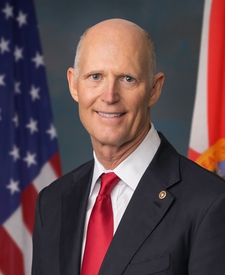
Sponsors
Legislative Progress
ReportedCommittee on Energy and Natural Resources. Ordered to be reported …
Mr. Wyden (for himself and Mr. Budd) introduced the following …
Read twice and referred to the Committee on Energy and …
Introduced in Senate
Stakeholder Effects
cui bono?How this legislation distributes effects. Mention counts reflect frequency, not effect magnitude.
Forest Service fire staff, Forest Service fire training staff, Forest Service reporting staff
Positive-direction: Prescribed-fire collaboratives, Prescribed-fire managers, Private prescribed-fire contractors
Negative-direction: Forest Service fire staff, Forest Service fire training staff, Forest Service reporting staff
At-risk communities, Fire departments, Interior fire staff
Positive-direction: At-risk communities, Fire departments
Negative-direction: Interior fire staff, Interior reporting staff
Agency legal staff, Congressional oversight committees
Positive-direction: Congressional oversight committees
Negative-direction: Agency legal staff
Bill Structure & Actor Mappings
Who is "The Secretary" in each section?
- "secretaries"
- → Secretaries of Agriculture and the Interior
We use a combination of our own taxonomy and classification in addition to large language models to assess meaning and potential beneficiaries. High confidence means strong textual evidence. Always verify with the original bill text.
Learn more about our methodology