Strategic Grazing to Reduce Risk of Wildfire Act
Summary
What This Bill Does
Requires Agriculture and Interior to evaluate and use livestock grazing as a wildfire-risk reduction tool on National Forest System and public lands, including identifying grazing opportunities, coordinating with permit holders, and reporting implementation.
Who Benefits and How
Grazing permittees benefit because the bill pushes federal land managers to use livestock grazing as a fuel-reduction tool and may create more grazing opportunities or more flexible permit coordination. At-risk communities benefit if targeted grazing reduces hazardous grasses or other fuels that carry wildfire toward homes, roads, watersheds, or infrastructure. Forest Service and BLM wildfire planners benefit from another treatment option where mechanical thinning or prescribed fire is less suitable.
Who Bears the Burden and How
Forest Service grazing staff and BLM grazing staff must evaluate where grazing can reduce wildfire risk, coordinate with current or potential permittees, and document results. Wildlife habitat managers and recreation users may face site-specific tradeoffs if grazing is expanded in sensitive areas, so those effects are uncertain and depend on local management. Federal land permit administrators bear additional workload.
Key Provisions
- Defines National Forest System, public lands, Secretary, and Secretary concerned.
- Directs Agriculture and Interior to evaluate livestock grazing for wildfire-risk reduction.
- Encourages use of grazing to reduce hazardous fuels where appropriate.
- Requires coordination with grazing permittees or prospective permittees.
- Creates implementation and reporting work for federal land managers.
Evidence Chain:
This summary is generated from the full bill text using AI analysis. Expand "Detailed Analysis" below for identified beneficiaries/burden bearers with clause-level evidence links.
At a Glance
What This Bill Does
Requires Agriculture and Interior to evaluate and use livestock grazing as a wildfire-risk reduction tool on National Forest System and public lands, including identifying grazing opportunities, coordinating with permit holders, and reporting implementation.
Key Policy Areas
Wildfire, Public Lands, Ranching
Primary Purpose
Requires Agriculture and Interior to evaluate and use livestock grazing as a wildfire-risk reduction tool on National Forest System and public lands, including identifying grazing opportunities, coordinating with permit holders, and reporting implementation.
Policy Domains
House resolution provisions
Identified Gains
- Grazing permittees
- At-risk communities
- Forest Service wildfire planners
- BLM wildfire planners
Identified Costs
- Forest Service grazing staff
- BLM grazing staff
- Wildlife habitat managers
- Recreation users
Sponsors

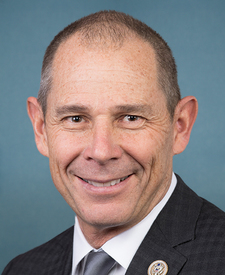
Legislative Progress
ReportedCommittee on Energy and Natural Resources. Ordered to be reported …
Committee on Energy and Natural Resources Subcommittee on Public Lands, …
Ms. Cortez Masto (for herself and Mr. Curtis) introduced the …
Read twice and referred to the Committee on Energy and …
Introduced in Senate
Stakeholder Effects
cui bono?How this legislation distributes effects. Mention counts reflect frequency, not effect magnitude.
At-risk communities, BLM grazing staff
Positive-direction: At-risk communities
Negative-direction: BLM grazing staff
Bill Structure & Actor Mappings
Who is "The Secretary" in each section?
- "secretary_concerned"
- → Secretary of Agriculture or Secretary of the Interior
We use a combination of our own taxonomy and classification in addition to large language models to assess meaning and potential beneficiaries. High confidence means strong textual evidence. Always verify with the original bill text.
Learn more about our methodology