To support rural coastal and maritime economic development, and for other purposes.
Analysis under review: This bill has generated analysis that may be too generic or incomplete. Clause-level evidence remains available below.
Summary
What This Bill Does
The Rural Coastal and Maritime Communities Self-Determination Act is a comprehensive package to strengthen America's coastal fishing communities and maritime industries. It addresses the decline of rural coastal economies by offering tax incentives for clean energy hydropower, grants for fishing vessel modernization and seafood processing, expanded access to agricultural loans for fishing businesses, and new workforce training programs for maritime careers.
Who Benefits and How
-
Commercial fishing industry (vessel owners, processors, workers): Gains access to USDA farm loans previously unavailable to fishing businesses, receives grants to transition vessels to alternative fuels, and benefits from new cold storage and processing infrastructure investments of $10 million per year through 2030.
-
Hydropower facility owners and operators: Receive a 30% investment tax credit for improving fish passage, water quality systems, and marine energy projects at their dams - significantly reducing the cost of environmental upgrades.
-
Rural coastal communities and seafood processors: Eligible for competitive grants to build new processing infrastructure, rehabilitate existing facilities, and expand cold storage capacity, helping them process more domestically-caught seafood.
-
Maritime workforce training providers: Can access new grant funding to recruit, educate, and train workers for maritime careers including safety training addressing substance abuse and fatigue issues.
-
Blue Economy entrepreneurs and startups: At least 7 new "Ocean Innovation Clusters" will be designated to provide business incubation, technical assistance, and connections to capital for ocean-related businesses.
Who Bears the Burden and How
-
Federal taxpayers: Fund the new appropriations including $10 million/year for seafood processing grants (FY2026-2030), funding for maritime workforce grants, and reduced tax revenue from the hydropower investment credit.
-
Federal agencies (NOAA, USDA, Commerce, Transportation, IRS): Must administer multiple new programs, establish interagency working groups on coastal ecosystems, designate Ocean Innovation Clusters, and implement new grant and loan programs with associated compliance oversight.
Key Provisions
-
Creates a new 30% investment tax credit for hydropower improvements including fish passage, water quality maintenance, and marine energy projects (Section 101)
-
Extends USDA farm credit eligibility to commercial fishing operations, fish processing facilities, and aquaculture businesses for the first time (Section 201)
-
Authorizes $10 million annually (FY2026-2030) for grants to support rural seafood processing, cold storage, and mariculture infrastructure (Sections 303-304)
-
Establishes a maritime workforce grant program for training, recruitment, and education including fishing vessel safety (Sections 401-402)
-
Designates at least 7 Ocean Innovation Clusters to support Blue Economy business development and entrepreneurship (Section 502)
-
Creates new grants for research on coastal ecosystems, ocean acidification impacts on shellfish, and Arctic coastal protection (Title V)
Evidence Chain:
This summary is generated from the full bill text using AI analysis. Expand "Detailed Analysis" below for identified beneficiaries/burden bearers.
At a Glance
What This Bill Does
To support rural coastal and maritime economic development through tax incentives for hydropower improvements, grants for fishing vessel transitions and seafood processing, workforce development programs, and environmental research initiatives.
Who Benefits
- Hydropower facility owners and operators
- Commercial fishing industry (vessel owners, operators, processors)
- Mariculture and shellfish aquaculture operations
Who Bears Costs
- Federal taxpayers (funding appropriations)
- Federal agencies (NOAA, USDA, DOT, Commerce) with new program administration responsibilities
- IRS with new tax credit administration
Key Policy Areas
Energy, Commercial Fishing, Maritime Workforce, Rural Economic Development, Environmental Conservation, Aquaculture, Ocean Science
Primary Purpose
To support rural coastal and maritime economic development through tax incentives for hydropower improvements, grants for fishing vessel transitions and seafood processing, workforce development programs, and environmental research initiatives.
Policy Domains
Legislative Strategy
"Comprehensive support package for coastal and maritime economies combining tax incentives, grants, loans, workforce development, and environmental research to strengthen rural coastal communities and domestic fishing/seafood industries"
Identified Gains
- Hydropower facility owners and operators
- Commercial fishing industry (vessel owners, operators, processors)
- Mariculture and shellfish aquaculture operations
- Boatbuilding industry
- Rural coastal communities
- Maritime workforce training providers
- Blue Economy entrepreneurs and startups
- Seafood processing facilities in rural areas
Identified Costs
- Federal taxpayers (funding appropriations)
- Federal agencies (NOAA, USDA, DOT, Commerce) with new program administration responsibilities
- IRS with new tax credit administration
Sponsors
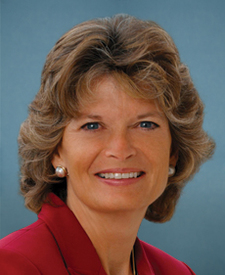
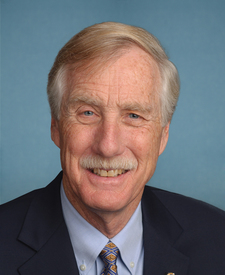
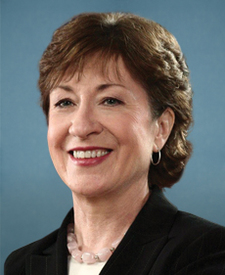
Legislative Progress
IntroducedMs. Murkowski (for herself, Ms. Collins, and Mr. King) introduced …
Stakeholder Effects
cui bono?How this legislation distributes effects. Mention counts reflect frequency, not effect magnitude.
Commercial fishing industry operators, Commercial fishing vessel operators, Commercial fishing vessel owners
Hydroelectric dam owners and operators, Hydroelectric facility owners
Alternative marine fuel technology companies, Boatbuilding industry
Fish processing facility owners, Rural seafood processors
Blue economy businesses and startups, Maritime training institutions
Arctic coastal researchers, Environmental mapping contractors
Remote community utilities in Alaska and similar areas
Bill Structure & Actor Mappings
Who is "The Secretary" in each section?
- "the_commission"
- → Federal Energy Regulatory Commission
- "the_administrator"
- → Administrator of the National Oceanic and Atmospheric Administration
- "the_secretary"
- → Secretary of Agriculture
- "the_administrator"
- → Administrator of the National Oceanic and Atmospheric Administration
- "the_secretary_311"
- → Secretary of Commerce
- "the_secretary_301_304"
- → Secretary of Agriculture
- "the_secretary"
- → Secretary of Transportation
- "the_secretary"
- → Secretary of Commerce
- "the_administrator"
- → Under Secretary of Commerce for Oceans and Atmosphere (NOAA Administrator)
Note: 'The Secretary' refers to Secretary of Agriculture in Sections 301-304 (Subtitle A) but Secretary of Commerce in Section 311 (Subtitle B) of Title III
Key Definitions
Terms defined in this bill
Property that adds/improves fish passage, maintains water quality, promotes downstream habitat maintenance, is part of a marine energy project, or places into service an approved remote dam
Shellfish and aquatic plants grown under controlled conditions
Value and impact of sustainable industries related to Great Lakes, oceans, bays, estuaries, and coasts including fishing, seafood processing, aquaculture, marine construction, transportation, tourism, and recreation
A hydroelectric dam licensed by FERC or legally operating without license before enactment
Fishing in which harvested fish are intended to enter commerce through sale, barter, or trade
A project producing electricity from waves, tides, currents, free flowing water, salinity/pressure differentials, or temperature differentials including ocean thermal energy conversion
A commercial fishing vessel that runs on an energy source other than exclusively petroleum, including hybrid energy sources
A coastal community in a rural area as defined under the Consolidated Farm and Rural Development Act
Land used for or supporting commercial fishing, mariculture, for-hire recreational fishing, or boatbuilding industries
Includes mangroves, tidal marshes, seagrasses, kelp forests, and other tidal, freshwater, or salt-water wetlands
We use a combination of our own taxonomy and classification in addition to large language models to assess meaning and potential beneficiaries. High confidence means strong textual evidence. Always verify with the original bill text.
Learn more about our methodology