To establish the United States Foundation for International Food Security to leverage private sector investments in order to improve and scale economically viable agricultural production, build food systems to mitigate food shock, reduce malnutrition, and drive economic growth, and for other purposes.
Analysis under review: This bill has generated analysis that may be too generic or incomplete. Clause-level evidence remains available below.
Summary
This bill formally recognizes and funds the United States Foundation for International Food Security, a private nonprofit corporation based in Washington, DC. The Foundation would leverage private investment alongside government grants to improve agricultural production, build food system resilience, and reduce malnutrition in developing countries. It would be governed by a bipartisan board of up to 15 directors with expertise in agriculture, finance, and national security. The Foundation would provide grants, loans, and other financing for locally-led agricultural projects, with a focus on measurable outcomes like increased crop yields and farmer incomes. The bill prohibits the Foundation from operating in countries that support terrorism or violate human rights, and requires annual reports to Congress. Funding would come from existing State Department appropriations for economic support, with cost matching from non-government sources.
Evidence Chain:
This summary is generated from the full bill text using AI analysis. Expand "Detailed Analysis" below for identified beneficiaries/burden bearers.
At a Glance
What This Bill Does
Establishes the United States Foundation for International Food Security as a private nonprofit corporation to leverage private sector investment in agricultural production, food systems resilience, and economic growth in developing countries.
Who Benefits
- International agribusiness firms
- Agricultural development organizations
- Private agricultural investors
Who Bears Costs
- State Department budget (via ESF)
- Governments designated as terrorism supporters
Key Policy Areas
International Affairs, Agriculture, Foreign Aid
Primary Purpose
Establishes the United States Foundation for International Food Security as a private nonprofit corporation to leverage private sector investment in agricultural production, food systems resilience, and economic growth in developing countries.
Policy Domains
Legislative Strategy
"Structure the foundation as a private nonprofit outside federal government to enable more flexible, private-sector-style investment while requiring cost matching and outcome-based accountability"
Sponsors

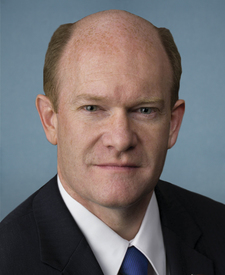
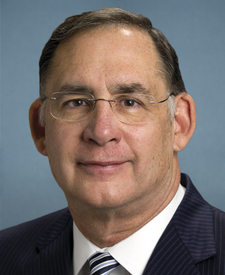
Legislative Progress
IntroducedMr. Graham (for himself, Mr. Coons, and Mr. Boozman) introduced …
Stakeholder Effects
cui bono?How this legislation distributes effects. Mention counts reflect frequency, not effect magnitude.
Development finance institutions, Sanctioned persons and entities, US Foundation for International Food Security
Positive-direction: Development finance institutions, US Foundation for International Food Security
Negative-direction: Sanctioned persons and entities
Agricultural enterprises in developing countries, International agribusiness firms, Local agricultural organizations in developing countries
Congressional oversight committees, Department of State, Governments designated as terrorism supporters
Positive-direction: Congressional oversight committees
Negative-direction: Department of State, Governments designated as terrorism supporters
Private agricultural investors, Private co-funding partners
Impact evaluation firms, Independent auditors
Bill Structure & Actor Mappings
Who is "The Secretary" in each section?
- "the_board"
- → Board of Directors (up to 15 members)
- "the_foundation"
- → US Foundation for International Food Security
- "the_secretary"
- → Secretary of State
- "the_foundation"
- → US Foundation for International Food Security
- "the_secretary"
- → Secretary of State
Key Definitions
Terms defined in this bill
Foreign Relations, Agriculture, Appropriations committees of both chambers
We use a combination of our own taxonomy and classification in addition to large language models to assess meaning and potential beneficiaries. High confidence means strong textual evidence. Always verify with the original bill text.
Learn more about our methodology