To reauthorize and amend the Nicaraguan Investment Conditionality Act of 2018 and the Reinforcing Nicaragua’s Adherence to Conditions for Electoral Reform Act of 2021, and for other purposes.
Analysis under review: This bill has generated analysis that may be too generic or incomplete. Clause-level evidence remains available below.
Summary
What This Bill Does
This bill, To reauthorize and amend the Nicaraguan Investment Conditionality Act of 2018 and the Reinforcing Nicaragua’s Adherence to Conditions for Electoral Reform Act of 2021, and for other purposes., changes federal law or congressional policy affecting foreign governments, international partners, and aid recipients. The main policy domain is Foreign Policy, Government Operations, Finance.
Who Benefits and How
foreign governments, international partners, and aid recipients may benefit from new authority, funding, eligibility, regulatory clarity, or reduced risk created by the bill.
Who Bears the Burden and How
federal implementing agencies, foreign governments, international partners, and aid recipients may take on implementation duties, reporting obligations, compliance costs, or oversight responsibilities.
Key Provisions
- Section S1: 1. Short title; table of contents This Act may be cited as the Restoring Sovereignty and Human Rights in Nicaragua Act of 2023. The table of contents of this...
- Section id2cee3df1cf4f4047bbee476f7f0e78a0: 2. Definitions In this Act: The term appropriate congressional committees means— the Committee on Foreign Relations and the Committee on Banking of the Senate;...
- Section iddd3ac4404a14404fb361369651032abe: 3. Findings Congress makes the following findings: The 2022 Annual Report of the United States Commission on International Religious Freedom made the following...
- Section id25731a9f92bc42dbb5b4f9e7e1591d89: 4. Sense of Congress It is the sense of Congress that— the Secretary of State, working through the head of the Office of Sanctions Coordination, and in...
- Section id60a67962a68446f48aaad1839844b397: 101. Extension of authorities of the Nicaraguan Investment Conditionality Act of 2018 Section 10 of the Nicaraguan Investment Conditionality Act of 2018...
Evidence Chain:
This summary is generated from the full bill text using AI analysis. Expand "Detailed Analysis" below for identified beneficiaries/burden bearers.
At a Glance
What This Bill Does
This bill, To reauthorize and amend the Nicaraguan Investment Conditionality Act of 2018 and the Reinforcing Nicaragua’s Adherence to Conditions for Electoral Reform Act of 2021, and for other purposes., changes federal law or congressional policy affecting foreign governments, international partners, and aid recipients.
Key Policy Areas
Foreign Policy, Government Operations, Finance
Primary Purpose
This bill, To reauthorize and amend the Nicaraguan Investment Conditionality Act of 2018 and the Reinforcing Nicaragua’s Adherence to Conditions for Electoral Reform Act of 2021, and for other purposes., changes federal law or congressional policy affecting foreign governments, international partners, and aid recipients.
Policy Domains
Whole bill
Identified Gains
Contextual inference, no direct clause citation- foreign governments, international partners, and aid recipients
Contextual inference, no direct clause citation
Identified Costs
Contextual inference, no direct clause citation- federal implementing agencies
- foreign governments, international partners, and aid recipients
Contextual inference, no direct clause citation
Sponsors
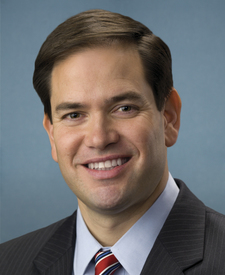

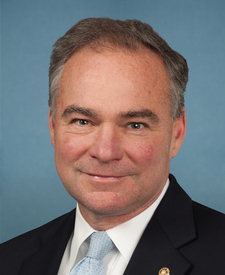
Legislative Progress
ReportedReported by Mr. Cardin, with an amendment
Mr. Rubio (for himself and Mr. Kaine) introduced the following …
Mr. Rubio (for himself, Mr. Kaine, and Mr. Cassidy) introduced …
Stakeholder Effects
cui bono?How this legislation distributes effects. Mention counts reflect frequency, not effect magnitude.
Government of Nicaragua, Instituto de Prevision Social Militar (IPSM) officials, Nicaragua (potential for sanctions relief)
Department of State, Department of State and USTR, U.S. Mission to the United Nations
Nicaraguan cattle industry, Nicaraguan coffee industry
Foreign investors in these Nicaraguan sectors, U.S. investors in Nicaragua
U.S. businesses with Nicaragua operations, U.S. persons subject to Nicaragua investment restrictions
Humanitarian organizations providing food/medicine, Nicaraguan human rights nonprofits
Nicaraguan opposition, Nicaraguan opposition in exile
Bill Structure & Actor Mappings
Who is "The Secretary" in each section?
- "the_commission"
- → The commission identified in the operative section
- "the_administrator"
- → The Administrator identified in the operative section
- "secretary_of_treasury"
- → Secretary of the Treasury
Key Definitions
Terms defined in this bill
internationally recognized human rights. The term United States person means— an individual who is a citizen or national of the United States or an alien lawfully admitted for permanent residence in the United States
the Dominican Republic-Central America-United States Free Trade Agreement— entered into on August 5, 2004, with the Governments of Costa Rica, the Dominican Republic, El Salvador, Guatemala, Honduras, and Nicaragua, and submitted to Congress on June 23, 2005
We use a combination of our own taxonomy and classification in addition to large language models to assess meaning and potential beneficiaries. High confidence means strong textual evidence. Always verify with the original bill text.
Learn more about our methodology