To create intergovernmental coordination between State, local, Tribal, and territorial jurisdictions, and the Federal Government to combat United States reliance on the People’s Republic of China and other covered countries for critical minerals and rare earth metals, and for other purposes.
Analysis under review: This bill has generated analysis that may be too generic or incomplete. Clause-level evidence remains available below.
Summary
What This Bill Does
This bill, To create intergovernmental coordination between State, local, Tribal, and territorial jurisdictions, and the Federal Government to combat United States reliance on the People’s Republic of China and other covered countries for critical minerals and rare earth metals, and for other purposes., changes federal law or congressional policy affecting federal agencies and legislative administrators. The main policy domain is Government Operations, Trade, Foreign Policy.
Who Benefits and How
federal agencies and legislative administrators may benefit from new authority, funding, eligibility, regulatory clarity, or reduced risk created by the bill.
Who Bears the Burden and How
federal implementing agencies may take on implementation duties, reporting obligations, compliance costs, or oversight responsibilities.
Key Provisions
- Section H28F3357274FF4B01BCAF0DC7A49A4ECF: 1. Short title This Act may be cited as the Intergovernmental Critical Minerals Task Force Act.
- Section H233A3E19CEE640FB8D264FAE024DE2F7: 2. Findings Congress finds that— current supply chains of critical minerals pose a great risk to the national security of the United States; critical minerals...
- Section H0B2ACB6E33724822BD4B6D80338249FE: 3. Intergovernmental critical minerals task force Section 5 of the National Materials and Minerals Policy, Research and Development Act of 1980 (30 U.S.C....
Evidence Chain:
This summary is generated from the full bill text using AI analysis. Expand "Detailed Analysis" below for identified beneficiaries/burden bearers with clause-level evidence links.
At a Glance
What This Bill Does
This bill, To create intergovernmental coordination between State, local, Tribal, and territorial jurisdictions, and the Federal Government to combat United States reliance on the People’s Republic of China and other covered countries for critical minerals and rare earth metals, and for other purposes., changes federal law or congressional policy affecting federal agencies and legislative administrators.
Key Policy Areas
Government Operations, Trade, Foreign Policy
Primary Purpose
This bill, To create intergovernmental coordination between State, local, Tribal, and territorial jurisdictions, and the Federal Government to combat United States reliance on the People’s Republic of China and other covered countries for critical minerals and rare earth metals, and for other purposes., changes federal law or congressional policy affecting federal agencies and legislative administrators.
Policy Domains
Whole bill
Identified Gains
- federal agencies and legislative administrators
Identified Costs
- federal implementing agencies
Sponsors



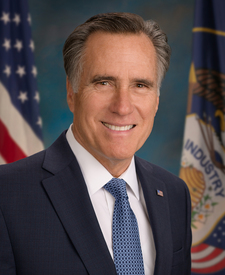
Legislative Progress
ReportedReported by Mr. Peters, with an amendment
Mr. Peters (for himself, Mr. Romney, and Mr. Lankford) introduced …
Mr. Peters (for himself, Mr. Romney, Mr. Lankford, and Ms. …
Stakeholder Effects
cui bono?How this legislation distributes effects. Mention counts reflect frequency, not effect magnitude.
Bureau of Land Management, Federal agencies (DOD, DOE, Interior, etc.), Federal agencies implementing critical mineral policy
Chinese critical minerals exporters, Chinese critical minerals producers, Domestic mining companies
Positive-direction: Domestic mining companies, Mining industry workers
Negative-direction: Chinese critical minerals exporters, Chinese critical minerals producers
Allied countries (Indo-Pacific, Quad, Abraham Accords), Countries designated as covered countries, Countries designated as covered countries (China, etc.)
Positive-direction: Allied countries (Indo-Pacific, Quad, Abraham Accords)
Negative-direction: Countries designated as covered countries, Countries designated as covered countries (China, etc.)
Critical mineral processing and recycling companies, Critical mineral processing and refining companies
Bill Structure & Actor Mappings
Who is "The Secretary" in each section?
- "secretary_of_commerce"
- → Secretary of Commerce
We use a combination of our own taxonomy and classification in addition to large language models to assess meaning and potential beneficiaries. High confidence means strong textual evidence. Always verify with the original bill text.
Learn more about our methodology