To require an interagency study to produce a security assessment process on adjacent space to high-security leased space to accommodate a Federal agency, and for other purposes.
Analysis under review: This bill has generated analysis that may be too generic or incomplete. Clause-level evidence remains available below.
Summary
What This Bill Does
This bill, To require an interagency study to produce a security assessment process on adjacent space to high-security leased space to accommodate a Federal agency, and for other purposes., changes federal law or congressional policy affecting federal agencies and legislative administrators. The main policy domain is Government Operations, Defense, Immigration.
Who Benefits and How
federal agencies and legislative administrators may benefit from new authority, funding, eligibility, regulatory clarity, or reduced risk created by the bill.
Who Bears the Burden and How
federal implementing agencies may take on implementation duties, reporting obligations, compliance costs, or oversight responsibilities.
Key Provisions
- Section idb5944747-9b02-4758-8eb1-aeecdd58bcbe: 1. Short title This Act may be cited as the Secure Adjacent Federal Property Act of 2023.
- Section id002f6d3e-ca85-452b-b164-dc3ea563cfd5: 2. Definitions In this Act: The term Administrator means the Administrator of General Services. The term beneficial owner, with respect to a covered entity,...
- Section idb73f29b5-ff6d-4ee2-98a7-7a9ce182dc6d: 3. Government-wide study The Administrator, in coordination with the Director of the Federal Protective Service, the Secretary of Homeland Security, the...
Evidence Chain:
This summary is generated from the full bill text using AI analysis. Expand "Detailed Analysis" below for identified beneficiaries/burden bearers.
At a Glance
What This Bill Does
This bill, To require an interagency study to produce a security assessment process on adjacent space to high-security leased space to accommodate a Federal agency, and for other purposes., changes federal law or congressional policy affecting federal agencies and legislative administrators.
Key Policy Areas
Government Operations, Defense, Immigration
Primary Purpose
This bill, To require an interagency study to produce a security assessment process on adjacent space to high-security leased space to accommodate a Federal agency, and for other purposes., changes federal law or congressional policy affecting federal agencies and legislative administrators.
Policy Domains
Whole bill
Identified Gains
Contextual inference, no direct clause citation- federal agencies and legislative administrators
Contextual inference, no direct clause citation
Identified Costs
Contextual inference, no direct clause citation- federal implementing agencies
Contextual inference, no direct clause citation
Sponsors
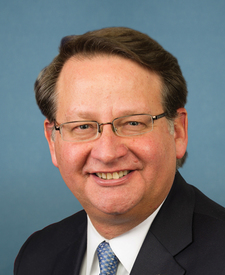
Gary C. Peters
D-MI | Primary Sponsor
Legislative Progress
ReportedReported by Mr. Peters, with an amendment
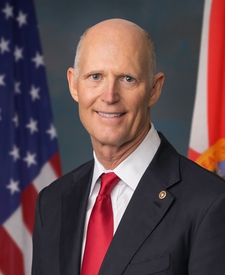
Mr. Peters (for himself and Mr. Scott of Florida) introduced …
Stakeholder Effects
cui bono?How this legislation distributes effects. Mention counts reflect frequency, not effect magnitude.
Department of Homeland Security, Federal Protective Service, Federal agencies in high-security spaces
Positive-direction: Federal agencies in high-security spaces, Federal agencies occupying high-security spaces, Federal employees in high-security buildings, Federal employees in high-security facilities
Negative-direction: Department of Homeland Security, Federal Protective Service, General Services Administration, Office of Management and Budget
Commercial real estate owners leasing space near federal facilities, Commercial real estate owners near federal facilities, Commercial real estate owners with complex ownership structures
Private equity and real estate investment trusts
Bill Structure & Actor Mappings
Who is "The Secretary" in each section?
- "the_administrator"
- → The Administrator identified in the operative section
- "secretary_of_defense"
- → Secretary of Defense
- "secretary_of_homeland_security"
- → Secretary of Homeland Security
Key Definitions
Terms defined in this bill
an individual who— is a citizen of the United States
We use a combination of our own taxonomy and classification in addition to large language models to assess meaning and potential beneficiaries. High confidence means strong textual evidence. Always verify with the original bill text.
Learn more about our methodology