College for All Act of 2025
Analysis under review: This bill has generated analysis that may be too generic or incomplete. Clause-level evidence remains available below.
Summary
What This Bill Does
The College for All Act of 2025 creates a federal-state partnership to eliminate tuition and fees at public colleges and universities for undergraduate students. Beginning in the 2026-2027 school year, the federal government would cover 80% of costs (phasing to 75% after five years) while states cover the remainder. The bill also nearly doubles maximum Pell Grants and significantly increases funding for historically Black colleges, tribal colleges, and other minority-serving institutions.
Who Benefits and How
Students and families benefit most directly: undergraduate students at public community colleges would pay zero tuition regardless of income, while students at four-year public institutions from families earning up to $150,000 (single) or $300,000 (married) would also have tuition eliminated. Students would be eligible regardless of immigration status. Maximum Pell Grants would increase to $17,236 for students at public institutions and $10,808 at other institutions, nearly doubling current levels.
HBCUs, Tribal Colleges, and minority-serving institutions receive substantial new funding: private nonprofit HBCUs and MSIs would receive grants to eliminate tuition for their students ($5,110 per 2-year student, $9,844 per 4-year student annually). Institutional support funding for these schools would double from $255 million to $510 million annually.
Tenure-track faculty benefit from requirements that institutions reduce reliance on adjunct professors and increase full-time, tenure-track positions.
Who Bears the Burden and How
Federal taxpayers bear the largest burden through substantial new appropriations across multiple programs, including the tuition elimination grants, increased Pell Grants, and institutional support funding.
State governments must maintain current higher education spending levels and contribute 20-25% of tuition elimination costs. States cannot reduce their existing financial support for higher education as a condition of receiving federal grants.
For-profit colleges are excluded from participating in the tuition elimination programs, potentially putting them at a competitive disadvantage compared to tuition-free public institutions.
Adjunct and contingent faculty may face reduced employment opportunities as institutions are required to shift toward tenure-track hiring.
Key Provisions
-
Tuition-free public college: Eliminates tuition and required fees at public community colleges for all students and at public 4-year institutions for working and middle-class families (income up to $150,000/$300,000), starting in 2026-2027.
-
Nearly doubled Pell Grants: Increases maximum Pell Grant from approximately $7,395 to $17,236 for students at public institutions and to $10,808 at other institutions, with annual inflation adjustments.
-
HBCU and MSI support: Provides grants to private nonprofit HBCUs and minority-serving institutions to cover student tuition, plus doubles baseline institutional funding from $255 million to $510 million annually.
-
Inclusive Student Success Grants: Authorizes $10 billion for evidence-based student support services including mentoring, advising, emergency aid, and child care, prioritizing underfunded institutions.
-
TRIO program expansion: More than triples TRIO program funding from $900 million to $3 billion to support first-generation and low-income college students.
-
Immigration-inclusive eligibility: Students are eligible for tuition benefits regardless of immigration status.
Evidence Chain:
This summary is generated from the full bill text using AI analysis. Expand "Detailed Analysis" below for identified beneficiaries/burden bearers.
At a Glance
What This Bill Does
Establishes a Federal-State partnership to eliminate tuition and required fees at public colleges and universities, increases Pell Grants, and provides additional support for HBCUs, Tribal Colleges, and minority-serving institutions.
Who Benefits
- Undergraduate students at public colleges and universities
- Students from working-class and middle-class families
- Students regardless of immigration status
Who Bears Costs
- Federal government (significant new appropriations)
- State governments (maintenance of effort and 20% cost share after phase-in)
- Proprietary (for-profit) colleges (excluded from program benefits)
Key Policy Areas
Higher Education, Education Finance, Student Aid, Federal Grants
Primary Purpose
Establishes a Federal-State partnership to eliminate tuition and required fees at public colleges and universities, increases Pell Grants, and provides additional support for HBCUs, Tribal Colleges, and minority-serving institutions.
Policy Domains
Legislative Strategy
"Establish federal-state cost-sharing to make public higher education tuition-free, expand Pell Grants to near-double current maximum, and increase support for under-resourced institutions serving historically underrepresented students."
Identified Gains
- Undergraduate students at public colleges and universities
- Students from working-class and middle-class families
- Students regardless of immigration status
- Historically Black Colleges and Universities (HBCUs)
- Tribal Colleges and Universities
- Hispanic-Serving Institutions and other MSIs
- Community colleges and their students
- First-generation college students
- Low-income students eligible for Pell Grants
- Tenure-track and tenured faculty (hiring requirement)
Identified Costs
- Federal government (significant new appropriations)
- State governments (maintenance of effort and 20% cost share after phase-in)
- Proprietary (for-profit) colleges (excluded from program benefits)
- Out-of-state students (may face higher relative costs)
- Adjunct and contingent faculty (institutions required to shift to tenure-track)
Sponsors

Legislative Progress
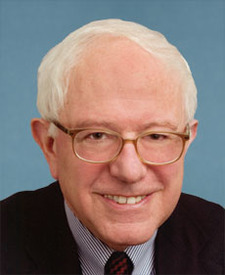
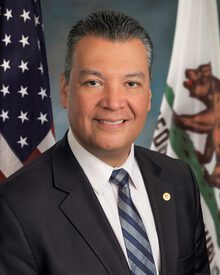
In CommitteeMr. Sanders (for himself, Mr. Blumenthal, Mr. Padilla, Mr. Murphy, …
Read twice and referred to the Committee on Finance.
Introduced in Senate
Stakeholder Effects
cui bono?How this legislation distributes effects. Mention counts reflect frequency, not effect magnitude.
Academic advisors, mental health counselors, and tutors, Adjunct and contingent faculty, Community college students
Positive-direction: Academic advisors, mental health counselors, and tutors, Community college students, DACA recipients and Dreamer students, Low-income college students receiving Pell Grants, Prison education programs, Public 4-year institutions enrolling territorial students, Public 4-year university students, Public community colleges and universities, Public higher education institutions seeking to improve student services, State higher education systems, State higher education systems and Tribal Colleges, States implementing evidence-based practices, States serving students with disparate outcomes, States with above-average tuition rates, States with high Pell Grant enrollment, Students at 4-year HBCUs and MSIs, Students at HBCUs and MSIs from working and middle-class families, Students from US territories, Students from US territories seeking mainland education, Students needing academic and mental health support, Students of color, low-income students, first-generation students, Students with disabilities, Tenure-track and tenured faculty, Tribal Colleges and Universities, Underfunded public institutions, Underfunded public institutions receiving below-average state appropriations, Undergraduate students at public community colleges and 4-year institutions, Undocumented students who would otherwise qualify for in-state tuition
Negative-direction: Adjunct and contingent faculty, For-profit colleges that converted to nonprofit status, Public higher education institutions
Private HBCUs and MSIs, Private HBCUs and minority-serving institutions
Private HBCUs and MSIs faces effects in multiple directions
State governments, State governments during economic downturns, State governments participating in the program
Positive-direction: State governments during economic downturns
Negative-direction: State governments, State governments participating in the program
Hispanic-Serving Institutions, Minority-serving institutions meeting definition criteria
Bill Structure & Actor Mappings
Who is "The Secretary" in each section?
- "the_secretary"
- → Secretary of Education
- "the_secretary"
- → Secretary of Education
- "the_secretary"
- → Secretary of Education
- "the_secretary"
- → Secretary of Education
- "the_secretary"
- → Secretary of Education
- "the_secretary"
- → Secretary of Education
- "the_secretary"
- → Secretary of Education
- "the_secretary"
- → Secretary of Education
- "the_secretary"
- → Secretary of Education
Key Definitions
Terms defined in this bill
Has the meaning given the term in section 481(a) of the Higher Education Act.
A public institution of higher education at which the highest or most frequently awarded degree is an associate degree, or a public postsecondary vocational institution.
An individual, regardless of age or immigration status, who has not obtained a baccalaureate degree and meets enrollment and residency requirements at a community college, 2-year Tribal College, or (for working/middle class students) a 4-year public institution.
State funds appropriated to support institutions of higher education and student financial aid, including lottery receipts, excluding federal sources and certain other funds.
A private nonprofit 2-year or 4-year institution that is a Part B institution, Hispanic-serving institution, Tribal College, or other minority-serving institution.
A public 2-year or 4-year institution of higher education that receives less than the national average of State appropriations per full-time equivalent student.
Dependent students with parental AGI up to $150,000 (single) or $300,000 (married); independent students with AGI up to $150,000 (single) or $300,000 (married).
We use a combination of our own taxonomy and classification in addition to large language models to assess meaning and potential beneficiaries. High confidence means strong textual evidence. Always verify with the original bill text.
Learn more about our methodology