Supreme Court Ethics, Recusal, and Transparency Act of 2025
Analysis under review: This bill has generated analysis that may be too generic or incomplete. Clause-level evidence remains available below.
Summary
What This Bill Does
The bill requires the Supreme Court to issue a binding code of conduct for justices within 180 days, requires the Judicial Conference to issue codes for lower court judges, and mandates public web access to all ethics rules, mandates that the Supreme Court issue a code of conduct for justices and the Judicial Conference issue codes for lower court judges, with public notice and comment requirements, and requires the Supreme Court to publish its code of conduct and all ethics rules on its website in searchable, downloadable format. It relies on compliance mandates, reporting requirements, and definition changes. The main policy areas are Judiciary, Finance, Science & Space, and Trade.
Who Benefits and How
Litigants in federal courts would be affected, Government watchdog organizations would be affected, and General public would be affected.
Who Bears the Burden and How
Supreme Court justices would take on compliance duties, Federal judges, magistrate judges, and bankruptcy judges would take on compliance duties, and Administrative Office of the United States Courts would take on compliance duties.
Key Provisions
- Requires the Supreme Court to issue a binding code of conduct for justices within 180 days, requires the Judicial Conference to issue codes for lower court judges, and mandates public web access to all ethics rules...
- Mandates that the Supreme Court issue a code of conduct for justices and the Judicial Conference issue codes for lower court judges, with public notice and comment requirements.
- Requires the Supreme Court to publish its code of conduct and all ethics rules on its website in searchable, downloadable format.
- Creates a formal ethics complaint system for Supreme Court justices, with complaints investigated by a 5-judge panel of circuit chief judges who can hold hearings, issue subpoenas, and publish findings.
- Requires the Counselor to the Chief Justice to establish rules governing acceptance and disclosure of gifts, income, and reimbursements by justices and law clerks, matching Congressional ethics standards.
Evidence Chain:
This summary is generated from the full bill text using AI analysis. Expand "Detailed Analysis" below for identified beneficiaries/burden bearers with clause-level evidence links.
At a Glance
What This Bill Does
The bill requires the Supreme Court to issue a binding code of conduct for justices within 180 days, requires the Judicial Conference to issue codes for lower court judges, and mandates public web access to all ethics rules, mandates that the Supreme Court issue a code of conduct for justices and the Judicial Conference issue codes for lower court judges, with public notice and comment requirements, and requires the Supreme Court to publish its code of conduct and all ethics rules on its website in searchable, downloadable format.
Key Policy Areas
Judiciary, Finance, Science & Space, Trade
Primary Purpose
The bill requires the Supreme Court to issue a binding code of conduct for justices within 180 days, requires the Judicial Conference to issue codes for lower court judges, and mandates public web access to all ethics rules, mandates that the Supreme Court issue a code of conduct for justices and the Judicial Conference issue codes for lower court judges, with public notice and comment requirements, and requires the Supreme Court to publish its code of conduct and all ethics rules on its website in searchable, downloadable format.
Policy Domains
Ethics and Conduct Framework
Identified Gains
- Litigants in federal courts
- Government watchdog organizations
- General public
- General public and journalists
- Litigants seeking judge disqualification
Identified Costs
- Supreme Court justices
- Federal judges, magistrate judges, and bankruptcy judges
- Administrative Office of the United States Courts
- Organizations filing amicus briefs
- Nonprofit advocacy organizations filing amicus briefs
Sponsors


Legislative Progress
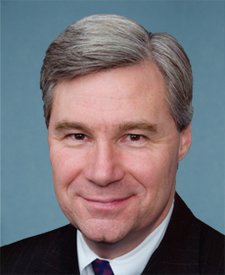
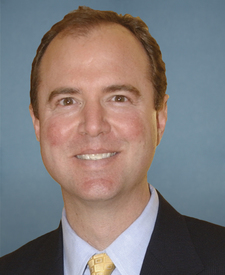
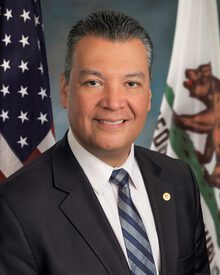
In CommitteeMr. Whitehouse (for himself, Mr. Blumenthal, Ms. Baldwin, Mr. Booker, …
Read twice and referred to the Committee on the Judiciary.
Introduced in Senate
Stakeholder Effects
cui bono?How this legislation distributes effects. Mention counts reflect frequency, not effect magnitude.
Administrative Office of the United States Courts, Chief judges of circuit courts, Federal Judicial Center
General public, General public and journalists, General public interested in judicial accountability
Law firms appearing before the Supreme Court, Litigants before the Supreme Court, Litigants in federal courts
Positive-direction: Litigants before the Supreme Court, Litigants in federal courts, Litigants seeking judge disqualification
Negative-direction: Law firms appearing before the Supreme Court
Advocacy organizations filing amicus briefs, Nonprofit advocacy organizations filing amicus briefs, Organizations filing amicus briefs
Political donors and gift-givers to judges, Wealthy individuals and organizations providing gifts to justices
Bill Structure & Actor Mappings
Who is "The Secretary" in each section?
- "the_counselor"
- → Counselor to the Chief Justice of the United States
- "the_chief_justice"
- → Chief Justice of the United States
- "the_supreme_court"
- → Supreme Court of the United States
- "the_judicial_conference"
- → Judicial Conference of the United States
- "reviewing_panel"
- → Panel of 3 judges selected at random (or remaining Supreme Court justices for SCOTUS cases)
- "judicial_investigation_panel"
- → Panel of 5 chief judges of circuit courts selected randomly
- "the_director"
- → Director of the Administrative Office of the United States Courts
- "the_fjc_director"
- → Director of the Federal Judicial Center
- "the_comptroller_general"
- → Comptroller General of the United States
Key Definitions
Terms defined in this bill
As defined in section 13101 of title 5 (the Ethics in Government Act definitions)
An organization related to the amicus filer whose donors must be disclosed
As defined in section 3 of the Lobbying Disclosure Act of 1995 (2 U.S.C. 1602)
We use a combination of our own taxonomy and classification in addition to large language models to assess meaning and potential beneficiaries. High confidence means strong textual evidence. Always verify with the original bill text.
Learn more about our methodology