S1748-119

Reported

Kids Online Safety Act

119th Congress Introduced May 14, 2025

Summary

What This Bill Does

The Kids Online Safety Act creates two linked federal regimes. Title I covers online platforms, online video games, messaging applications, and video-streaming services used or reasonably likely to be used by people under 17, while excluding specified telecommunications, email, conferencing, nonprofit, education, library, news, sports, business-software, VPN, and government services. Covered platforms must exercise reasonable care when a design feature foreseeably contributes to enumerated harms, including clinically diagnosable mental-health conditions related to compulsive use, severe harassment, sexual exploitation, substance sales, gambling, physical violence, and deceptive financial harm. The duty does not require blocking a minor's independent search or protected speech. Platforms that know a user is a minor must offer protective defaults, communication and data-visibility limits, time controls, recommendation-system opt-outs, geolocation safeguards, parental tools, purchase controls, and timely harm-reporting channels. They may not use interfaces to impair those controls or facilitate advertising for drugs, cannabis, tobacco, gambling, or alcohol to known minors. Before registration or purchase, platforms must disclose safety policies and controls; obtain or coordinate verifiable parental consent for known children under 13; explain recommendation systems; and label advertisements and paid endorsements. Large community-forum platforms with more than 10 million monthly U.S. users must publish annual, privacy-protected reports based on independent audits covering minor use, design features, data practices, reports of harm, and the effectiveness of safeguards across English and major non-English languages. Platforms may not conduct market or product research on known children and need verifiable parental consent to conduct it on other known minors. Commerce, the FCC, and the FTC must study device- or operating-system-level age verification, including privacy, accessibility, technical feasibility, and competition effects. FTC guidance must address risky design, parental-tool misuse, age inferences, audit practices, and the objective-circumstances knowledge standard, but the guidance is nonbinding and cannot itself support enforcement. The FTC enforces Title I under the FTC Act, while state attorneys general may enforce only the safeguard, disclosure, and transparency sections and may not use the duty of care as a basis for state-law liability. An 11-member, time-limited Kids Online Safety Council reports recommendations to Congress. Savings clauses preserve student privacy, COPPA, FTC rulemaking limits, and section 230; the title does not require new age-data collection or age verification; and qualifying provider-selected video services receive an alternative compliance path. Title II separately requires online platforms using opaque, user-specific ranking algorithms to disclose their operation, let every user switch to an input-transparent feed, and provide that choice without different prices or service, while protecting trade secrets and allowing user-directed blocking.

Who Benefits and How

Minor platform users benefit from safer design practices, protective defaults, controls over communication, visibility, time, recommendations, and geolocation, restricted harmful-product advertising, and faster responses to reports of imminent threats. Parents of minor users benefit from tools to inspect or control settings, limit purchases and time, receive child-specific notices, and participate in audit and policy recommendations without being entitled to the contents of a minor's communications. All online-platform users benefit under Title II from notice when an opaque algorithm uses user-specific data and from a no-surcharge option to switch to a ranking system driven only by information they deliberately provide. Independent audit firms, online-safety researchers, youth experts, and protective-technology providers gain demand for audits, consultation, standards, and tools, while regulators and Congress receive comparable public evidence about platform risks and safeguards.

Who Bears the Burden and How

Covered platform operators must redesign defaults and interfaces, supply minor and parental controls, process harm reports within statutory deadlines, restrict specified advertising and research, deliver multilingual notices, and document when objective circumstances imply that a user is a minor. Large social-media and virtual-community operators must fund annual independent audits, disclose relevant systems and records to auditors, publish detailed de-identified reports, and evaluate safeguards across several languages without exposing security vulnerabilities. Online video game, messaging, streaming, recommendation-system, digital-advertising, and market-research businesses face product, consent, disclosure, and data-use restrictions, although the bill provides sector exclusions and alternative compliance rules. The FTC, Commerce Department, FCC, state attorneys general, Congress, and the new Council assume guidance, study, enforcement, coordination, appointment, and reporting work. Platforms that violate the Act face FTC Act penalties and specified state civil remedies.

Key Provisions

  • Requires reasonable care in platform design when enumerated harms to minors are reasonably foreseeable and design features contribute to them.
  • Establishes protective defaults, recommendation and time controls, parental tools, purchase limits, geolocation safeguards, and deadlines for responding to harm reports.
  • Prohibits specified harmful-product advertising to known minors and market research on children, while conditioning research on other minors on parental consent.
  • Requires prominent safety, recommendation-system, advertising, and endorsement disclosures before or during a known minor's use.
  • Requires large community platforms to publish annual independent-audit reports on minor use, data practices, design risks, reports, and safeguard effectiveness.
  • Directs a federal age-verification study and nonbinding FTC guidance without requiring platforms to collect new age data, age gate users, or verify age.
  • Establishes FTC enforcement, limited state-attorney-general authority, and a temporary Kids Online Safety Council reporting to Congress.
  • Requires opaque-algorithm notices and a free, easily selected input-transparent feed for all online-platform users.

Evidence Chain:

This summary is generated from the full bill text using AI analysis. Expand "Detailed Analysis" below for identified beneficiaries/burden bearers with clause-level evidence links.

At a Glance

What This Bill Does

Reduce foreseeable online harms to minors by imposing platform design duties, minor and parental safeguards, audit and disclosure requirements, and user control over opaque algorithms.

Key Policy Areas

Technology, Consumer Protection, Privacy, Public Health, Trade

Primary Purpose

Reduce foreseeable online harms to minors by imposing platform design duties, minor and parental safeguards, audit and disclosure requirements, and user control over opaque algorithms.

Policy Domains

Technology Consumer Protection Privacy Public Health Trade

Kids Online Safety Act

Identified Gains
  • Minor covered-platform users
  • Parents of minor platform users
  • Users of opaque algorithmic feeds
  • Independent platform audit firms
  • Youth online-safety researchers
  • State residents protected by platform safeguards
Model: codex-gpt-5 | Version: bill_summary_v2 | Source: is
Minor covered-platform users: , , , , , , , , , , , ,
Parents of minor platform users: , , , , , , , , , , , ,
Youth online-safety researchers: , , , , , , , , , , , ,
Independent platform audit firms: , , , , , , , , , , , ,
Users of opaque algorithmic feeds: , , , , , , , , , , , ,
State residents protected by platform safeguards: , , , , , , , , , , , ,
Identified Costs
  • Covered online-platform operators
  • Large social-media platform operators
  • Online video game publishers
  • Digital advertising businesses
  • Federal Trade Commission staff
  • State consumer-protection offices
Model: codex-gpt-5 | Version: bill_summary_v2 | Source: is
Online video game publishers: , , , , , , , , , , , ,
Digital advertising businesses: , , , , , , , , , , , ,
Federal Trade Commission staff: , , , , , , , , , , , ,
Covered online-platform operators: , , , , , , , , , , , ,
State consumer-protection offices: , , , , , , , , , , , ,
Large social-media platform operators: , , , , , , , , , , , ,

Legislative Progress

Reported
Introduced Committee Passed
Aug 5, 2026

Committee on Commerce, Science, and Transportation. Ordered to be reported …

May 14, 2025

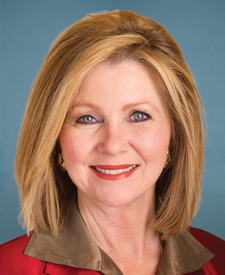
Mrs. Blackburn (for herself, Mr. Blumenthal, Mr. Thune, and Mr. …

May 14, 2025

Read twice and referred to the Committee on Commerce, Science, …

May 14, 2025

Introduced in Senate

Stakeholder Effects

cui bono?

How this legislation distributes effects. Mention counts reflect frequency, not effect magnitude.

General Public
21 mentions across 13 clauses
+19 positive ?2 uncertain

Children protected by existing privacy law, Children subject to platform market research, Minor covered-platform users

Technology
18 mentions across 13 clauses
+6 positive -11 negative ?1 uncertain

Age-restriction algorithm providers, Age-verification technology vendors, Covered platform compliance teams

Covered platform operators faces effects in multiple directions

Positive-direction: Age-restriction algorithm providers, Covered platform compliance teams, Platform parental-control vendors, Platforms facing duty-of-care state claims, Trade-secret owners supplying ranking technology

Negative-direction: Age-verification technology vendors, Covered platform council representatives, Covered platform operators facing enforcement, Covered platform research teams, Large community-platform operators, Online-platform operators using opaque algorithms, Online-platform operators using ranked feeds

Government
10 mentions across 6 clauses
-10 negative

Congressional oversight committees, Department of Commerce study staff, Federal Communications Commission study staff

Custom Computer Programming Services
3 mentions across 3 clauses
+1 positive -2 negative

Algorithmic ranking-system developers, User-interface testing teams

Positive-direction: User-interface testing teams

Negative-direction: Algorithmic ranking-system developers

Education
3 mentions across 3 clauses
+2 positive -1 negative

Educational institutions applying student privacy law, Educational institutions using online platforms, Excluded educational institutions

Positive-direction: Educational institutions applying student privacy law, Excluded educational institutions

Negative-direction: Educational institutions using online platforms

Research & Science
3 mentions across 3 clauses
+1 positive -1 negative ?1 uncertain

Youth market-research vendors, Youth online-safety researchers

Positive-direction: Youth online-safety researchers

Negative-direction: Youth market-research vendors

Information Security
2 mentions across 2 clauses
+2 positive

Platform safety engineering vendors, Platform security investigation teams

Digital Advertising
2 mentions across 2 clauses
-2 negative

Digital advertisers serving regulated products, Digital advertising businesses

13/17
sections analyzed
Full impact breakdown

Bill Structure & Actor Mappings

Who is "The Secretary" in each section?

Domains
Technology Consumer Protection Privacy Public Health Trade
Actor Mappings
"child"
→ Individual under 13 years of age
"minor"
→ Individual under 17 years of age
"parent"
→ Parent or legal guardian of a minor
"the_council"
→ Kids Online Safety Council
"state_enforcer"
→ State attorney general
"study_agencies"
→ Department of Commerce, Federal Communications Commission, and Federal Trade Commission
"the_commission"
→ Federal Trade Commission
"opaque_platform"
→ Online-platform operator using user-specific data in an opaque ranking algorithm
"covered_platform"
→ Online service used or reasonably likely to be used by a person under 17

Key Definitions

Terms defined in this bill

6 terms
"minor" §minor

An individual under 17 years of age; a child is an individual under 13.

"know or knows" §knowledge

Actual knowledge or knowledge fairly implied by objective circumstances, evaluated using competent and reliable evidence and the totality of circumstances.

"design feature" §design_feature

A platform feature that encourages or increases a minor's frequency, time, or activity, including scrolling, autoplay, rewards, alerts, badges, personalization, purchases, or appearance filters.

"covered platform" §covered_platform

An internet-connected online platform, online video game, messaging application, or video-streaming service used or reasonably likely to be used by a minor, subject to enumerated exclusions.

"opaque algorithm" §opaque_algorithm

A ranking system using user-specific data not expressly provided for ranking, excluding age-only systems used solely to restrict age-inappropriate content.

"input-transparent algorithm" §input_transparent_algorithm

A ranking system that avoids user-specific data except information the user expressly supplies for ranking, with statutory limits on device history and inferred data.

We use a combination of our own taxonomy and classification in addition to large language models to assess meaning and potential beneficiaries. High confidence means strong textual evidence. Always verify with the original bill text.

Learn more about our methodology