To provide for advocation of support for nuclear energy, and establish a nuclear energy assistance trust fund, at the World Bank, the European Bank for Reconstruction and Development, and other international financial institutions, as appropriate, and for other purposes.
Analysis under review: This bill has generated analysis that may be too generic or incomplete. Clause-level evidence remains available below.
Summary
This bill directs the U.S. Treasury Secretary to advocate at the World Bank and European Bank for Reconstruction and Development for removing prohibitions on financing nuclear energy projects, but only for technologies that meet American or allied quality standards. It establishes Nuclear Energy Assistance Trust Funds at these banks to provide financial and technical assistance for nuclear energy adoption in developing countries, with competitive financing terms to counter non-market credit from countries like Russia and China. The bill responds to findings that Russia and China dominate global nuclear reactor exports, with Rosatom operating in 29 countries, and that nuclear energy is critical for meeting climate goals. All provisions sunset after 10 years.
Evidence Chain:
This summary is generated from the full bill text using AI analysis. Expand "Detailed Analysis" below for identified beneficiaries/burden bearers.
At a Glance
What This Bill Does
Direct the U.S. to advocate for nuclear energy financing at multilateral development banks (World Bank, EBRD), establish Nuclear Energy Assistance Trust Funds at those institutions, and counter Russian and Chinese dominance in global nuclear exports.
Who Benefits
- U.S. nuclear energy companies
- Allied nuclear technology providers
- Developing countries seeking clean energy
Who Bears Costs
- Russian nuclear exporter Rosatom
- Chinese nuclear exporters
- Countries reliant on Russian nuclear technology
Key Policy Areas
{'domain': 'Nuclear Energy', 'evidence': 'Entire bill promotes nuclear energy financing through international institutions'}, {'domain': 'Foreign Policy', 'evidence': 'Counters Russian/Chinese nuclear export influence in developing nations'}, {'domain': 'International Finance', 'evidence': 'Creates trust funds at World Bank and EBRD'}
Primary Purpose
Direct the U.S. to advocate for nuclear energy financing at multilateral development banks (World Bank, EBRD), establish Nuclear Energy Assistance Trust Funds at those institutions, and counter Russian and Chinese dominance in global nuclear exports.
Policy Domains
Legislative Strategy
"Counter Russian and Chinese nuclear influence by leveraging U.S. position in multilateral development banks to finance Western nuclear technology exports"
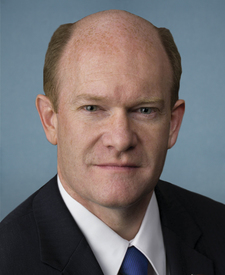
Sponsors

Legislative Progress
IntroducedMr. McCormick (for himself and Mr. Coons) introduced the following …
Stakeholder Effects
cui bono?How this legislation distributes effects. Mention counts reflect frequency, not effect magnitude.
Non-OECD Arrangement exporters (Russia, China), Nuclear energy industry, Russian and Chinese nuclear exporters
Positive-direction: Nuclear energy industry, U.S. and allied nuclear technology companies, U.S. nuclear energy industry, U.S. nuclear technology exporters
Negative-direction: Non-OECD Arrangement exporters (Russia, China), Russian and Chinese nuclear exporters, Russian nuclear exporter Rosatom
Developing countries adopting nuclear energy, Developing countries seeking nuclear energy
International financial institutions, World Bank and EBRD
National Advisory Council on International Monetary and Financial Policies
Bill Structure & Actor Mappings
Who is "The Secretary" in each section?
- "the_secretary"
- → Secretary of the Treasury
- "the_secretary"
- → Secretary of the Treasury
Key Definitions
Terms defined in this bill
Institution specified in section 1701(c)(2) of the International Financial Institutions Act
We use a combination of our own taxonomy and classification in addition to large language models to assess meaning and potential beneficiaries. High confidence means strong textual evidence. Always verify with the original bill text.
Learn more about our methodology