Equitable Access to School Facilities Act
Summary
What This Bill Does
The bill creates state policies for charter school facilities quality, affordability, and access to public buildings, plus technical assistance for charter school growth, provides modification of charter school funding allocation caps and minimums under ESEA Title IV-C, and creates new $100M/year competitive grant program for state charter school facilities aid, with priority for states with equitable facilities policies and charter school access to surplus public property. It relies on grants, appropriations, definition changes, and reporting requirements. The main policy areas are Education, Finance, and Housing.
Who Benefits and How
State entities administering charter school programs could gain revenue opportunities, Charter school operators seeking facilities could see lower costs, and Planned and operating charter schools could see lower costs.
Who Bears the Burden and How
Eligible entities receiving credit enhancement grants would take on compliance duties, Charter school authorizers would take on compliance duties, and Traditional public schools could lose revenue opportunities.
Key Provisions
- Creates state policies for charter school facilities quality, affordability, and access to public buildings, plus technical assistance for charter school growth.
- Provides modification of charter school funding allocation caps and minimums under ESEA Title IV-C.
- Creates new $100M/year competitive grant program for state charter school facilities aid, with priority for states with equitable facilities policies and charter school access to surplus public property.
- Requires annual reporting requirement for credit enhancement grant recipients, with 10-year reporting period and exclusion of new facilities aid subsection.
- Creates expansion of charter school grants to cover facility assistance, revolving loan fund establishment (up to 10% of funds), and building code compliance support.
Evidence Chain:
This summary is generated from the full bill text using AI analysis. Expand "Detailed Analysis" below for identified beneficiaries/burden bearers with clause-level evidence links.
At a Glance
What This Bill Does
The bill creates state policies for charter school facilities quality, affordability, and access to public buildings, plus technical assistance for charter school growth, provides modification of charter school funding allocation caps and minimums under ESEA Title IV-C, and creates new $100M/year competitive grant program for state charter school facilities aid, with priority for states with equitable facilities policies and charter school access to surplus public property.
Key Policy Areas
Education, Finance, Housing
Primary Purpose
The bill creates state policies for charter school facilities quality, affordability, and access to public buildings, plus technical assistance for charter school growth, provides modification of charter school funding allocation caps and minimums under ESEA Title IV-C, and creates new $100M/year competitive grant program for state charter school facilities aid, with priority for states with equitable facilities policies and charter school access to surplus public property.
Policy Domains
Whole bill
Identified Gains
- State entities administering charter school programs
- Charter school operators seeking facilities
- Planned and operating charter schools
- Charter school facilities programs
- Charter school operators
Identified Costs
- Eligible entities receiving credit enhancement grants
- Charter school authorizers
- Traditional public schools
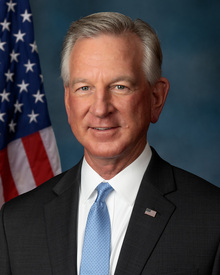
Sponsors



Legislative Progress
In CommitteeMr. Cassidy (for himself and Mr. Bennet) introduced the following …
Read twice and referred to the Committee on Health, Education, …
Introduced in Senate
Stakeholder Effects
cui bono?How this legislation distributes effects. Mention counts reflect frequency, not effect magnitude.
Charter school authorizers, Charter school facilities programs, Charter school operators
Positive-direction: Charter school facilities programs, Charter school operators, Charter school operators seeking facilities, Charter school students in low-income and rural communities, Charter schools, Planned and operating charter schools, Rural charter school students and students with disabilities
Negative-direction: Charter school authorizers, Eligible entities receiving credit enhancement grants, Traditional public schools
Department of Education, State education agencies, State entities administering charter grants
Bill Structure & Actor Mappings
Who is "The Secretary" in each section?
We use a combination of our own taxonomy and classification in addition to large language models to assess meaning and potential beneficiaries. High confidence means strong textual evidence. Always verify with the original bill text.
Learn more about our methodology