To allow Americans to earn paid sick time so that they can address their own health needs and the health needs of their families.
Analysis under review: This bill has generated analysis that may be too generic or incomplete. Clause-level evidence remains available below.
Summary
What This Bill Does
The Healthy Families Act creates a federal mandate requiring employers to provide paid sick time to their employees. Workers would earn at least 1 hour of paid sick leave for every 30 hours worked, up to 56 hours per year. The leave can be used for the employee's own illness, to care for a sick family member, or to address domestic violence situations.
Who Benefits and How
Employees across most industries benefit by gaining a guaranteed right to paid sick time, allowing them to take time off for illness without losing wages. Workers in low-wage sectors like retail, food service, and hospitality who often lack paid leave see the greatest gains. Domestic violence survivors gain protected time to seek medical care, legal assistance, or counseling.
Who Bears the Burden and How
Employers face new compliance obligations including tracking sick time accrual, maintaining records, and posting required notices. Smaller employers (under 15 employees) may provide unpaid rather than paid sick time but still must comply with administrative requirements. Businesses that do not currently offer paid sick leave face increased labor costs.
Key Provisions
- Employees earn 1 hour of paid sick time for every 30 hours worked, up to 56 hours annually
- Sick time can be used for personal illness, caring for family members, or domestic violence-related needs
- Employers are prohibited from retaliating against employees who use sick time
- The Secretary of Labor has enforcement authority with investigative powers similar to the Fair Labor Standards Act
Evidence Chain:
This summary is generated from the full bill text using AI analysis. Expand "Detailed Analysis" below for identified beneficiaries/burden bearers.
At a Glance
What This Bill Does
Establishes a federal requirement for employers to provide paid sick time to employees, allowing workers to earn at least 1 hour of paid sick time for every 30 hours worked
Key Policy Areas
Labor, Employment, Public Health, Family Policy
Primary Purpose
Establishes a federal requirement for employers to provide paid sick time to employees, allowing workers to earn at least 1 hour of paid sick time for every 30 hours worked
Policy Domains
Healthy Families Act
Identified Gains
Contextual inference, no direct clause citation- Workers without existing paid sick leave
- Low-wage employees
- Part-time workers
- Domestic violence survivors
- Working parents
Contextual inference, no direct clause citation
Identified Costs
Contextual inference, no direct clause citation- Employers without existing paid leave policies
- Small businesses
- Retail and hospitality industry employers
- Food service industry employers
Contextual inference, no direct clause citation
Sponsors
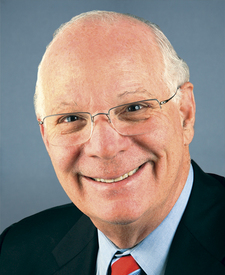
Legislative Progress
ReportedReported by Mr. Sanders, without amendment
Mr. Sanders (for himself, Mr. Schumer, Mrs. Murray, Mrs. Gillibrand, …
Stakeholder Effects
cui bono?How this legislation distributes effects. Mention counts reflect frequency, not effect magnitude.
Domestic violence survivors, Employees in industries without paid sick leave, Employees seeking to exercise sick leave rights
Employers considering enhanced leave policies, Employers subject to the Act, Employers with 15 or more employees
Positive-direction: Employers considering enhanced leave policies
Negative-direction: Employers subject to the Act, Employers with 15 or more employees
Bureau of Labor Statistics, Department of Labor, Government Accountability Office
Retail industry employers, Retail industry workers
Positive-direction: Retail industry workers
Negative-direction: Retail industry employers
Food service and hospitality workers, Restaurant and hospitality employers
Positive-direction: Food service and hospitality workers
Negative-direction: Restaurant and hospitality employers
States with more generous sick leave laws
HR departments and compliance officers
Bill Structure & Actor Mappings
Who is "The Secretary" in each section?
- "the_director"
- → Director of the Office of Personnel Management
- "the_secretary"
- → Secretary of Labor
- "the_commissioner"
- → Commissioner of Labor Statistics
- "the_comptroller_general"
- → Comptroller General of the United States
Key Definitions
Terms defined in this bill
Includes employees under FLSA, Government Accountability Office employees, railroad workers, State employees, covered employees under Congressional Accountability Act, and Executive Branch employees
A biological, foster, or adopted child, a stepchild, a child of a domestic partner, a legal ward, or a child of a person standing in loco parentis
Engaged in commerce with 15 or more employees, or smaller employers with fewer than 15 employees (who may provide unpaid rather than paid sick time)
Another individual with whom the individual is in a committed relationship, including same-sex relationships granted legal recognition
Has the meaning given in section 40002(a) of the Violence Against Women Act of 1994, including dating violence
We use a combination of our own taxonomy and classification in addition to large language models to assess meaning and potential beneficiaries. High confidence means strong textual evidence. Always verify with the original bill text.
Learn more about our methodology