S162-119

Passed Senate

Recruiting Families Using Data Act of 2025

119th Congress Introduced Jan 21, 2025

Summary

What This Bill Does

The Recruiting Families Using Data Act of 2025 changes the child welfare state plan requirements in Title IV-B of the Social Security Act. It requires each state plan to include a family partnership plan for identifying, recruiting, screening, licensing, supporting, and retaining foster and adoptive families. The plan must be developed with birth families, kinship families, foster families, adoptive families, community-based service providers, technical assistance providers, and youth with lived foster care and adoption experience. States must explain how they will contact relatives and other people connected to a child, create child-specific recruitment plans, engage children and youth in recruitment, use data to reduce unnecessary congregate care, improve permanency and placement stability, increase kinship placements, recruit families for teens and sibling groups, and support foster family advisory boards. States must also collect and update annual information on actual foster family capacity, congregate care use, unused licensed homes, feedback from foster and adoptive parents and youth, and barriers to recruiting families who reflect the racial and ethnic background of children in foster care. The bill also expands the annual federal child welfare outcomes report to Congress, starting with fiscal year 2028, to include state-by-state foster and adoptive family data and summaries of reported recruitment, licensing, retention, disruption, and racial-equity barriers.

Who Benefits and How

Children in foster care benefit because states must plan around actual family-placement needs instead of only broad recruitment activity. The bill pushes states to identify relatives, make child-specific recruitment plans for children who need foster or adoptive families, reduce unnecessary congregate care, improve permanency, and increase placement stability. Kinship caregivers, foster parents, adoptive parents, teens in foster care, sibling groups, and children whose race or ethnicity is not well matched by the available family pool benefit from more explicit state planning, advisory boards, data collection, and federal reporting about barriers. Congress and federal child welfare oversight officials benefit from recurring state-by-state data on family capacity and congregate care use.

Who Bears the Burden and How

State child welfare agencies administering Title IV-B plans bear the main compliance burden. They must consult with affected families and youth, write and implement the family partnership plan, collect annual data on licensed families and congregate care placements, summarize feedback from parents and youth, analyze racial and ethnic recruitment barriers, and update the plan each year. The Secretary of Health and Human Services and the HHS child welfare reporting function also bear administrative burdens because HHS must determine when state legislation is needed, may require additional plan information, and must include the new data and barrier summaries in annual reports to Congress. Congregate care facilities could see fewer placements if states use the required data and recruitment planning to reduce unnecessary congregate care.

Key Provisions

  • Requires state Title IV-B child welfare plans to include a family partnership plan for identifying, recruiting, screening, licensing, supporting, and retaining foster and adoptive families.
  • Requires the plan to be developed with birth families, kinship families, foster families, adoptive families, community-based providers, technical assistance providers, and youth with lived foster care and adoption experience.
  • Requires states to describe how they will identify relatives, create child-specific recruitment plans, engage children and youth, use data to reduce unnecessary congregate care and improve permanency, increase kinship placements, and support foster family advisory boards.
  • Requires annual state collection and updates on actual foster family capacity, licensed homes that are unused or underused, congregate care placements, parent and youth feedback, and barriers to recruiting families whose racial and ethnic background reflects children in foster care.
  • Expands the HHS annual child welfare outcomes report to Congress for fiscal year 2028 and later years to include state-by-state foster and adoptive family data and summaries of barriers reported by states.

Evidence Chain:

This summary is generated from the full bill text using AI analysis. Expand "Detailed Analysis" below for identified beneficiaries/burden bearers with clause-level evidence links.

At a Glance

What This Bill Does

The bill amends federal child welfare law to require state Title IV-B plans and HHS annual reports to use data on foster family capacity, congregate care use, recruitment barriers, and feedback from foster and adoptive families to improve recruitment and retention of family placements for children in foster care.

Key Policy Areas

Child Welfare, Social Services, Government Operations

Primary Purpose

The bill amends federal child welfare law to require state Title IV-B plans and HHS annual reports to use data on foster family capacity, congregate care use, recruitment barriers, and feedback from foster and adoptive families to improve recruitment and retention of family placements for children in foster care.

Policy Domains

Child Welfare Social Services Government Operations

HHS annual child welfare outcomes reporting to Congress

Identified Gains
  • Congressional child welfare oversight
  • Children in foster care needing family placements
  • Foster parents
  • Adoptive parents
Model: codex-gpt-5 | Version: bill_summary_v2 | Source: es
Foster parents:
Adoptive parents:
Congressional child welfare oversight:
Children in foster care needing family placements:
Identified Costs
  • Department of Health and Human Services child welfare reporting staff
  • State child welfare agencies reporting family-capacity data
Model: codex-gpt-5 | Version: bill_summary_v2 | Source: es
State child welfare agencies reporting family-capacity data:
Department of Health and Human Services child welfare reporting staff:

State Title IV-B family partnership plan requirements

Identified Gains
  • Children in foster care needing family placements
  • Kinship caregivers
  • Foster parents
  • Adoptive parents
  • Teens in foster care
  • Sibling groups in foster care
Model: codex-gpt-5 | Version: bill_summary_v2 | Source: es
Foster parents:
Adoptive parents:
Kinship caregivers:
Teens in foster care:
Sibling groups in foster care:
Children in foster care needing family placements:
Identified Costs
  • State child welfare agencies administering Title IV-B plans
  • Secretary of Health and Human Services
  • Congregate care facilities for foster youth
Model: codex-gpt-5 | Version: bill_summary_v2 | Source: es
Secretary of Health and Human Services:
Congregate care facilities for foster youth:
State child welfare agencies administering Title IV-B plans:

Legislative Progress

Passed Senate
Introduced Committee Passed
Jun 15, 2026

Held at the desk.

Jun 15, 2026

Received in the House.

Jun 12, 2026

Message on Senate action sent to the House.

Jun 11, 2026

Passed Senate with an amendment by Unanimous Consent. (text: CR …

Jun 11, 2026

Passed/agreed to in Senate: Passed Senate with an amendment by …

Jun 11, 2026

Measure laid before Senate by unanimous consent. (consideration: CR S2770-2771)

Jun 11, 2026

Senate Committee on Finance discharged by Unanimous Consent.

Jan 21, 2025

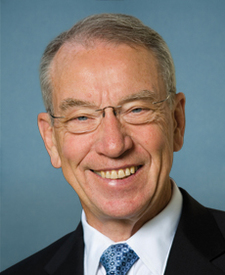
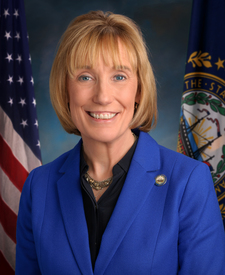
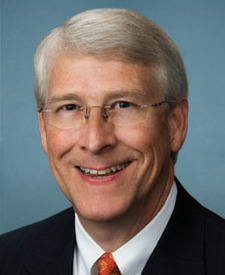
Mr. Grassley (for himself, Ms. Hassan, and Mr. Wicker) introduced …

Jan 21, 2025

Read twice and referred to the Committee on Finance.

Jan 21, 2025

Introduced in Senate

Stakeholder Effects

cui bono?

How this legislation distributes effects. Mention counts reflect frequency, not effect magnitude.

Child Welfare Services
14 mentions across 4 clauses
+14 positive

Adoptive parents from foster care, Children in foster care needing family placements, Foster parents

Child Welfare Administration
4 mentions across 4 clauses
-4 negative

State child welfare agencies administering Title IV-B plans, State child welfare agencies reporting family-capacity data

Health And Human Services Administration
4 mentions across 4 clauses
-4 negative

Department of Health and Human Services child welfare reporting staff, Secretary of Health and Human Services

Social Services
2 mentions across 2 clauses
-2 negative

Congregate care facilities for foster youth

Legislative Oversight
2 mentions across 2 clauses
+2 positive

Congressional child welfare oversight

2/3
sections analyzed
Full impact breakdown

Bill Structure & Actor Mappings

Who is "The Secretary" in each section?

Domains
Child Welfare Social Services
Actor Mappings
"state"
→ State child welfare agency administering a Title IV-B plan
"youth"
→ Youth with lived experience with foster care and adoption
"families"
→ Birth, kinship, foster, and adoptive families
"secretary"
→ Secretary of Health and Human Services
Domains
Child Welfare Government Operations
Actor Mappings
"hhs"
→ Department of Health and Human Services
"states"
→ State child welfare agencies reporting family-capacity and barrier data
"congress"
→ Congress receiving annual child welfare outcomes reports

Key Definitions

Terms defined in this bill

2 terms
"actual foster family capacity and congregate care utilization" §actual_foster_family_capacity

Annual state data on licensed foster and prospective adoptive families, unused or underused licensed homes, reasons for underuse, and the demographics and characteristics of children placed in in-state and out-of-state congregate care.

"family partnership plan" §id3D32356528594C93BDF20B9344AEE6A1

A required state child welfare plan component covering how the state will identify, recruit, screen, license, support, and retain foster and adoptive families using consultation, child-specific recruitment, family-capacity data, congregate care data, parent and youth feedback, and analysis of racial and ethnic recruitment barriers.

We use a combination of our own taxonomy and classification in addition to large language models to assess meaning and potential beneficiaries. High confidence means strong textual evidence. Always verify with the original bill text.

Learn more about our methodology