To amend the Internal Revenue Code of 1986 to modify certain provisions relating to the taxation of international entities.
Analysis under review: This bill has generated analysis that may be too generic or incomplete. Clause-level evidence remains available below.
Summary
What This Bill Does
The bill exempts makes permanent the look-thru rule that allows dividends, interest, rents, and royalties received from a related controlled foreign corporation to be excluded from foreign personal holding company income, which, expands increases deductions for foreign-derived intangible income (FDII) to 37.5% and global intangible low-taxed income (GILTI) to 50%, reducing the effective tax rate on these income categories for domestic, and exempts modifies the base erosion and anti-abuse tax (BEAT) to exclude payments already subject to foreign income tax of at least 18.9%, and clarifies that payments already subject to U.S. income tax are not base. It relies on exemptions, definition changes, tax deductions, and tax credits. The main policy areas are Taxation, Finance, and Technology.
Who Benefits and How
U.S. multinationals with CFCs engaged in sales to related parties could see lower costs, U.S. multinational corporations with controlled foreign corporations could see lower costs, and U.S. corporations with GILTI inclusions paying foreign taxes could see lower costs.
Who Bears the Burden and How
U.S. Treasury could lose revenue opportunities, U.S. persons with more than 50% ownership in foreign corporations would take on compliance duties, and U.S. shareholders of foreign-controlled foreign corporations would take on compliance duties.
Key Provisions
- Exempts makes permanent the look-thru rule that allows dividends, interest, rents, and royalties received from a related controlled foreign corporation to be excluded from foreign personal holding company income, which...
- Expands increases deductions for foreign-derived intangible income (FDII) to 37.5% and global intangible low-taxed income (GILTI) to 50%, reducing the effective tax rate on these income categories for domestic...
- Exempts modifies the base erosion and anti-abuse tax (BEAT) to exclude payments already subject to foreign income tax of at least 18.9%, and clarifies that payments already subject to U.S. income tax are not base...
- Creates simplifies foreign tax credit limitation baskets by eliminating passive category income and foreign branch income as separate categories, and provides special allocation rules for GILTI-related deductions.
- Defines restores the limitation on downward attribution that prevents U.S. persons from being treated as owning stock owned by non-U.S. persons, and creates new category of foreign controlled United States shareholders.
Evidence Chain:
This summary is generated from the full bill text using AI analysis. Expand "Detailed Analysis" below for identified beneficiaries/burden bearers with clause-level evidence links.
At a Glance
What This Bill Does
The bill exempts makes permanent the look-thru rule that allows dividends, interest, rents, and royalties received from a related controlled foreign corporation to be excluded from foreign personal holding company income, which, expands increases deductions for foreign-derived intangible income (FDII) to 37.5% and global intangible low-taxed income (GILTI) to 50%, reducing the effective tax rate on these income categories for domestic, and exempts modifies the base erosion and anti-abuse tax (BEAT) to exclude payments already subject to foreign income tax of at least 18.9%, and clarifies that payments already subject to U.S. income tax are not base.
Key Policy Areas
Taxation, Finance, Technology
Primary Purpose
The bill exempts makes permanent the look-thru rule that allows dividends, interest, rents, and royalties received from a related controlled foreign corporation to be excluded from foreign personal holding company income, which, expands increases deductions for foreign-derived intangible income (FDII) to 37.5% and global intangible low-taxed income (GILTI) to 50%, reducing the effective tax rate on these income categories for domestic, and exempts modifies the base erosion and anti-abuse tax (BEAT) to exclude payments already subject to foreign income tax of at least 18.9%, and clarifies that payments already subject to U.S. income tax are not base.
Policy Domains
International Tax Modifications
Identified Gains
- U.S. multinationals with CFCs engaged in sales to related parties
- U.S. multinational corporations with controlled foreign corporations
- U.S. corporations with GILTI inclusions paying foreign taxes
- Domestic corporations with foreign-derived intangible income
- U.S. shareholders of controlled foreign corporations with volatile earnings
Identified Costs
- U.S. Treasury
- U.S. persons with more than 50% ownership in foreign corporations
- U.S. shareholders of foreign-controlled foreign corporations
Sponsors
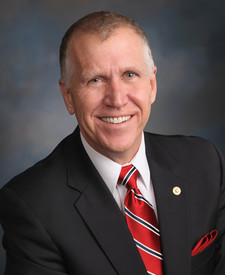
Legislative Progress
IntroducedMr. Tillis introduced the following bill; which was read twice …
Stakeholder Effects
cui bono?How this legislation distributes effects. Mention counts reflect frequency, not effect magnitude.
Companies operating in jurisdictions with non-traditional income taxes, Companies with CFCs in cyclical industries, Companies with affiliates in high-tax foreign jurisdictions
Positive-direction: Companies operating in jurisdictions with non-traditional income taxes, Companies with CFCs in cyclical industries, Companies with affiliates in high-tax foreign jurisdictions, Domestic corporations with foreign-derived intangible income, Large multinational corporations with deductible payments to foreign affiliates, Multinational corporations with foreign branches, Multinational holding company structures, U.S. corporate shareholders of CFCs investing in U.S. property, U.S. corporations claiming foreign tax credits, U.S. corporations receiving IP distributions from CFCs, U.S. corporations with GILTI inclusions paying foreign taxes, U.S. corporations with intangible property held in CFCs, U.S. corporations with tiered CFC structures, U.S. multinational corporations with controlled foreign corporations, U.S. multinationals with CFCs engaged in sales to related parties, U.S. persons with minority interests in foreign corporations, U.S. shareholders of controlled foreign corporations with volatile earnings, U.S. taxpayers claiming foreign tax credits, U.S. taxpayers paying foreign taxes that may not meet traditional income tax definitions
Negative-direction: U.S. persons with more than 50% ownership in foreign corporations, U.S. shareholders of foreign-controlled foreign corporations
Companies seeking to bring offshore intellectual property back to the U.S., Technology and IP-intensive companies, Technology and pharmaceutical companies with offshore IP
Professional services corporations operating in U.S. Virgin Islands, U.S. multinationals with CFCs providing services to related parties
Bill Structure & Actor Mappings
Who is "The Secretary" in each section?
- "the_secretary"
- → Secretary of the Treasury
Key Definitions
Terms defined in this bill
A United States person which would be a United States shareholder with respect to a foreign corporation if section 951(b) were applied by substituting more than 50 percent for 10 percent or more
A foreign corporation, other than a controlled foreign corporation, which would be a controlled foreign corporation if section 957(a) were applied by substituting foreign controlled United States shareholders for United States shareholders
Gross income from compensation for labor or personal services performed in the Virgin Islands by a corporation formed under Virgin Islands law, attributable to services performed from within the Virgin Islands
Any United States shareholder which is an individual, trust, estate, or closely held C corporation that acquired its interest in the foreign corporation before December 31, 2023
We use a combination of our own taxonomy and classification in addition to large language models to assess meaning and potential beneficiaries. High confidence means strong textual evidence. Always verify with the original bill text.
Learn more about our methodology