Mathematical and Statistical Modeling Education Act
Summary
What This Bill Does
Authorizes NSF STEM Education Directorate funding for fiscal years 2026 through 2030 to advance mathematical and statistical modeling education by supporting competitive R&D awards for higher-education institutions, nonprofits, and consortia, requiring evaluation and public reporting, and seeking a National Academies study on barriers, pathways, community-based learning, teacher preparation, stakeholder communication, and modernization recommendations.
Who Benefits and How
K-12 students benefit from research-backed mathematical modeling, statistical modeling, data science, operations research, computational thinking, problem-based learning, real data sets, computational tools, and career-connected projects. Students underrepresented in STEM, students experiencing homelessness, and foster youth benefit because applications must describe target populations and access strategies. STEM educators benefit from professional learning, pre-service and in-service training resources, mentoring, online and face-to-face professional development, federal-lab, higher-education, and industry research opportunities. Higher education researchers and nonprofits benefit from merit-reviewed NSF awards, and NASEM benefits from a study agreement if it accepts.
Who Bears the Burden and How
The NSF STEM Education Directorate must run competitive awards, encourage partnerships, evaluate the award portfolio, use common benchmarks, publish results, and report to Congress within 180 days after evaluation completion. Local education agencies and Tribal education agencies must partner, recruit students and educators, supply school-leader assurances, communicate with parents and communities, and support evaluation plans if they participate. NASEM study staff must hold at least one public meeting and report within 24 months of the agreement. NSF must fund the work from already appropriated or otherwise available Foundation funds, and award authority expires September 30, 2029.
Key Provisions
- Authorizes NSF awards for R&D to support mathematical modeling, statistical modeling, data science, operations research, and computational thinking education.
- Requires applications to describe target populations, recruitment, underrepresented STEM engagement, and sustained partnerships.
- Provides eligible activities including educator professional learning, curriculum research, real data sets, district-wide professional development, rural agencies, accessibility, mastery assessment, local assets, federal-lab training, employer partnerships, and STEM-transition supports.
- Requires outcome-oriented evaluation plans, annual and final reports, portfolio evaluation, common benchmarks, best-practice identification, and public congressional reporting.
- Directs NSF to seek a NASEM study and report on K-12 modeling education barriers, pathways, teacher preparation, stakeholder communication, and modernization recommendations.
- Authorizes $10,000,000 per fiscal year for sections 2 and $1,000,000 per fiscal year for section 3 from fiscal years 2026 through 2030, subject to available NSF funds and a September 30, 2029 award sunset.
Evidence Chain:
This summary is generated from the full bill text using AI analysis. Expand "Detailed Analysis" below for identified beneficiaries/burden bearers with clause-level evidence links.
At a Glance
What This Bill Does
Authorizes NSF STEM Education Directorate funding for fiscal years 2026 through 2030 to advance mathematical and statistical modeling education by supporting competitive R&D awards for higher-education institutions, nonprofits, and consortia, requiring evaluation and public reporting, and seeking a National Academies study on barriers, pathways, community-based learning, teacher preparation, stakeholder communication, and modernization recommendations.
Key Policy Areas
STEM Education, Mathematics, Data Science, NSF
Primary Purpose
Authorizes NSF STEM Education Directorate funding for fiscal years 2026 through 2030 to advance mathematical and statistical modeling education by supporting competitive R&D awards for higher-education institutions, nonprofits, and consortia, requiring evaluation and public reporting, and seeking a National Academies study on barriers, pathways, community-based learning, teacher preparation, stakeholder communication, and modernization recommendations.
Policy Domains
House resolution provisions
Identified Gains
- K-12 students benefit from research-backed mathematical modeling, statistical modeling, data science, operations research, computational thinking, problem-based learning, real data sets, computational tools, and career-connected projects
- Students underrepresented in STEM, students experiencing homelessness, and foster youth benefit because applications must describe target populations and access strategies
- STEM educators benefit from professional learning, pre-service and in-service training resources, mentoring, online and face-to-face professional development, federal-lab, higher-education, and industry research opportunities
- Higher education researchers and nonprofits benefit from merit-reviewed NSF awards, and NASEM benefits from a study agreement if it accepts
Identified Costs
- The NSF STEM Education Directorate must run competitive awards, encourage partnerships, evaluate the award portfolio, use common benchmarks, publish results, and report to Congress within 180 days after evaluation completion
- Local education agencies and Tribal education agencies must partner, recruit students and educators, supply school-leader assurances, communicate with parents and communities, and support evaluation plans if they participate
- NASEM study staff must hold at least one public meeting and report within 24 months of the agreement
- NSF must fund the work from already appropriated or otherwise available Foundation funds, and award authority expires September 30, 2029
Sponsors
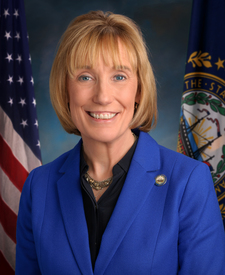
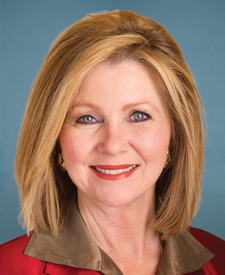
Legislative Progress
ReportedReferred sequentially to the Committee on Commerce, Science, and Transportation, …
Referred sequentially to the Committee on Commerce, Science, and Transportation …
Placed on Senate Legislative Calendar under General Orders. Calendar No. …
Committee on Health, Education, Labor, and Pensions. Reported by Senator …
Reported by Mr. Cassidy, without amendment
Committee on Health, Education, Labor, and Pensions. Ordered to be …
Ms. Hassan (for herself and Mrs. Blackburn) introduced the following …
Read twice and referred to the Committee on Health, Education, …
Introduced in Senate
Ms. Hassan (for herself and Mrs. Blackburn) introduced the following …
Stakeholder Effects
cui bono?How this legislation distributes effects. Mention counts reflect frequency, not effect magnitude.
Education policymakers, Grant applicants after sunset, Higher education researchers
Positive-direction: Education policymakers, Higher education researchers, K-12 students, STEM educators, Students underrepresented in STEM
Negative-direction: Grant applicants after sunset, Local education agencies
NASEM study staff, NSF STEM Education Directorate, NSF budget managers
Positive-direction: NASEM study staff, NSF budget managers
Negative-direction: NSF STEM Education Directorate
Bill Structure & Actor Mappings
Who is "The Secretary" in each section?
- "director"
- → National Science Foundation Director
Key Definitions
Terms defined in this bill
The concept defined in the 2019 GAIMME report for using mathematics to represent and analyze real-world situations.
We use a combination of our own taxonomy and classification in addition to large language models to assess meaning and potential beneficiaries. High confidence means strong textual evidence. Always verify with the original bill text.
Learn more about our methodology