ARCA Act of 2025
Sponsors
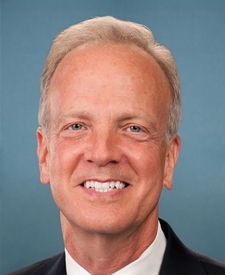




Legislative Progress
IntroducedMr. Moran (for himself, Mr. Banks, Mr. Warner, Mr. King, …
Mr. Moran introduced the following bill; which was read twice …
Passed Senate (inferred from es version)
Summary
What This Bill Does
This bill comprehensively restructures how the VA acquires goods, services, and technology. It creates a new Assistant Secretary for Acquisition and Innovation who serves as Chief Acquisition Officer, with three Deputy Assistant Secretaries (Logistics, Innovation, Procurement). It requires dedicated program managers for major acquisitions over $250 million with formal program baselines and milestone reviews. It mandates independent verification and validation (IV&V) of major IT projects through competitively-bid contracts. It also creates a new Director of Cost Assessment and Program Evaluation reporting directly to the Secretary.
Who Benefits and How
- Veterans benefit from better-managed acquisition programs that deliver needed systems and services on time and on budget.
- Independent verification & validation contractors (IV&V firms with DoD experience) gain new contract opportunities for VA project oversight.
- Management consulting firms with acquisition expertise benefit from increased demand for program management support.
- VA acquisition workforce gains clearer career paths and centralized organization under the new office.
- Congress gains better visibility through mandatory IV&V reports and cost assessment independence.
Who Bears the Burden and How
- VA organizational units (VHA, VBA, NCA) lose acquisition authority as functions centralize under the new Assistant Secretary.
- Current VA contractors without IV&V conflict separation may lose eligibility for certain contracts.
- VA leadership faces significant reorganization burden to transfer contracting officers and acquisition centers.
- Contractors working on VA systems face additional IV&V oversight and potential schedule impacts.
Key Provisions
- Creates Assistant Secretary for Acquisition and Innovation as Chief Acquisition Officer
- Establishes Office of Acquisition and Innovation with three Deputy Assistant Secretaries
- Defines major acquisition programs as $250M+ life-cycle cost
- Requires program managers appointed within 30 days of program approval
- Mandates program baselines with cost, schedule, and performance estimates
- Requires IV&V at program initiation, completion, and intervals selected by CAO
- IV&V contractors must have 3+ DoD prime contracts in preceding 3 years
- Creates Director of Cost Assessment and Program Evaluation reporting to Secretary
- Requires transfer of all VA contracting officers to new office
Evidence Chain:
This summary is derived from the structured analysis below. See "Detailed Analysis" for per-title beneficiaries/burden bearers with clause-level evidence links.
Primary Purpose
Comprehensively reorganizes VA acquisition structure by creating an Assistant Secretary for Acquisition and Innovation, establishing program manager requirements for major acquisitions ($250M+), requiring independent verification and validation of IT projects, and creating a Director of Cost Assessment and Program Evaluation.
Policy Domains
Legislative Strategy
"Apply DoD-style acquisition discipline to VA to address history of failed IT projects and cost overruns"
Bill Structure & Actor Mappings
Who is "The Secretary" in each section?
- "the_secretary"
- → Secretary of Veterans Affairs
- "assistant_secretary"
- → Assistant Secretary for Acquisition and Innovation
- "program_manager"
- → Major Acquisition Program Manager
- "deputy_secretary"
- → Deputy Secretary of Veterans Affairs
- "chief_financial_officer"
- → Chief Financial Officer (VA)
- "chief_acquisition_officer"
- → Chief Acquisition Officer (VA)
- "director_cape"
- → Director of Cost Assessment and Program Evaluation
Key Definitions
Terms defined in this bill
Prime contract or subcontract for IT support, software/system design, development, sustainment, maintenance, professional/management consulting, or advisory services
Comprehensive inspection, review, analysis, testing, or assessment to verify requirements are correctly defined and validate correct implementation
Program to acquire property, systems, technology, assets, supplies, or services with estimated total life-cycle cost of $250,000,000 or more
Program with estimated total life-cycle cost of less than $250,000,000
We use a combination of our own taxonomy and classification in addition to large language models to assess meaning and potential beneficiaries. High confidence means strong textual evidence. Always verify with the original bill text.
Learn more about our methodology