To support United States policy toward Taiwan.
Analysis under review: This bill has generated analysis that may be too generic or incomplete. Clause-level evidence remains available below.
Summary
What This Bill Does
The Taiwan Relations Reinforcement Act of 2025 strengthens and formalizes the U.S.-Taiwan relationship across diplomatic, military, economic, and information-security dimensions. It establishes an interagency Taiwan Policy Task Force, elevates the American Institute in Taiwan director to a Senate-confirmed "Representative," directs support for Taiwan's participation in international organizations, calls for resuming trade agreement negotiations and bilateral military exercises, and mandates strategies to counter China's "sharp power" operations targeting Taiwan and U.S. entities.
Who Benefits and How
Taiwan's government benefits from elevated diplomatic recognition, increased participation in international forums, military cooperation including joint exercises and arms sales dialogues, and U.S. assistance countering Chinese disinformation and coercion campaigns. U.S. defense contractors benefit from provisions supporting arms sales through Foreign Military Sales mechanisms and direct commercial sales for Taiwan's indigenous defense capabilities. U.S. businesses and NGOs benefit from a federal strategy to protect them from PRC-mandated political censorship and coercive sharp power operations.
Who Bears the Burden and How
The People's Republic of China faces increased diplomatic and strategic pressure as the bill opposes PRC efforts to isolate Taiwan internationally and explicitly rejects unilateral unification timetables. Multiple U.S. agencies (State, Defense, Treasury, Commerce, NSC, USTR) bear increased reporting and coordination burdens through the mandatory interagency task force and multiple congressionally-mandated reports. The Senate takes on additional confirmation responsibilities for the AIT director position.
Key Provisions
- Creates an interagency Taiwan Policy Task Force with 90-day deadline, led by senior officials from 7+ agencies
- Elevates AIT Taipei director to Senate-confirmed "Representative" with 60-day vacancy fill requirement
- Directs U.S. support for Taiwan's membership and meaningful participation in international organizations
- Calls for bilateral free trade agreement negotiations and resumption of trade framework meetings
- Mandates reports on Taiwan Strait military deterrence, sharp power operations, and PRC censorship efforts
- Opposes PRC-imposed unification timetables and rejects one country, two systems framework for Taiwan
- Defines "sharp power" as coordinated PRC disinformation, economic coercion, and academic censorship operations
Evidence Chain:
This summary is generated from the full bill text using AI analysis. Expand "Detailed Analysis" below for identified beneficiaries/burden bearers with clause-level evidence links.
At a Glance
What This Bill Does
Strengthens U.S.-Taiwan relations across diplomatic, military, economic, and information-security dimensions by establishing an interagency task force, elevating the AIT director to a Senate-confirmed position, supporting Taiwan's international participation, and mandating strategies to counter PRC sharp power operations.
Key Policy Areas
Foreign Affairs, Defense, Trade
Primary Purpose
Strengthens U.S.-Taiwan relations across diplomatic, military, economic, and information-security dimensions by establishing an interagency task force, elevating the AIT director to a Senate-confirmed position, supporting Taiwan's international participation, and mandating strategies to counter PRC sharp power operations.
Policy Domains
Whole Bill - Taiwan Relations Reinforcement
Identified Gains
- Government of Taiwan
- U.S. defense contractors (arms sales/FMS)
- U.S. businesses facing PRC censorship pressure
- Taiwan civil society and media organizations
Identified Costs
- People's Republic of China (diplomatic/strategic pressure)
- Department of State (reporting and coordination burden)
- Department of Defense (deterrence reporting)
- U.S. Senate (AIT confirmation duties)
Sponsors

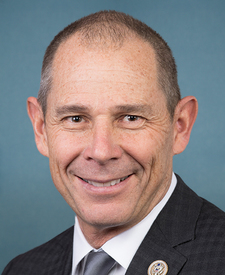
Legislative Progress
IntroducedMr. Merkley (for himself and Mr. Curtis) introduced the following …
Stakeholder Effects
cui bono?How this legislation distributes effects. Mention counts reflect frequency, not effect magnitude.
American Institute in Taiwan, Department of Defense, Department of State
Positive-direction: Government of Taiwan
Negative-direction: Department of Defense, Department of State, National Security Council, People's Republic of China
Defense contractors, Taiwan defense industry, Taiwan defense sector
Bill Structure & Actor Mappings
Who is "The Secretary" in each section?
- "the_president"
- → President of the United States
- "the_secretary_of_state"
- → Secretary of State
- "the_secretary_of_defense"
- → Secretary of Defense
Key Definitions
Terms defined in this bill
Committee on Foreign Relations of the Senate and the Committee on Foreign Affairs of the House of Representatives
Coordinated and often concealed application of disinformation, media manipulation, economic coercion, cyber-intrusions, targeted investments, and academic censorship intended to corrupt institutions, interfere in elections, or foster outcomes supporting PRC/CCP interests
We use a combination of our own taxonomy and classification in addition to large language models to assess meaning and potential beneficiaries. High confidence means strong textual evidence. Always verify with the original bill text.
Learn more about our methodology