SBIR/STTR Reauthorization Act of 2025
Analysis under review: This bill has generated analysis that may be too generic or incomplete. Clause-level evidence remains available below.
Summary
What This Bill Does
The bill authorizes federal agencies to provide SBIR/STTR fellowship grants to Phase II awardees for undergraduate through postdoctoral internship opportunities, with enhanced outreach to women and disadvantaged individuals, expands application assistance for SBIR/STTR programs to include states with historically low award levels, requires enhanced outreach to minority institutions (HBCUs, HSIs) and updates policy directives accordingly, and expands technical and business assistance for SBIR/STTR recipients: $6,500 for Phase I, $50,000 for Phase II, allows hiring staff for training, adds cybersecurity assistance, and requires I-Corps participation option. It relies on reporting requirements, compliance mandates, exemptions, and grants. The main policy areas are Finance, Small Business, Federal Contracting, and Education.
Who Benefits and How
Small businesses receiving SBIR/STTR Phase II awards could gain revenue opportunities, Small businesses seeking Phase III contracts could face fewer barriers, and Small businesses with proven technologies could face fewer barriers.
Who Bears the Burden and How
Federal agencies with SBIR/STTR programs would take on compliance duties, SBA and participating agencies would take on compliance duties, and SBA (database management) would take on compliance duties.
Key Provisions
- Authorizes federal agencies to provide SBIR/STTR fellowship grants to Phase II awardees for undergraduate through postdoctoral internship opportunities, with enhanced outreach to women and disadvantaged individuals.
- Expands application assistance for SBIR/STTR programs to include states with historically low award levels, requires enhanced outreach to minority institutions (HBCUs, HSIs) and updates policy directives accordingly.
- Expands technical and business assistance for SBIR/STTR recipients: $6,500 for Phase I, $50,000 for Phase II, allows hiring staff for training, adds cybersecurity assistance, and requires I-Corps participation option.
- Requires SBIR/STTR databases to track research institution subcontractors including minority-serving institution status (HBCUs, HSIs, Tribal Colleges, etc.) and extends tracking to Phase III awards.
- Requires SBA to establish training for contracting officers on Phase III acquisitions including SBIR/STTR program goals, Phase III agreements, data rights, and sole source contracting procedures.
Evidence Chain:
This summary is generated from the full bill text using AI analysis. Expand "Detailed Analysis" below for identified beneficiaries/burden bearers with clause-level evidence links.
At a Glance
What This Bill Does
The bill authorizes federal agencies to provide SBIR/STTR fellowship grants to Phase II awardees for undergraduate through postdoctoral internship opportunities, with enhanced outreach to women and disadvantaged individuals, expands application assistance for SBIR/STTR programs to include states with historically low award levels, requires enhanced outreach to minority institutions (HBCUs, HSIs) and updates policy directives accordingly, and expands technical and business assistance for SBIR/STTR recipients: $6,500 for Phase I, $50,000 for Phase II, allows hiring staff for training, adds cybersecurity assistance, and requires I-Corps participation option.
Key Policy Areas
Finance, Small Business, Federal Contracting, Education
Primary Purpose
The bill authorizes federal agencies to provide SBIR/STTR fellowship grants to Phase II awardees for undergraduate through postdoctoral internship opportunities, with enhanced outreach to women and disadvantaged individuals, expands application assistance for SBIR/STTR programs to include states with historically low award levels, requires enhanced outreach to minority institutions (HBCUs, HSIs) and updates policy directives accordingly, and expands technical and business assistance for SBIR/STTR recipients: $6,500 for Phase I, $50,000 for Phase II, allows hiring staff for training, adds cybersecurity assistance, and requires I-Corps participation option.
Policy Domains
Title I - Authorization Extension
Identified Gains
- Small businesses receiving SBIR/STTR Phase II awards
- Small businesses seeking Phase III contracts
- Small businesses with proven technologies
- Small businesses receiving SBIR/STTR Phase I awards
- Minority-serving institutions (HBCUs, HSIs)
Identified Costs
- Federal agencies with SBIR/STTR programs
- SBA and participating agencies
- SBA (database management)
- Government Accountability Office
- Federal agencies denying Phase III awards
Sponsors
Legislative Progress
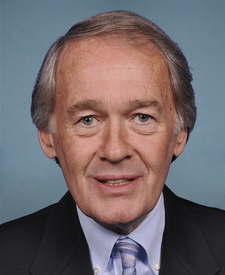
In CommitteeMr. Markey introduced the following bill; which was read twice …
Read twice and referred to the Committee on Small Business …
Introduced in Senate
Stakeholder Effects
cui bono?How this legislation distributes effects. Mention counts reflect frequency, not effect magnitude.
Congressional oversight committees, Federal agencies administering SBIR/STTR programs, Federal agencies denying Phase III awards
Federal agencies with SBIR/STTR programs faces effects in multiple directions
Positive-direction: Congressional oversight committees, Federal agencies administering SBIR/STTR programs, National Institutes of Health
Negative-direction: Federal agencies denying Phase III awards, Federal contracting officers, GAO, Government Accountability Office, SBA (database management), SBA (policy directive updates), SBA and participating agencies, SBA, DoD, GSA (training coordination)
SBIR/STTR awardees (data reporting), Small businesses applying to NIH SBIR/STTR, Small businesses receiving SBIR/STTR Phase I awards
Positive-direction: Small businesses applying to NIH SBIR/STTR, Small businesses receiving SBIR/STTR Phase I awards, Small businesses receiving SBIR/STTR Phase II awards, Small businesses seeking Phase III commercialization, Small businesses seeking Phase III contracts, Small businesses seeking SBIR/STTR funding, Small businesses transitioning to Phase III, Small businesses with proven technologies, Traditional small businesses competing for awards, Underrepresented groups in SBIR/STTR
Negative-direction: SBIR/STTR awardees (data reporting), VC-backed small businesses in SBIR/STTR
Minority-serving institutions (HBCUs, HSIs), Minority-serving institutions (tracking visibility), Students (undergraduate, graduate, postdoctoral)
Women and socially/economically disadvantaged individuals
States with historically low SBIR/STTR awards
Small Business Investment Companies (SBICs)
Bill Structure & Actor Mappings
Who is "The Secretary" in each section?
- "the_administrator"
- → Administrator of the Small Business Administration
- "the_administrator"
- → Administrator of the Small Business Administration
- "the_administrator"
- → Administrator of the Small Business Administration
- "the_secretary_of_defense"
- → Secretary of Defense
Key Definitions
Terms defined in this bill
Percentage of extramural R&D budget agencies must spend on SBIR, increasing from 3.65% to 7% by 2032
Percentage of extramural R&D budget agencies must spend on STTR, increasing from 0.45% to 1% by 2032
Acquisition of a good or service from a Phase III participant that such participant has commercialized or is seeking to commercialize
We use a combination of our own taxonomy and classification in addition to large language models to assess meaning and potential beneficiaries. High confidence means strong textual evidence. Always verify with the original bill text.
Learn more about our methodology