To amend the Child Nutrition Act of 1966 and the Richard B. Russell National School Lunch Act to make breakfasts and lunches free for all children, and for other purposes.
Analysis under review: This bill has generated analysis that may be too generic or incomplete. Clause-level evidence remains available below.
Summary
What This Bill Does
This bill establishes universal free school meals for all children enrolled in public schools by eliminating the reduced-price meal category and providing free breakfast ($2.80) and lunch ($4.63) to all students. It prohibits lunch shaming practices, forgives existing school meal debt, and creates additional payments for schools using locally-sourced farm products. The bill also expands free meal programs for summer, afterschool, and childcare settings.
Who Benefits and How
All school-age children receive free breakfast and lunch regardless of family income, eliminating stigma and administrative burden. Local farmers receive increased demand through a 25% local sourcing incentive that provides additional reimbursements. School food service operations benefit from simplified administration without means-testing. Food service workers may see improved working conditions with consistent meal counts. Schools with existing meal debt receive federal reimbursement for outstanding charges.
Who Bears the Burden and How
Federal taxpayers fund significantly expanded school meal programs (elimination of family co-pays for reduced-price meals). State education agencies face new administrative requirements for certifying local food purchases. The USDA faces increased program costs and oversight responsibilities. Schools must adapt operations to serve free meals to all students.
Key Provisions
- Universal free breakfast ($2.80) and lunch ($4.63) for all enrolled students, adjusted for inflation
- Additional $0.30/lunch and $0.21/breakfast payments for schools using 25%+ locally-sourced foods
- Prohibition on lunch shaming and debt collection from families
- Federal reimbursement program for all outstanding school meal debt
- Expansion of Summer EBT from $40 to $60 per child per month
Evidence Chain:
This summary is generated from the full bill text using AI analysis. Expand "Detailed Analysis" below for identified beneficiaries/burden bearers.
At a Glance
What This Bill Does
Establishes universal free school meals for all students by eliminating reduced-price meal categories, setting national reimbursement rates for free breakfast and lunch, prohibiting lunch shaming, and creating local food procurement incentives
Key Policy Areas
Education, Nutrition, Agriculture, Child Welfare
Primary Purpose
Establishes universal free school meals for all students by eliminating reduced-price meal categories, setting national reimbursement rates for free breakfast and lunch, prohibiting lunch shaming, and creating local food procurement incentives
Policy Domains
Title I - Free School Breakfast Program
Identified Gains
Contextual inference, no direct clause citation- All school-age children
- Families currently paying for reduced-price meals
- School food service operations
Contextual inference, no direct clause citation
Identified Costs
Contextual inference, no direct clause citation- Federal budget
- USDA Food and Nutrition Service
Contextual inference, no direct clause citation
Title II - Free School Lunch Program
Identified Gains
Contextual inference, no direct clause citation- All school-age children
- Local farmers within 250 miles
- Summer program participants
- Childcare providers
- Schools with meal debt
Contextual inference, no direct clause citation
Identified Costs
Contextual inference, no direct clause citation- Federal budget
- State education agencies
- School food authorities with certification requirements
Contextual inference, no direct clause citation
Title III - Measure of Poverty
Identified Gains
Contextual inference, no direct clause citation- Schools serving low-income students
- Local education agencies
Contextual inference, no direct clause citation
Identified Costs
Contextual inference, no direct clause citation- State and local education agencies (new survey requirements)
Contextual inference, no direct clause citation
Sponsors
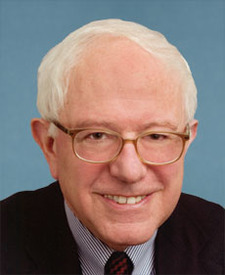
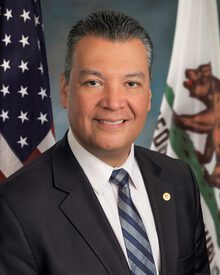
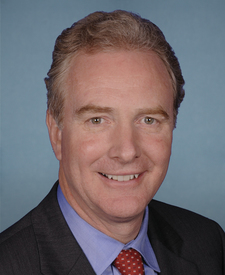
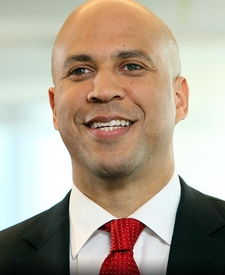
Legislative Progress
IntroducedMr. Sanders (for himself, Mrs. Gillibrand, Mr. Heinrich, Ms. Hirono, …
Stakeholder Effects
cui bono?How this legislation distributes effects. Mention counts reflect frequency, not effect magnitude.
Department of Education, Department of Justice, Federal SNAP program budget
All school-age children, GEAR UP grantees, High-need schools under ESEA definition
Positive-direction: All school-age children, High-need schools under ESEA definition, School administrators, Schools with outstanding meal debt, Tribal schools
Negative-direction: GEAR UP grantees, Local education agencies
All children during summer months, Families currently paying reduced-price meals, Families of economically disadvantaged children
School food authorities meeting local sourcing threshold, School food service operations, Summer food service institutions
Children in afterschool programs, Non-profit childcare organizations, Private childcare providers
Incarcerated juveniles, Juvenile detention facilities
Food hubs and agricultural cooperatives
Bill Structure & Actor Mappings
Who is "The Secretary" in each section?
- "the_secretary"
- → Secretary of Agriculture
- "the_secretary"
- → Secretary of Agriculture
- "the_secretary"
- → Secretary of Education
Key Definitions
Terms defined in this bill
A farm product marketed directly to consumers or through intermediated channels, produced and distributed in the same state or within 250 miles of the school food authority
We use a combination of our own taxonomy and classification in addition to large language models to assess meaning and potential beneficiaries. High confidence means strong textual evidence. Always verify with the original bill text.
Learn more about our methodology