SECURE Notarization Act of 2025
Analysis under review: This bill has generated analysis that may be too generic or incomplete. Clause-level evidence remains available below.
Summary
What This Bill Does
This bill creates a federal framework authorizing notaries public to perform electronic notarizations (on electronic records) and remote notarizations (via audio-video communication technology) for transactions that occur in or affect interstate commerce. It establishes minimum standards for both: electronic notarizations must use tamper-evident electronic signatures, and remote notarizations require real-time audio-video appearance, identity verification through at least two independent processes or a credible witness, and mandatory audio-visual recording retained for 5 to 10 years. The bill mandates that all federal courts and all state courts recognize notarizations performed by a notarial officer of any state, creating nationwide portability. It preserves state authority to set additional standards, create special notarial commissions, and discipline notaries, but preempts state laws that fall short of the federal minimum or that favor a specific technology. The bill also prohibits notaries from using the term 'notario' or falsely advertising legal or immigration services.
Who Benefits and How
- Remote notarization technology companies (e.g., Notarize, DocVerify, Nexsys) benefit significantly: the bill creates a guaranteed national market for their platforms by authorizing remote notarization across all states and preempting state laws that would block or disfavor their technology.
- Real estate, mortgage, and financial services industries benefit from the ability to close transactions remotely with legally recognized notarizations, reducing delays and costs associated with in-person requirements.
- Identity verification service providers benefit from the requirement that remote notarizations use at least two distinct identity verification processes, creating mandatory demand for their services.
- Consumers and businesses conducting interstate transactions benefit from the ability to have documents notarized remotely rather than finding a local notary, and from guaranteed cross-state recognition.
- U.S. citizens and residents located abroad benefit from the ability to have documents notarized remotely for U.S. legal proceedings and property transactions without returning to the country.
- Notaries public who adopt electronic and remote capabilities gain access to a larger market of clients across state lines.
Who Bears the Burden and How
- Traditional in-person-only notaries face competitive pressure from remote notarization, as clients can now choose notaries from any state for interstate commerce transactions.
- Notaries performing remote notarizations bear new compliance burdens: mandatory identity verification through two independent processes, audio-visual recording of every remote session, and record retention obligations of 5 to 10 years.
- States that have not adopted the Revised Uniform Law on Notarial Acts face preemption of their existing notarial laws for interstate commerce transactions, losing some regulatory autonomy.
- Notaries who are not licensed attorneys are prohibited from using the term 'notario publico' or advertising legal or immigration services, with compliance enforced through a false advertising prohibition.
Key Provisions
- Authorizes electronic notarization for interstate commerce with tamper-evident electronic signature requirements (Sec. 3)
- Authorizes remote notarization via audio-video technology with identity verification through two independent processes or credible witness (Sec. 4)
- Requires audio-visual recording of all remote notarizations, retained 5-10 years depending on state law (Sec. 4)
- Mandates federal courts recognize notarizations from any state (Sec. 5)
- Mandates states recognize notarizations from other states for interstate commerce and public acts (Sec. 6)
- Preserves notary choice not to perform electronic or remote notarizations (Sec. 7)
- Provides that technical noncompliance does not invalidate a notarization (Sec. 8)
- Allows states to adopt the Revised Uniform Law on Notarial Acts or enact consistent additional requirements, but preempts inconsistent or technology-specific state laws (Sec. 9)
- Preserves state authority over notary commissions, discipline, and standards of care (Sec. 10)
- Prohibits 'notario' advertising and false claims of legal or immigration authority by non-attorney notaries (Sec. 10)
Evidence Chain:
This summary is generated from the full bill text using AI analysis. Expand "Detailed Analysis" below for identified beneficiaries/burden bearers.
At a Glance
What This Bill Does
Creates a federal framework authorizing and setting minimum standards for electronic and remote notarizations in interstate commerce, with mandatory cross-state recognition by all federal and state courts.
Key Policy Areas
Commerce, Legal System, Technology, Consumer Protection, Federalism
Primary Purpose
Creates a federal framework authorizing and setting minimum standards for electronic and remote notarizations in interstate commerce, with mandatory cross-state recognition by all federal and state courts.
Policy Domains
Remote Notarization Authorization, Standards, and Recordkeeping
Identified Gains
Contextual inference, no direct clause citation- Remote notarization technology platforms (mandatory infrastructure for compliance)
- Identity verification service providers (required dual-process verification)
- Real estate and mortgage industries (remote closings become legally valid nationwide)
- U.S. persons abroad (can execute notarized documents without returning to the U.S.)
Contextual inference, no direct clause citation
Identified Costs
Contextual inference, no direct clause citation- Notaries performing remote notarizations (identity verification, recording, and retention requirements)
- Traditional in-person-only notaries (competitive pressure from remote providers)
Contextual inference, no direct clause citation
State Law Preemption and Preservation of State Authority
Identified Gains
Contextual inference, no direct clause citation- Technology-neutral notarization platforms (states cannot favor specific technologies)
- Immigrant communities (protection from 'notario' fraud)
- States that have adopted the Revised Uniform Law (their laws are preserved)
Contextual inference, no direct clause citation
Identified Costs
Contextual inference, no direct clause citation- States with technology-specific notarization requirements (preempted)
- Non-attorney notaries using 'notario' terminology (prohibited from using the term)
Contextual inference, no direct clause citation
Federal and Interstate Recognition of Notarizations
Identified Gains
Contextual inference, no direct clause citation- Notaries public (expanded market across state lines)
- Parties to interstate transactions (legal certainty that notarizations will be accepted)
- Litigants in federal court (guaranteed acceptance of any state notarization)
Contextual inference, no direct clause citation
Identified Costs
Contextual inference, no direct clause citation- States with stricter notarization standards (must accept notarizations from less-regulated states)
Contextual inference, no direct clause citation
Electronic Notarization Authorization and Standards
Identified Gains
Contextual inference, no direct clause citation- Electronic notarization platform providers (guaranteed national market)
- Businesses conducting interstate transactions (reduced friction)
Contextual inference, no direct clause citation
Identified Costs
Contextual inference, no direct clause citation- Notaries public (must meet tamper-evident electronic signature standards)
Contextual inference, no direct clause citation
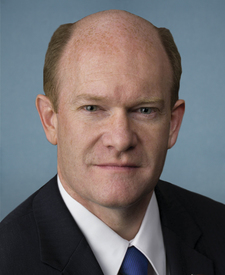
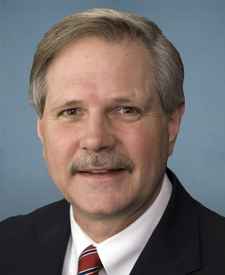
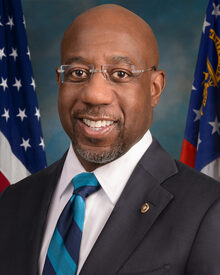
Sponsors


Legislative Progress
In CommitteeMr. Cramer (for himself and Mr. Warner) introduced the following …
Read twice and referred to the Committee on the Judiciary.
Introduced in Senate
Impact analysis is available but no clear stakeholder effects identified. View clause-level analysis →
Bill Structure & Actor Mappings
Who is "The Secretary" in each section?
- "notary_public"
- → Notary public performing electronic notarization
- "notary_public"
- → Notary public performing remote notarization
- "remotely_located_individual"
- → Remotely located individual
- "identity_verification_provider"
- → Third-party identity verification service
- "state_courts"
- → State courts and governmental entities
- "federal_courts"
- → Courts of the United States
- "nccusl"
- → National Conference of Commissioners on Uniform State Laws
- "states"
- → State governments and notarial regulatory officials
Key Definitions
Terms defined in this bill
We use a combination of our own taxonomy and classification in addition to large language models to assess meaning and potential beneficiaries. High confidence means strong textual evidence. Always verify with the original bill text.
Learn more about our methodology