To expand the use of E-Verify to hold employers accountable, and for other purposes.
Analysis under review: This bill has generated analysis that may be too generic or incomplete. Clause-level evidence remains available below.
Summary
What This Bill Does
The Accountability Through Electronic Verification Act makes E-Verify mandatory for all U.S. employers within one year, including verification of existing employees. It permanently reauthorizes the E-Verify program, dramatically increases civil penalties for hiring unauthorized workers, and creates an Employer Compliance Inspection Center to enforce these requirements.
Who Benefits and How
U.S. workers benefit from reduced competition with unauthorized workers for jobs. Employers who already comply with immigration laws gain a level playing field against competitors who hire unauthorized workers. Law enforcement agencies gain new tools and information sharing for immigration enforcement. Employers gain liability protection for good-faith reliance on E-Verify results.
Who Bears the Burden and How
All employers face mandatory E-Verify enrollment and compliance requirements, with penalties ranging from $2,500 to $25,000 per violation. Small businesses in rural areas face operational challenges (though a demonstration program provides assistance). Employers must reverify employees with expiring work authorizations. Companies failing to comply face debarment from federal contracts.
Key Provisions
- Mandates E-Verify for all employers within 1 year, including current employees
- Increases civil penalties 10-fold (e.g., first offense: $2,500-$5,000, up from $250-$2,000)
- Requires immediate termination upon final nonconfirmation
- Creates weekly interagency reports on nonconfirmed individuals for ICE enforcement
Evidence Chain:
This summary is generated from the full bill text using AI analysis. Expand "Detailed Analysis" below for identified beneficiaries/burden bearers.
At a Glance
What This Bill Does
Mandates E-Verify employment eligibility verification for all U.S. employers, strengthens penalties for violations, and creates enforcement infrastructure to combat unauthorized employment
Key Policy Areas
Immigration, Employment, Law Enforcement, Small Business
Primary Purpose
Mandates E-Verify employment eligibility verification for all U.S. employers, strengthens penalties for violations, and creates enforcement infrastructure to combat unauthorized employment
Policy Domains
E-Verify Mandate and Enforcement (Sections 2-14)
Identified Gains
Contextual inference, no direct clause citation- U.S. workers competing for jobs
- Compliant employers
- Immigration enforcement agencies
- Employers acting in good faith (liability protection)
Contextual inference, no direct clause citation
Identified Costs
Contextual inference, no direct clause citation- All U.S. employers (compliance costs)
- Small businesses in rural areas
- Employers who currently hire unauthorized workers
- Unauthorized workers
Contextual inference, no direct clause citation
Sponsors


Legislative Progress
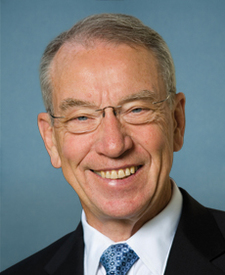
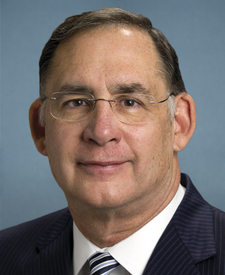
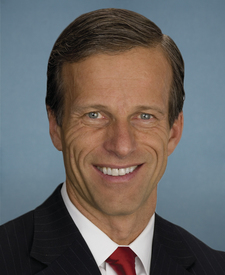
IntroducedMr. Grassley (for himself, Mr. Tuberville, Mr. Lee, Mr. Cotton, …
Stakeholder Effects
cui bono?How this legislation distributes effects. Mention counts reflect frequency, not effect magnitude.
All U.S. employers, Employers (potential I-9 burden reduction), Employers currently using E-Verify voluntarily
Positive-direction: Employers (potential I-9 burden reduction), Employers currently using E-Verify voluntarily, Employers using E-Verify, Good-faith compliant employers
Negative-direction: All U.S. employers, Employers of workers with temporary work authorization, Employers receiving final nonconfirmation, Employers subject to I-9 audits, Employers violating employment eligibility requirements, Employers who hire unauthorized workers, Repeat violators of employment verification laws
Department of Homeland Security, E-Verify program and infrastructure, Federal contractors
Positive-direction: E-Verify program and infrastructure, Immigration and Customs Enforcement
Negative-direction: Department of Homeland Security, Federal contractors, Internal Revenue Service, Social Security Administration, USCIS (program administration), USCIS E-Verify system
Individuals receiving final nonconfirmation, Job applicants and current employees, U.S. workers
Positive-direction: U.S. workers
Negative-direction: Individuals receiving final nonconfirmation, Job applicants and current employees, Unauthorized workers in U.S. tax system, Unauthorized workers using false documents, Unauthorized workers with existing employment, Workers with expiring work authorization (H-1B, OPT, etc.), Workers wrongfully terminated based on E-Verify errors
Identity thieves and document fraudsters, Identity thieves using documents for unauthorized employment
State DMV agencies, State and local governments with E-Verify restrictions
Bill Structure & Actor Mappings
Who is "The Secretary" in each section?
- "the_director"
- → Director of U.S. Citizenship and Immigration Services
- "the_secretary"
- → Secretary of Homeland Security
Key Definitions
Terms defined in this bill
Standardized consequences including civil and criminal penalties for employment eligibility verification failures
Employers may verify employment eligibility through E-Verify before hiring if the individual consents
Civil penalties may be waived or reduced if the violator establishes good faith compliance
We use a combination of our own taxonomy and classification in addition to large language models to assess meaning and potential beneficiaries. High confidence means strong textual evidence. Always verify with the original bill text.
Learn more about our methodology