Made in America Manufacturing Finance Act of 2025
Summary
What This Bill Does
Raises SBA loan limits for small manufacturers with U.S.-located production facilities by defining small manufacturer, increasing 7(a) outstanding and guaranteed loan thresholds, raising export working-capital limits, increasing 504 loan project limits from $5,500,000 to $10,000,000, and requiring SBA Inspector General and Administrator reports on risk, defaults, job creation, and job retention.
Who Benefits and How
Small manufacturers in NAICS sectors 31, 32, and 33 with all production facilities in the United States benefit from larger SBA-backed credit capacity: 7(a) outstanding amounts can reach $7,500,000 with gross loans up to $10,000,000, certain export-purpose guarantees can reach $9,000,000 with $8,000,000 for working capital, export loans can reach $10,000,000, and 504 loans can reach $10,000,000. SBA 7(a) lenders and 504 certified development companies benefit from larger eligible manufacturing deals. Employees of small manufacturers benefit if larger loans create or retain jobs. Congress benefits from risk and job-effect reports.
Who Bears the Burden and How
SBA program staff must administer higher loan caps and distinguish small manufacturers using NAICS sector and U.S.-facility criteria. The SBA Inspector General must analyze projected default rates, early default rates, default amounts, guaranty purchase amounts, and no-cost-to-government impacts for the first-year loan cohort. The SBA Administrator must report annually for five years on larger loans, total dollars per job created or retained, and whether loans prevented job losses. Federal taxpayers bear risk if larger guarantees increase defaults or guaranty purchase amounts despite the no-cost program requirement.
Key Provisions
- Defines small manufacturer as a small business in NAICS sector 31, 32, or 33 with all production facilities in the United States.
- Raises certain SBA 7(a) loan thresholds for small manufacturers to $7,500,000, $9,000,000, and gross loan amounts up to $10,000,000.
- Provides up to $8,000,000 for working capital, supplies, or export-purpose financing within the small-manufacturer guarantee increase.
- Raises the Small Business Investment Act section 502 project limit for small manufacturers from $5,500,000 to $10,000,000.
- Requires an SBA Inspector General risk and default analysis within two years.
- Requires five years of SBA Administrator reports on larger manufacturing loans, dollars per job created or retained, and job-loss prevention.
Evidence Chain:
This summary is generated from the full bill text using AI analysis. Expand "Detailed Analysis" below for identified beneficiaries/burden bearers with clause-level evidence links.
At a Glance
What This Bill Does
Raises SBA loan limits for small manufacturers with U.S.-located production facilities by defining small manufacturer, increasing 7(a) outstanding and guaranteed loan thresholds, raising export working-capital limits, increasing 504 loan project limits from $5,500,000 to $10,000,000, and requiring SBA Inspector General and Administrator reports on risk, defaults, job creation, and job retention.
Key Policy Areas
Manufacturing, Small Business, Loans, SBA
Primary Purpose
Raises SBA loan limits for small manufacturers with U.S.-located production facilities by defining small manufacturer, increasing 7(a) outstanding and guaranteed loan thresholds, raising export working-capital limits, increasing 504 loan project limits from $5,500,000 to $10,000,000, and requiring SBA Inspector General and Administrator reports on risk, defaults, job creation, and job retention.
Policy Domains
House resolution provisions
Identified Gains
- Small manufacturers in NAICS sectors 31, 32, and 33 with all production facilities in the United States benefit from larger SBA-backed credit capacity: 7(a) outstanding amounts can reach $7,500,000 with gross loans up to $10,000,000, certain export-purpose guarantees can reach $9,000,000 with $8,000,000 for working capital, export loans can reach $10,000,000, and 504 loans can reach $10,000,000
- SBA 7(a) lenders and 504 certified development companies benefit from larger eligible manufacturing deals
- Employees of small manufacturers benefit if larger loans create or retain jobs
- Congress benefits from risk and job-effect reports
Identified Costs
- SBA program staff must administer higher loan caps and distinguish small manufacturers using NAICS sector and U
- S
- -facility criteria
- The SBA Inspector General must analyze projected default rates, early default rates, default amounts, guaranty purchase amounts, and no-cost-to-government impacts for the first-year loan cohort
- The SBA Administrator must report annually for five years on larger loans, total dollars per job created or retained, and whether loans prevented job losses
Sponsors


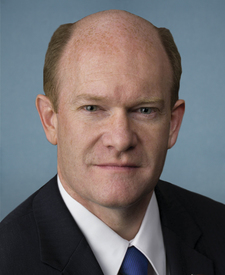


Legislative Progress
ReportedCommittee on Small Business and Entrepreneurship. Hearings held.
Committee on Small Business and Entrepreneurship. Hearings held.
Committee on Small Business and Entrepreneurship. Hearings held.
Committee on Small Business and Entrepreneurship. Hearings held.
Reported by Ms. Ernst, with an amendment
Placed on Senate Legislative Calendar under General Orders. Calendar No. …
Committee on Small Business and Entrepreneurship. Reported by Senator Ernst …
Committee on Small Business and Entrepreneurship. Ordered to be reported …
Committee on Small Business and Entrepreneurship. Hearings held.
Committee on Small Business and Entrepreneurship. Hearings held.
Stakeholder Effects
cui bono?How this legislation distributes effects. Mention counts reflect frequency, not effect magnitude.
SBA Administrator staff, SBA Inspector General, SBA loan staff
Small manufacturers, Small manufacturers receiving larger loans
Positive-direction: Small manufacturers
Negative-direction: Small manufacturers receiving larger loans
Congressional small-business committees, Taxpayers
Bill Structure & Actor Mappings
Who is "The Secretary" in each section?
- "administrator"
- → Small Business Administration Administrator
- "inspector_general"
- → SBA Inspector General
Key Definitions
Terms defined in this bill
A small business in NAICS manufacturing sectors 31, 32, or 33 whose production facilities are all located in the United States.
We use a combination of our own taxonomy and classification in addition to large language models to assess meaning and potential beneficiaries. High confidence means strong textual evidence. Always verify with the original bill text.
Learn more about our methodology