To provide the Congressional Budget Office with necessary authorities to expedite the sharing of data from executive branch agencies, and for other purposes.
Analysis under review: This bill has generated analysis that may be too generic or incomplete. Clause-level evidence remains available below.
Summary
What This Bill Does
This bill amends the Privacy Act of 1974 to add a new exception allowing federal agencies to share personal data with the Congressional Budget Office (CBO). Specifically, it adds a new paragraph to the conditions of disclosure in 5 U.S.C. 552a(b) permitting disclosure of records to the CBO Director or authorized representatives when performing CBO duties. This removes a legal barrier that previously prevented agencies from sharing certain data needed for budget scoring and policy analysis.
Who Benefits and How
The Congressional Budget Office benefits by gaining legal authority to access federal agency data containing personal information, improving the accuracy and completeness of its budget estimates and policy analyses. Members of Congress and congressional committees benefit from more reliable CBO cost estimates. The general public benefits indirectly from better-informed legislative decision-making based on more complete data analysis.
Who Bears the Burden and How
Federal agencies bear an administrative burden of processing data requests from CBO under this new disclosure authority. Individuals whose records are held by federal agencies bear a privacy burden, as their personal information can now be shared with an additional government entity (CBO) without their consent. However, CBO is already subject to strict confidentiality requirements for data it receives.
Key Provisions
- Amends the Privacy Act of 1974 (5 U.S.C. 552a(b)) to add a new disclosure exception for CBO (Section 2)
- Permits disclosure of agency records to the CBO Director or authorized representatives in the course of performing CBO duties (Section 2)
- Renumbers existing paragraphs (11) and (12) as (12) and (13) to accommodate the new provision (Section 2)
Evidence Chain:
This summary is generated from the full bill text using AI analysis. Expand "Detailed Analysis" below for identified beneficiaries/burden bearers.
At a Glance
What This Bill Does
Amends the Privacy Act of 1974 to permit federal agencies to disclose personal records to the Congressional Budget Office for the performance of CBO duties, removing a legal barrier to data sharing for budget analysis.
Key Policy Areas
Government Operations, Privacy, Budget and Spending
Primary Purpose
Amends the Privacy Act of 1974 to permit federal agencies to disclose personal records to the Congressional Budget Office for the performance of CBO duties, removing a legal barrier to data sharing for budget analysis.
Policy Domains
Congressional Budget Office Data Access Act
Identified Gains
Contextual inference, no direct clause citation- Congressional Budget Office
- Members of Congress
- Congressional committees
Contextual inference, no direct clause citation
Identified Costs
Contextual inference, no direct clause citation- Federal agencies (data disclosure processing)
- Individuals whose records are held by federal agencies
Contextual inference, no direct clause citation
Sponsors


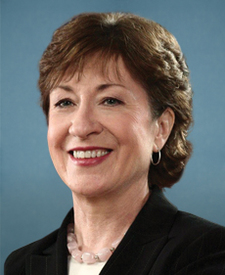
Legislative Progress
Enrolled (Passed Congress)Mr. Peters (for himself, Ms. Collins, and Mr. Lankford) introduced …
Mr. Peters (for himself and Ms. Collins) introduced the following …
Passed House (inferred from enr version)
Passed Senate (inferred from enr version)
Enrolled Bill (inferred from enr version)
Stakeholder Effects
cui bono?How this legislation distributes effects. Mention counts reflect frequency, not effect magnitude.
Congressional Budget Office, Federal agencies holding personal data
Bill Structure & Actor Mappings
Who is "The Secretary" in each section?
- "the_director"
- → Director of the Congressional Budget Office
We use a combination of our own taxonomy and classification in addition to large language models to assess meaning and potential beneficiaries. High confidence means strong textual evidence. Always verify with the original bill text.
Learn more about our methodology