To permit COPS grants to be used for the purpose of increasing the compensation and hiring of law enforcement officers, and for other purposes.
Analysis under review: This bill has generated analysis that may be too generic or incomplete. Clause-level evidence remains available below.
Summary
What This Bill Does
The COPS on the Beat Grant Program Parity Act of 2023 significantly restructures the COPS grant program. It adds increasing law enforcement officer wages as a new eligible grant use for low-income jurisdictions (below 70% of national median household income), restructures the matching fund requirements to provide reduced non-Federal contribution rates (90% to 75% over four years) for qualifying rural areas, raises the per-officer funding cap from the current level to $75,000 with waiver authority, legislatively establishes the COPS Office with a director having final grant authority, and mandates biennial GAO reports on law enforcement diversity.
Who Benefits and How
Rural and low-income law enforcement agencies benefit most from reduced matching requirements (starting at only 10% local match versus 25% standard), new authority to use grants for officer compensation up to 80% of national median income, and raised per-officer funding caps. The COPS Office benefits from formal statutory establishment and clear director authority. Small jurisdictions benefit from provisions redirecting unused large-jurisdiction grant funds.
Who Bears the Burden and How
Federal taxpayers bear increased costs from higher federal matching rates for rural jurisdictions and the raised $75,000 per-officer cap. The Attorney General bears new responsibilities for establishing the COPS Office structure, granting waivers, and implementing revised matching formulas. GAO must produce comprehensive reports in FY2027 and FY2032 on law enforcement diversity metrics. Local jurisdictions still must provide decreasing non-Federal match and develop sustainability plans.
Key Provisions
- Adds officer wage increases as eligible COPS grant use for jurisdictions below 70% national median household income (Section 3)
- Removes the cap on number of officers funded per jurisdiction (Section 3)
- Creates tiered matching: 90%/85%/80%/75% federal share for qualifying rural areas with median income below 80% national (Section 3)
- Raises per-officer hiring cap to $75,000 with AG waiver authority (Section 3)
- Redirects unused large-jurisdiction funds to small jurisdictions (Section 3)
- Legislatively establishes COPS Office within DOJ with appointed Director (Section 4)
- Mandates GAO diversity reports in FY2027 and FY2032 (Section 5)
Evidence Chain:
This summary is generated from the full bill text using AI analysis. Expand "Detailed Analysis" below for identified beneficiaries/burden bearers.
At a Glance
What This Bill Does
Overhauls the COPS grant program to add law enforcement officer compensation as an eligible use, creates reduced matching requirements for rural and low-income jurisdictions, legislatively establishes the COPS Office, raises the per-officer hiring cap to $75,000, and mandates GAO reports on law enforcement diversity and community representation.
Key Policy Areas
Criminal Justice, Law Enforcement, Rural Development
Primary Purpose
Overhauls the COPS grant program to add law enforcement officer compensation as an eligible use, creates reduced matching requirements for rural and low-income jurisdictions, legislatively establishes the COPS Office, raises the per-officer hiring cap to $75,000, and mandates GAO reports on law enforcement diversity and community representation.
Policy Domains
COPS on the Beat Grant Program Parity Act of 2023
Identified Gains
Contextual inference, no direct clause citation- Rural and low-income law enforcement agencies
- Law enforcement officers in low-income jurisdictions
- COPS Office (formalized authority)
- Small jurisdictions (fund reallocation)
Contextual inference, no direct clause citation
Identified Costs
Contextual inference, no direct clause citation- Federal taxpayers
- Attorney General / DOJ
- GAO
Contextual inference, no direct clause citation
Sponsors
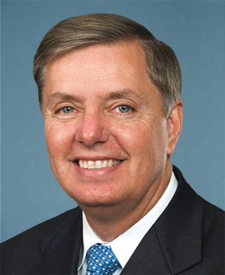
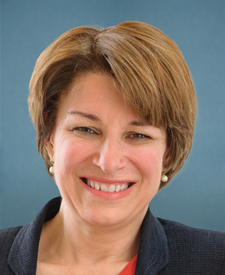
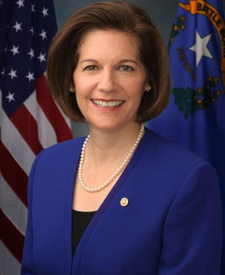
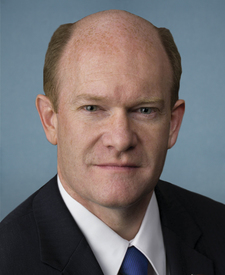
Legislative Progress
ReportedReported by Mr. Durbin, without amendment
Mr. Graham (for himself, Ms. Klobuchar, Ms. Cortez Masto, Mr. …
Mr. Graham (for himself and Ms. Klobuchar) introduced the following …
Stakeholder Effects
cui bono?How this legislation distributes effects. Mention counts reflect frequency, not effect magnitude.
COPS Office, Government Accountability Office
Positive-direction: COPS Office
Negative-direction: Government Accountability Office
Law enforcement officers in low-income jurisdictions, Taxpayers
Positive-direction: Law enforcement officers in low-income jurisdictions
Negative-direction: Taxpayers
Small jurisdictions (under 150,000 population), States, local governments, and tribal governments
Bill Structure & Actor Mappings
Who is "The Secretary" in each section?
- "the_attorney_general"
- → Attorney General, acting through the Director of the COPS Office
- "the_comptroller_general"
- → Comptroller General of the United States
Key Definitions
Terms defined in this bill
Not explicitly defined but referenced for jurisdictions operating below maximum funded officer levels.
The Attorney General, acting through the Director of the Office of Community Oriented Policing Services.
As defined in section 40002(a) of the Violent Crime Control and Law Enforcement Act of 1994 (34 U.S.C. 12291(a)).
We use a combination of our own taxonomy and classification in addition to large language models to assess meaning and potential beneficiaries. High confidence means strong textual evidence. Always verify with the original bill text.
Learn more about our methodology