Retirement Savings for Americans Act of 2025
Analysis under review: This bill has generated analysis that may be too generic or incomplete. Clause-level evidence remains available below.
Summary
What This Bill Does
The Retirement Savings for Americans Act of 2025 creates a new federal retirement savings program for the roughly 57 million American workers who lack access to employer-sponsored retirement plans. The bill establishes an "American Worker Retirement Fund" - similar to the federal Thrift Savings Plan - with automatic enrollment and government-matched contributions to help low and moderate-income workers build retirement savings.
Who Benefits and How
Low and moderate-income workers without retirement plans benefit most significantly. They receive government matching contributions of up to 4% of their income (1% automatic plus up to 3% matched contributions) through a new refundable tax credit deposited directly into their retirement accounts. Workers can keep their accounts even when changing jobs, and their savings are protected from creditors.
Gig workers and independent contractors gain access to a retirement savings vehicle with government matching that was previously unavailable to them as self-employed individuals.
Asset management firms will compete for contracts to manage portions of what could become one of the largest investment funds in the country, with the requirement that no single manager control more than $500 billion or 10% of Fund assets.
Payroll service providers will see increased demand as employers must integrate the new enrollment and contribution systems into their payroll processes.
Who Bears the Burden and How
Federal taxpayers bear the cost of the government matching contributions through the new Section 25F tax credit, which represents a significant new expenditure from the Treasury.
Small and medium businesses without existing retirement plans face new compliance requirements including mandatory enrollment of workers within one year, penalties of 2-10% for late enrollment or missed contribution deposits, and integration with payroll systems.
IRS and Treasury Department take on substantial new administrative responsibilities for processing tax credits, managing advance payments, and handling clawbacks for early withdrawals.
Asset managers selected by the Board face strict ERISA-style fiduciary duties with personal liability for losses, bonding requirements, and Department of Labor oversight.
Key Provisions
-
Automatic enrollment with opt-out: Workers at businesses without retirement plans are automatically enrolled at a 3% contribution rate unless they actively choose not to participate.
-
Government matching formula: Workers receive a tax credit of 1% of gross income automatically, plus 100% match on the first 3% of contributions and 50% match on the next 2%, with the credit capped at 5% of median income and phasing out for higher earners.
-
Thrift Savings Plan-style investment options: Six investment funds including Government Securities, Fixed-Income, Stock Index (US large-cap, small-cap, and international), and Life-Cycle target-date funds managed by professional asset managers.
-
Independent governance structure: A 5-member Board with investment expertise (no federal employees) appointed by the President with Congressional input, plus a 7-member Advisory Council representing investment professionals and small business advocates.
-
Strong participant protections: Account balances protected from creditors, spousal inheritance rights, hardship withdrawal options, and comprehensive fiduciary duties enforced by the Department of Labor.
-
Roth-style tax treatment: Contributions are made with after-tax dollars but qualified withdrawals in retirement are tax-free, similar to a Roth IRA.
Evidence Chain:
This summary is generated from the full bill text using AI analysis. Expand "Detailed Analysis" below for identified beneficiaries/burden bearers.
At a Glance
What This Bill Does
Establishes a new federal retirement savings program called the American Worker Retirement Plan, providing government-matched retirement accounts for workers without access to employer-sponsored retirement plans, with automatic enrollment and tax credits.
Who Benefits
- Low and moderate income workers without employer retirement plans
- Independent contractors and gig economy workers
- Small business employees
Who Bears Costs
- Federal Treasury (funding government matching contributions)
- Small and medium businesses (compliance with enrollment requirements)
- Existing retirement plan providers (competitive pressure from new government-administered option)
Key Policy Areas
Retirement Security, Tax Policy, Labor & Employment, Financial Services, Federal Administration
Primary Purpose
Establishes a new federal retirement savings program called the American Worker Retirement Plan, providing government-matched retirement accounts for workers without access to employer-sponsored retirement plans, with automatic enrollment and tax credits.
Policy Domains
Legislative Strategy
"Creates a Thrift Savings Plan-like retirement program for private sector workers without employer plans, using automatic enrollment with opt-out and government matching via refundable tax credits."
Identified Gains
- Low and moderate income workers without employer retirement plans
- Independent contractors and gig economy workers
- Small business employees
- Financial services and investment management industry (asset managers selected by the Board)
Identified Costs
- Federal Treasury (funding government matching contributions)
- Small and medium businesses (compliance with enrollment requirements)
- Existing retirement plan providers (competitive pressure from new government-administered option)
Sponsors

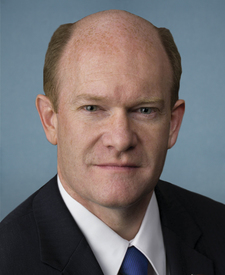
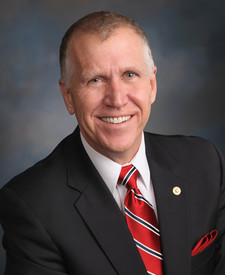

Legislative Progress
In CommitteeMr. Hickenlooper (for himself and Mr. Tillis) introduced the following …
Read twice and referred to the Committee on Finance.
Introduced in Senate
Stakeholder Effects
cui bono?How this legislation distributes effects. Mention counts reflect frequency, not effect magnitude.
Former participants who changed jobs, Fund participants, Future retirees participating in the Fund
Positive-direction: Former participants who changed jobs, Fund participants, Future retirees participating in the Fund, Low and moderate income workers, Low-income workers receiving public assistance, Participants in the Fund, Participants receiving Roth-style tax treatment, Participants receiving government matching, Qualifying workers enrolling in the Fund, Retiring workers with Fund accounts, Spouses and beneficiaries of participants, Spouses of participants, Workers automatically enrolled, Workers without employer retirement plans
Negative-direction: High-income participants above 414(q) threshold, Workers who withdraw funds early
Annuity providers, Asset management firms selected by the Board, Asset managers selected by the Board
Positive-direction: Annuity providers, Asset management firms selected by the Board, Board members and fiduciaries, Fiduciary liability insurance providers, Fund administration and recordkeeping services, Index fund providers, Investment and pension management professionals, Large asset management firms, Large banks serving as custodians, Surety bond providers
Negative-direction: Asset managers selected by the Board, Fiduciaries handling Fund assets
Board members, Board members and Executive Director, Department of Labor enforcement division
Positive-direction: Board members
Negative-direction: Board members and Executive Director, Department of Labor enforcement division, Federal Treasury, IRS tax administration, U.S. Treasury
Small and medium businesses without retirement plans, Small businesses without retirement plans
Workers without employer-sponsored retirement plans
Bill Structure & Actor Mappings
Who is "The Secretary" in each section?
- "the_secretary"
- → Secretary of the Treasury
- "the_board"
- → American Worker Retirement Investment Board
- "the_secretary"
- → Secretary of the Treasury
- "the_executive_director"
- → Executive Director of the American Worker Retirement Investment Board
- "the_board"
- → American Worker Retirement Investment Board
- "the_chair"
- → Chair of the Board designated by the President
- "the_secretary"
- → Secretary of Labor (for fiduciary regulations)
- "the_executive_director"
- → Executive Director appointed under Section 203
- "the_secretary_of_the_treasury"
- → Secretary of the Treasury
- "the_secretary"
- → Secretary of the Treasury
Note: The Secretary refers to Secretary of the Treasury in Title I and Title III for tax and fund administration, but Secretary of Labor in Title II for fiduciary responsibility regulations.
Key Definitions
Terms defined in this bill
An account established and maintained under section 107 for a participant in the Fund.
The American Worker Retirement Investment Board established under section 201.
Any entity, including any sole proprietor, partnership, limited liability company, or corporation, that engages in interstate commerce.
Includes eligible retirement plans under IRC 402(c)(8)(B), the Thrift Savings Plan, and other tax-deferred employee retirement plans determined by the Secretary of the Treasury.
A participant who has an account with the Fund and is no longer a qualifying worker.
The American Worker Retirement Fund established under section 101(a).
Any qualifying worker who is enrolled to participate in the Fund under section 104(a) and has not opted out.
Any business that employs a qualifying worker or contracts with an independent contractor who is a qualifying worker and opts to enroll them.
An employee employed by a business without an existing retirement plan (or not eligible for it), or a self-employed independent contractor without such plans.
Has the meaning given the term participant by section 2(13) - a qualifying worker enrolled in the Fund who has not opted out.
The most recent Median Personal Income for the population 15 and over in the US, as published in Census Bureau Current Population Survey Tables.
We use a combination of our own taxonomy and classification in addition to large language models to assess meaning and potential beneficiaries. High confidence means strong textual evidence. Always verify with the original bill text.
Learn more about our methodology