Halting Ownership and Non-Ethical Stock Transactions (HONEST) Act
Summary
What This Bill Does
Bars Members of Congress, the President, the Vice President, and their spouses and dependent children from buying covered investments, requires divestment of covered investments and qualified blind trusts on statutory timelines, creates ethics-office public documentation and civil penalties, adds $500 STOCK Act late-transaction-report fines, and requires searchable, sortable, downloadable, API-accessible financial-disclosure databases.
Who Benefits and How
Public disclosure users benefit because House and Senate databases must allow searching, sorting, downloading, and API access by filer name, asset, transaction type, ticker symbol, notification date, amount, and transaction date while complying with Section 508 and WCAG accessibility standards. Ethics offices benefit from explicit authority to issue rules, grant limited extensions, publish notices, impose civil penalties, and require reports on covered payments. Federal taxpayers benefit from disgorged profits, civil penalties, and $500 late-report fines being directed to the Treasury. Trust and divestiture administrators benefit from detailed rules for qualified blind trust dissolution, certificates of divestiture, permitted property, family-trust exemptions, inherited investments, and dependent-child small holdings.
Who Bears the Burden and How
Members of Congress, the President, the Vice President, spouses, and dependent children bear major investment restrictions: no new covered-investment purchases, required divestment of securities, commodities, futures, digital assets, derivatives, indirect holdings, private funds, trusts, employee benefit plans, deferred compensation plans, and carried interests unless an exclusion or exemption applies. Covered officials must dissolve qualified blind trusts, report covered payments, respond to ethics-office notices, and face penalties for continuing noncompliance. Supervising ethics offices must publish requests, responses, notices, extensions, penalties, trust dissolution notices, and civil-penalty information. Reporting individuals face $500 fines for each late transaction report beginning March 31, 2027.
Key Provisions
- Bars covered persons from purchasing covered investments on enactment and restricts later sales except for directed divestment.
- Requires covered persons, spouses, and dependent children to divest covered investments on statutory timelines, with special rules for illiquid investments, inherited investments, family trusts, and dependent-child holdings.
- Requires qualified blind trusts holding covered investments to divest and dissolve, with public notices to ethics offices.
- Authorizes supervising ethics offices to publish documentation, grant limited extensions, issue guidance, and impose civil penalties for continuing noncompliance.
- Requires reports of covered federal payments such as loans, contracts, and grants made to covered persons or controlled businesses.
- Adds a $500 fine for each STOCK Act transaction report failure and deposits fines in the Treasury.
- Requires online financial-disclosure databases to be searchable, sortable, downloadable, API-accessible, and accessible under Section 508 and WCAG.
Evidence Chain:
This summary is generated from the full bill text using AI analysis. Expand "Detailed Analysis" below for identified beneficiaries/burden bearers with clause-level evidence links.
At a Glance
What This Bill Does
Bars Members of Congress, the President, the Vice President, and their spouses and dependent children from buying covered investments, requires divestment of covered investments and qualified blind trusts on statutory timelines, creates ethics-office public documentation and civil penalties, adds $500 STOCK Act late-transaction-report fines, and requires searchable, sortable, downloadable, API-accessible financial-disclosure databases.
Key Policy Areas
Government Ethics, Financial Disclosure, Congress, Executive Branch
Primary Purpose
Bars Members of Congress, the President, the Vice President, and their spouses and dependent children from buying covered investments, requires divestment of covered investments and qualified blind trusts on statutory timelines, creates ethics-office public documentation and civil penalties, adds $500 STOCK Act late-transaction-report fines, and requires searchable, sortable, downloadable, API-accessible financial-disclosure databases.
Policy Domains
House resolution provisions
Identified Gains
- Public disclosure users benefit because House and Senate databases must allow searching, sorting, downloading, and API access by filer name, asset, transaction type, ticker symbol, notification date, amount, and transaction date while complying with Section 508 and WCAG accessibility standards
- Ethics offices benefit from explicit authority to issue rules, grant limited extensions, publish notices, impose civil penalties, and require reports on covered payments
- Federal taxpayers benefit from disgorged profits, civil penalties, and $500 late-report fines being directed to the Treasury
- Trust and divestiture administrators benefit from detailed rules for qualified blind trust dissolution, certificates of divestiture, permitted property, family-trust exemptions, inherited investments, and dependent-child small holdings
Identified Costs
- Members of Congress, the President, the Vice President, spouses, and dependent children bear major investment restrictions: no new covered-investment purchases, required divestment of securities, commodities, futures, digital assets, derivatives, indirect holdings, private funds, trusts, employee benefit plans, deferred compensation plans, and carried interests unless an exclusion or exemption applies
- Covered officials must dissolve qualified blind trusts, report covered payments, respond to ethics-office notices, and face penalties for continuing noncompliance
- Supervising ethics offices must publish requests, responses, notices, extensions, penalties, trust dissolution notices, and civil-penalty information
- Reporting individuals face $500 fines for each late transaction report beginning March 31, 2027
Sponsors



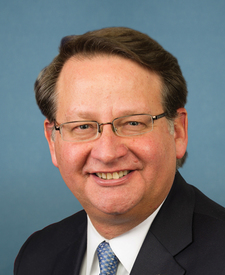
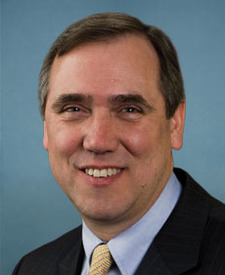
Legislative Progress
ReportedPlaced on Senate Legislative Calendar under General Orders. Calendar No. …
Reported by Mr. Paul, with an amendment
Committee on Homeland Security and Governmental Affairs. Reported by Senator …
Committee on Homeland Security and Governmental Affairs. Ordered to be …
Introduced in Senate
Mr. Hawley (for himself, Mr. Moreno, Mr. Ossoff, Mr. Peters, …
Read twice and referred to the Committee on Homeland Security …
Mr. Hawley (for himself and Mr. Moreno) introduced the following …
Stakeholder Effects
cui bono?How this legislation distributes effects. Mention counts reflect frequency, not effect magnitude.
Covered federal officials, Dependent children of covered officials, Federal officials with covered investments
Positive-direction: Public disclosure users, Taxpayers
Negative-direction: Covered federal officials, Dependent children of covered officials, Federal officials with covered investments, House disclosure database staff, Members of Congress, President, Reporting individuals, Senate disclosure database staff, Spouses of covered officials, Supervising ethics offices, Vice President
Bill Structure & Actor Mappings
Who is "The Secretary" in each section?
- "supervising_ethics_office"
- → House, Senate, executive, or judicial supervising ethics office
Key Definitions
Terms defined in this bill
Includes securities, commodities, futures, digital assets, derivatives, indirect interests, trusts, employee benefit plans, deferred compensation plans, and carried interests, subject to exclusions.
We use a combination of our own taxonomy and classification in addition to large language models to assess meaning and potential beneficiaries. High confidence means strong textual evidence. Always verify with the original bill text.
Learn more about our methodology