SEER Act 2025
Summary
What This Bill Does
The bill creates congressional findings on special Government employee conflicts of interest and ethics enforcement gaps, requires tightened conflict-of-interest rules for special Government employees requiring SF-50 designation, expanded particular matter standard, OGE concurrence for waivers, and mandatory public online database, and requires communication restrictions barring SGEs from official contact with agencies that contract with, regulate, or have enforcement actions against their large companies (>$1B market cap, >$100M federal contractor. It relies on compliance mandates and reporting requirements. The main policy areas are Labor.
Who Benefits and How
General public could face reduced risk, General public and transparency advocates could face reduced risk, and Low-level SGEs at GS-9 or below with limited duties would be affected.
Who Bears the Burden and How
Special Government employees who own or are executives of large companies would take on compliance duties, Special Government employees serving more than 130 days per year would take on compliance duties, and Special Government employees serving more than 60 days per year would take on compliance duties.
Key Provisions
- Creates congressional findings on special Government employee conflicts of interest and ethics enforcement gaps.
- Requires tightened conflict-of-interest rules for special Government employees requiring SF-50 designation, expanded particular matter standard, OGE concurrence for waivers, and mandatory public online database...
- Requires communication restrictions barring SGEs from official contact with agencies that contract with, regulate, or have enforcement actions against their large companies (>$1B market cap, >$100M federal contractor...
- Requires expanded public financial disclosure requirements for special Government employees not on advisory committees or serving as advisory committee chairs/vice chairs, with exemption for GS-9 and below with limited...
- Requires online public access to financial disclosure statements for executive branch SGEs not on advisory committees or serving as chairs/vice chairs, with GS-9 exemption.
Evidence Chain:
This summary is generated from the full bill text using AI analysis. Expand "Detailed Analysis" below for identified beneficiaries/burden bearers with clause-level evidence links.
At a Glance
What This Bill Does
The bill creates congressional findings on special Government employee conflicts of interest and ethics enforcement gaps, requires tightened conflict-of-interest rules for special Government employees requiring SF-50 designation, expanded particular matter standard, OGE concurrence for waivers, and mandatory public online database, and requires communication restrictions barring SGEs from official contact with agencies that contract with, regulate, or have enforcement actions against their large companies (>$1B market cap, >$100M federal contractor.
Key Policy Areas
Labor
Primary Purpose
The bill creates congressional findings on special Government employee conflicts of interest and ethics enforcement gaps, requires tightened conflict-of-interest rules for special Government employees requiring SF-50 designation, expanded particular matter standard, OGE concurrence for waivers, and mandatory public online database, and requires communication restrictions barring SGEs from official contact with agencies that contract with, regulate, or have enforcement actions against their large companies (>$1B market cap, >$100M federal contractor.
Policy Domains
Whole bill
Identified Gains
- General public
- General public and transparency advocates
- Low-level SGEs at GS-9 or below with limited duties
Identified Costs
- Special Government employees who own or are executives of large companies
- Special Government employees serving more than 130 days per year
- Special Government employees serving more than 60 days per year
- Special Government employees with significant authority (above GS-9)
- Special Government employees not on advisory committees
Sponsors

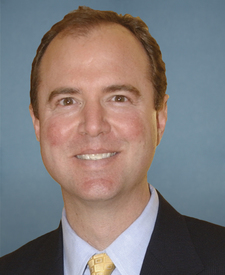
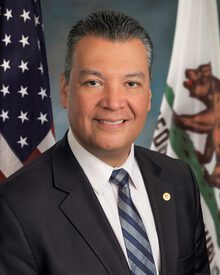

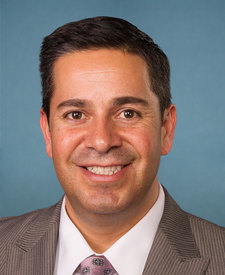
Legislative Progress
In CommitteeMs. Warren (for herself, Mr. Schumer, Mr. Peters, Mr. Luján, …
Read twice and referred to the Committee on Homeland Security …
Introduced in Senate
Stakeholder Effects
cui bono?How this legislation distributes effects. Mention counts reflect frequency, not effect magnitude.
Advisory committee chairs and vice chairs serving as SGEs, Executive branch special Government employees with authority, Office of Government Ethics
General public, General public and transparency advocates
Companies with monopolistic market control, Large companies (>$1B market cap or >$100M federal contractors), Private sector employers of long-serving SGEs
Low-level SGEs at GS-9 or below with limited duties
Bill Structure & Actor Mappings
Who is "The Secretary" in each section?
We use a combination of our own taxonomy and classification in addition to large language models to assess meaning and potential beneficiaries. High confidence means strong textual evidence. Always verify with the original bill text.
Learn more about our methodology