Climate Change Financial Risk Act of 2025
Analysis under review: This bill has generated analysis that may be too generic or incomplete. Clause-level evidence remains available below.
Summary
This bill, the Climate Change Financial Risk Act of 2025, directs the Federal Reserve to assess how climate change threatens the financial system. It requires the Fed to develop three climate risk scenarios (1.5C, 2C, and current-trajectory warming) and conduct biennial stress tests on financial institutions with 250 billion dollars or more in assets, evaluating whether they have enough capital to absorb climate-related losses. A 10-member Climate Risk Scenario Technical Development Group of climate scientists and economists will advise on scenario design. The first three rounds of stress tests carry no penalties, but subsequent rounds require covered entities to submit climate risk resolution plans. If the Fed rejects a plan, the institution cannot make capital distributions (dividends, buybacks). Smaller institutions (10 billion dollars or more in assets) face sub-systemic surveys rather than full stress tests. The bill also requires the Fed to coordinate with NOAA, EPA, DOE, NASA, and other climate science agencies.
Evidence Chain:
This summary is generated from the full bill text using AI analysis. Expand "Detailed Analysis" below for identified beneficiaries/burden bearers.
At a Glance
What This Bill Does
Requires the Federal Reserve to develop climate change risk scenarios and conduct biennial climate stress tests on the largest financial institutions, establishes a Climate Risk Scenario Technical Development Group, and mandates sub-systemic surveys of smaller financial institutions to assess climate-related financial risks.
Who Benefits
- Financial system stability (reduced systemic climate risk)
- Communities vulnerable to climate change (via fair services requirements)
- Climate science agencies (expanded advisory role)
Who Bears Costs
- Large financial institutions (new stress tests, resolution plans, potential capital distribution restrictions)
- Fossil fuel companies and energy-intensive industries (transition risk exposure surfaced)
- Smaller supervised institutions (survey compliance requirements)
Key Policy Areas
{'domain': 'Finance', 'evidence': ['3', '6', '7']}, {'domain': 'Environment', 'evidence': ['2', '5']}, {'domain': 'Energy', 'evidence': ['2']}
Primary Purpose
Requires the Federal Reserve to develop climate change risk scenarios and conduct biennial climate stress tests on the largest financial institutions, establishes a Climate Risk Scenario Technical Development Group, and mandates sub-systemic surveys of smaller financial institutions to assess climate-related financial risks.
Policy Domains
Legislative Strategy
"Integrate climate risk into the existing prudential supervision framework through the Federal Reserve stress testing regime, gradually escalating from information-gathering to binding capital requirements"
Sponsors

Legislative Progress
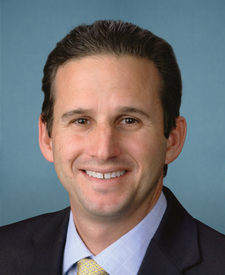
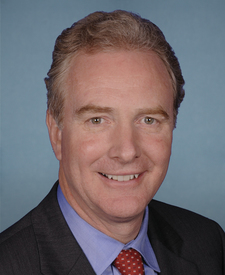
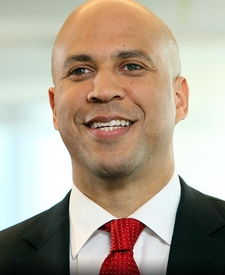
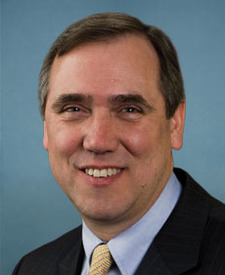
In CommitteeMr. Schatz (for himself, Ms. Warren, Mr. Merkley, Mr. Van …
Read twice and referred to the Committee on Banking, Housing, …
Introduced in Senate
Stakeholder Effects
cui bono?How this legislation distributes effects. Mention counts reflect frequency, not effect magnitude.
Large financial institutions (covered entities), Large financial institutions with 250B+ assets, Mid-size and smaller supervised financial institutions
Federal Reserve Board of Governors, Federal Reserve, OCC, and FDIC
Bank shareholders, Financial services industry, Financial system participants
Positive-direction: Financial system participants
Negative-direction: Bank shareholders
Bill Structure & Actor Mappings
Who is "The Secretary" in each section?
- "covered_entity"
- → Nonbank financial company or bank holding company with 250B+ in assets (or 100B+ if Fed determines appropriate)
- "surveyed_entity"
- → Supervised institution with 10B+ in assets that is not a covered entity
- "board_of_governors"
- → Board of Governors of the Federal Reserve System
- "climate_science_leads"
- → NOAA, EPA, DOE, NASA, USGS, Interior, State Dept, and other Federal agencies
- "technical_development_group"
- → Climate Risk Scenario Technical Development Group (10 members: 5 climate scientists, 5 economists)
Key Definitions
Terms defined in this bill
We use a combination of our own taxonomy and classification in addition to large language models to assess meaning and potential beneficiaries. High confidence means strong textual evidence. Always verify with the original bill text.
Learn more about our methodology