Finding ORE Act
Summary
What This Bill Does
Authorizes the Interior Secretary, through USGS, to enter memoranda of understanding with partner foreign countries for critical-mineral and rare-earth mapping, while seeking supply-chain resilience, U.S. or allied right of first refusal for further development, private-sector investment, protected mapping data, State Department concurrence, congressional notice and reports, and private-sector consultation.
Who Benefits and How
USGS mineral mapping staff benefit from authority to cooperate with partner foreign countries on geologic, geophysical, geochemical, spectroscopic, prospectivity, resource-assessment, and derivative map products. Partner foreign countries benefit from mapping assistance, natural-resource management collaboration, capacity building, higher-education training, standards training, and cooperation with U.S. agencies, research centers, universities, and private companies. U.S. mining companies and allied mining companies benefit from a right-of-first-refusal objective for further development of mapped critical minerals and rare earths. Congressional energy, foreign-affairs, natural-resources, and appropriations committees benefit from 30-day notice and MOU reports on partners, scope, activities, estimated costs, and funding sources.
Who Bears the Burden and How
Interior and USGS officials must negotiate MOUs, protect mapping data from unauthorized access by nonparty or nonallied entities, notify Congress before signing, submit implementation reports, obtain State Department concurrence, and consult private-sector actors. State Department staff must concur on partner selection, negotiation, implementation, and use of State funds. Partner-country agencies must share data and coordinate training while managing any domestic political consequences of offering U.S. or allied companies first-refusal opportunities. Nonallied companies and nonparty governments face restricted access to mapping data created under the MOUs.
Key Provisions
- Provides a sense of Congress favoring onshoring critical-mineral processing.
- Defines allied foreign country, critical mineral, partner foreign country, rare earth element, institution of higher education, and the Interior Secretary acting through USGS.
- Authorizes MOUs with partner foreign countries for scientific and technical cooperation in critical-mineral and rare-earth mapping.
- Directs negotiation objectives covering mapping assistance, U.S. or allied right of first refusal, private-sector investment, and protection of mapping data.
- Provides cooperative activities including geoscience data acquisition, mineral assessment, derivative maps, sustainable resource management, training, higher education, standards, and partner-country cooperation.
- Requires 30-day congressional notice and reports plus State Department concurrence and private-sector consultation.
- Preserves existing USGS authorities.
Evidence Chain:
This summary is generated from the full bill text using AI analysis. Expand "Detailed Analysis" below for identified beneficiaries/burden bearers with clause-level evidence links.
At a Glance
What This Bill Does
Authorizes the Interior Secretary, through USGS, to enter memoranda of understanding with partner foreign countries for critical-mineral and rare-earth mapping, while seeking supply-chain resilience, U.S. or allied right of first refusal for further development, private-sector investment, protected mapping data, State Department concurrence, congressional notice and reports, and private-sector consultation.
Key Policy Areas
Critical Minerals, Mining, USGS, Foreign Affairs
Primary Purpose
Authorizes the Interior Secretary, through USGS, to enter memoranda of understanding with partner foreign countries for critical-mineral and rare-earth mapping, while seeking supply-chain resilience, U.S. or allied right of first refusal for further development, private-sector investment, protected mapping data, State Department concurrence, congressional notice and reports, and private-sector consultation.
Policy Domains
House resolution provisions
Identified Gains
- USGS mineral mapping staff benefit from authority to cooperate with partner foreign countries on geologic, geophysical, geochemical, spectroscopic, prospectivity, resource-assessment, and derivative map products
- Partner foreign countries benefit from mapping assistance, natural-resource management collaboration, capacity building, higher-education training, standards training, and cooperation with U
- S
- agencies, research centers, universities, and private companies
- U
- S
Identified Costs
- Interior and USGS officials must negotiate MOUs, protect mapping data from unauthorized access by nonparty or nonallied entities, notify Congress before signing, submit implementation reports, obtain State Department concurrence, and consult private-sector actors
- State Department staff must concur on partner selection, negotiation, implementation, and use of State funds
- Partner-country agencies must share data and coordinate training while managing any domestic political consequences of offering U
- S
- or allied companies first-refusal opportunities
- Nonallied companies and nonparty governments face restricted access to mapping data created under the MOUs
Sponsors
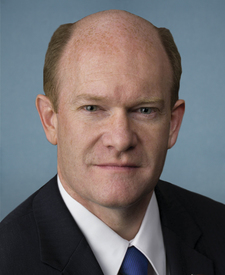
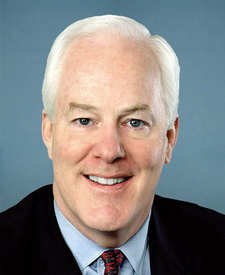
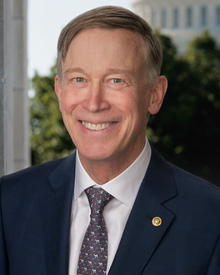
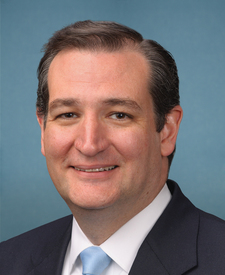

Legislative Progress
ReportedPlaced on Senate Legislative Calendar under General Orders. Calendar No. …
Reported by Mr. Risch, with an amendment
Committee on Foreign Relations. Reported by Senator Risch with an …
Committee on Foreign Relations. Ordered to be reported with an …
Introduced in Senate
Mr. Coons (for himself, Mr. Young, Mr. Hickenlooper, Mr. Cornyn, …
Read twice and referred to the Committee on Foreign Relations.
Mr. Coons (for himself, Mr. Young, Mr. Hickenlooper, and Mr. …
Stakeholder Effects
cui bono?How this legislation distributes effects. Mention counts reflect frequency, not effect magnitude.
Allied mining companies, Interior minerals staff, Nonallied mining companies
Positive-direction: Allied mining companies, U.S. mining companies, USGS mineral mapping staff
Negative-direction: Interior minerals staff, Nonallied mining companies
Partner foreign countries, State Department resource staff
Positive-direction: Partner foreign countries
Negative-direction: State Department resource staff
Bill Structure & Actor Mappings
Who is "The Secretary" in each section?
- "secretary"
- → Secretary of the Interior acting through USGS
We use a combination of our own taxonomy and classification in addition to large language models to assess meaning and potential beneficiaries. High confidence means strong textual evidence. Always verify with the original bill text.
Learn more about our methodology