TAKE IT DOWN Act
Summary
What This Bill Does
This bill, the TAKE IT DOWN Act, makes it a federal crime to knowingly share intimate images of someone without their consent, including AI-generated "digital forgeries" (deepfakes). It also requires online platforms to remove such content within 48 hours of receiving a valid takedown request from the victim.
Who Benefits and How
- Victims of revenge porn and deepfakes gain federal legal protections and a guaranteed 48-hour removal process on platforms
- Minors receive enhanced protections with harsher penalties for offenders (up to 3 years imprisonment vs. 2 years for adults)
- Broadband ISPs, email providers, and curated content platforms are explicitly excluded from compliance obligations
- Platforms that act in good faith receive liability shields for removing reported content
Who Bears the Burden and How
- Social media and user-generated content platforms must build removal request systems, respond within 48 hours, and identify/remove copies of reported content
- Perpetrators face federal criminal penalties: up to 2 years for sharing adult images, up to 3 years involving minors, plus mandatory forfeiture and restitution
- Those who threaten to publish face separate penalties (up to 18 months for adults, 30 months for minors)
- Federal Trade Commission must enforce platform compliance, treating violations as unfair/deceptive practices
Key Provisions
- Amends Section 223 of the Communications Act to criminalize nonconsensual intimate image sharing
- Covers both authentic images and AI-generated "digital forgeries" indistinguishable from real depictions
- Defines consent as affirmative, conscious, and voluntary, free from force, fraud, or coercion
- Requires platforms to establish a clear notice-and-removal process within 1 year of enactment
- Exempts law enforcement, medical/scientific use, legal proceedings, and reporting of unlawful content
- Section 230 immunity does not apply to platform failures to remove reported content
- Severability clause preserves remaining provisions if any part is struck down.
Evidence Chain:
This summary is generated from the full bill text using AI analysis. Expand "Detailed Analysis" below for identified beneficiaries/burden bearers with clause-level evidence links.
At a Glance
What This Bill Does
Criminalizes sharing nonconsensual intimate images (including AI deepfakes) and requires online platforms to remove such content within 48 hours of notification.
Key Policy Areas
Technology, Criminal Justice, Privacy, Online Safety
Primary Purpose
Criminalizes sharing nonconsensual intimate images (including AI deepfakes) and requires online platforms to remove such content within 48 hours of notification.
Policy Domains
TAKE IT DOWN Act
Identified Gains
- Victims of nonconsensual intimate image sharing
- Minors targeted by deepfakes
- Broadband internet service providers
- Email service providers
- Platforms acting in good faith
Identified Costs
- Social media platforms
- User-generated content platforms
- Federal Trade Commission
- Department of Justice
Sponsors
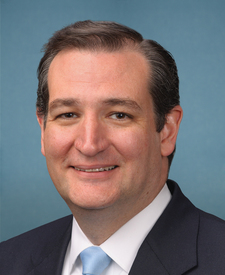
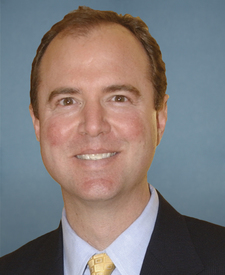


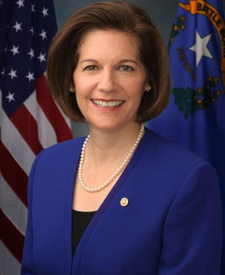
Legislative Progress
Signed into LawBecame Public Law No: 119-12.
Signed by President.
Presented to President.
Motion to reconsider laid on the table Agreed to without …
On motion to suspend the rules and pass the bill …
Passed/agreed to in House: On motion to suspend the rules …
Considered as unfinished business. (consideration: CR H1669)
At the conclusion of debate, the Yeas and Nays were …
DEBATE - The House proceeded with forty minutes of debate …
Considered under suspension of the rules. (consideration: CR H1644-1643)
Stakeholder Effects
cui bono?How this legislation distributes effects. Mention counts reflect frequency, not effect magnitude.
Email service providers, Social media and user-generated content platforms, Social media platforms and content hosting services
Positive-direction: Email service providers
Negative-direction: Social media and user-generated content platforms, Social media platforms and content hosting services
Perpetrators of nonconsensual intimate image sharing, Victims of nonconsensual intimate image sharing, Victims of nonconsensual intimate image sharing and deepfakes
Positive-direction: Victims of nonconsensual intimate image sharing, Victims of nonconsensual intimate image sharing and deepfakes
Negative-direction: Perpetrators of nonconsensual intimate image sharing
Department of Justice and federal prosecutors, Federal Trade Commission
Curated content platforms (streaming services, news sites)
On Motion to Suspend the Rules and Pass
TAKE IT DOWN Act
Bill Structure & Actor Mappings
Who is "The Secretary" in each section?
Key Definitions
Terms defined in this bill
Affirmative, conscious, voluntary authorization free from force, fraud, duress, misrepresentation, or coercion
Intimate visual depiction created through software, AI, machine learning, or other technological means that is indistinguishable from an authentic depiction when viewed by a reasonable person
Website, online service, or mobile application that serves the public and primarily provides a forum for user-generated content, or regularly publishes nonconsensual intimate content; excludes broadband ISPs, email, and curated content platforms
Person whose face, likeness, or distinguishing characteristic (such as a unique birthmark) is displayed in connection with an intimate visual depiction
We use a combination of our own taxonomy and classification in addition to large language models to assess meaning and potential beneficiaries. High confidence means strong textual evidence. Always verify with the original bill text.
Learn more about our methodology