University of Utah Research Park Act
Summary
What This Bill Does
Confirms that the University of Utah's use of about 593.54 acres in Salt Lake City as a university research park is a valid public purpose under the Recreation and Public Purposes Act, including previously approved development plans and related university purposes such as student housing and a transit hub.
Who Benefits and How
The University of Utah benefits from federal confirmation that its research park use is valid. Research park tenants benefit from reduced uncertainty over the land's public-purpose status. Students benefit if housing and transit hub uses proceed as related university purposes. Salt Lake City economic development stakeholders benefit from clearer authority for research park activity.
Who Bears the Burden and How
Interior land staff must treat the 1968 patent land and approved modifications as valid public purposes. Opponents of expanded research park development lose a federal public-purpose challenge. University land managers must keep uses consistent with research park and related university purposes. Local planners must coordinate student housing and transit impacts.
Key Provisions
- Confirms University of Utah research park use as a valid public purpose.
- Provides coverage for Interior-approved development plan modifications before enactment.
- Confirms related university purposes, including student housing and a transit hub.
- Defines the affected land as about 593.54 acres conveyed by the 1968 patent.
Evidence Chain:
This summary is generated from the full bill text using AI analysis. Expand "Detailed Analysis" below for identified beneficiaries/burden bearers with clause-level evidence links.
At a Glance
What This Bill Does
Confirms that the University of Utah's use of about 593.54 acres in Salt Lake City as a university research park is a valid public purpose under the Recreation and Public Purposes Act, including previously approved development plans and related university purposes such as student housing and a transit hub.
Key Policy Areas
Higher Education, Public Lands, Utah
Primary Purpose
Confirms that the University of Utah's use of about 593.54 acres in Salt Lake City as a university research park is a valid public purpose under the Recreation and Public Purposes Act, including previously approved development plans and related university purposes such as student housing and a transit hub.
Policy Domains
House resolution provisions
Identified Gains
- The University of Utah benefits from federal confirmation that its research park use is valid
- Research park tenants benefit from reduced uncertainty over the land's public-purpose status
- Students benefit if housing and transit hub uses proceed as related university purposes
- Salt Lake City economic development stakeholders benefit from clearer authority for research park activity
Identified Costs
- Interior land staff must treat the 1968 patent land and approved modifications as valid public purposes
- Opponents of expanded research park development lose a federal public-purpose challenge
- University land managers must keep uses consistent with research park and related university purposes
- Local planners must coordinate student housing and transit impacts
Sponsors
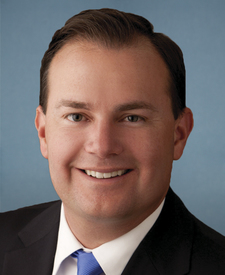
Mike Lee
R-UT | Primary Sponsor
Legislative Progress
ReportedPlaced on Senate Legislative Calendar under General Orders. Calendar No. …
Committee on Energy and Natural Resources. Reported by Senator Lee …
Reported by Mr. Lee, without amendment
Committee on Energy and Natural Resources. Ordered to be reported …
Mr. Lee (for himself and Mr. Curtis) introduced the following …
Read twice and referred to the Committee on Energy and …
Introduced in Senate
Stakeholder Effects
cui bono?How this legislation distributes effects. Mention counts reflect frequency, not effect magnitude.
Bill Structure & Actor Mappings
Who is "The Secretary" in each section?
We use a combination of our own taxonomy and classification in addition to large language models to assess meaning and potential beneficiaries. High confidence means strong textual evidence. Always verify with the original bill text.
Learn more about our methodology