To address mental health issues for youth, particularly youth of color, and for other purposes.
Analysis under review: This bill has generated analysis that may be too generic or incomplete. Clause-level evidence remains available below.
Summary
What This Bill Does
This bill addresses mental health disparities among racial and ethnic minority communities by expanding federal programs, research funding, and workforce training. It authorizes nearly $1 billion annually through 2031 across multiple agencies including the National Institutes of Health and the National Institute on Minority Health and Health Disparities.
Who Benefits and How
Racial and ethnic minority communities benefit from increased access to culturally competent mental health services and reduced stigma through public education. Health equity researchers and institutions receive substantial new funding ($150M for NIH clinical research, $750M for NIMHD annually). Mental health professionals in social work, psychology, psychiatry, and counseling benefit from enhanced training programs on cultural competency.
Who Bears the Burden and How
Federal taxpayers fund the approximately $1 billion in annual appropriations. Federal health agencies (HHS, NIH, SAMHSA) face new reporting and program implementation requirements.
Key Provisions
- Increases Primary and Behavioral Health Care grants to $80M/year with priority for entities serving minority populations
- Authorizes $750M annually for the National Institute on Minority Health and Health Disparities
- Mandates a National Academies study on mental health research gaps in minority groups
- Creates a new Section 554 requiring HHS to develop outreach strategies to reduce mental health stigma in minority communities
Evidence Chain:
This summary is generated from the full bill text using AI analysis. Expand "Detailed Analysis" below for identified beneficiaries/burden bearers.
At a Glance
What This Bill Does
Addresses mental health disparities among racial and ethnic minority groups by increasing funding, research, workforce training, and public education programs
Key Policy Areas
Healthcare, Mental Health, Public Health, Health Equity, Research
Primary Purpose
Addresses mental health disparities among racial and ethnic minority groups by increasing funding, research, workforce training, and public education programs
Policy Domains
Pursuing Equity in Mental Health Act
Identified Gains
Contextual inference, no direct clause citation- Racial and ethnic minority communities
- Mental health researchers
- Health equity institutions
- Mental health professionals
- Academic medical centers
- Community health organizations
Contextual inference, no direct clause citation
Identified Costs
Contextual inference, no direct clause citation- Federal taxpayers
- Federal health agencies
Contextual inference, no direct clause citation
Sponsors

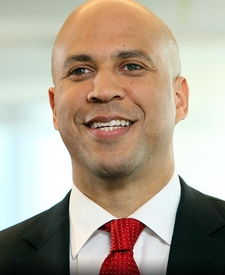
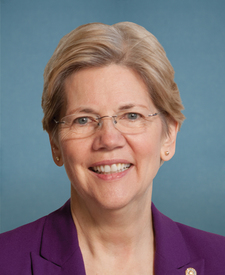
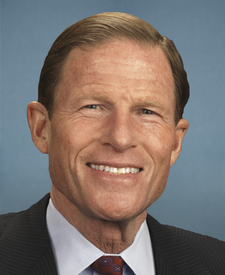

Legislative Progress
IntroducedMs. Hirono (for herself, Mr. Blumenthal, Ms. Smith, Ms. Warren, …
Stakeholder Effects
cui bono?How this legislation distributes effects. Mention counts reflect frequency, not effect magnitude.
Department of Health and Human Services, HHS/SAMHSA, National Institute on Minority Health and Health Disparities
National Institutes of Health faces effects in multiple directions
Positive-direction: National Institute on Minority Health and Health Disparities
Negative-direction: Department of Health and Human Services, HHS/SAMHSA
Clinical research institutions, Health disparities researchers, Health disparities researchers and institutions
Public health communications contractors, Racial and ethnic minority communities
Behavioral health service providers, Community health centers serving minority populations, Psychology and psychiatry training institutions
Mental health advocacy organizations serving minorities
Bill Structure & Actor Mappings
Who is "The Secretary" in each section?
- "the_director"
- → Director of the National Institutes of Health
- "the_secretary"
- → Secretary of Health and Human Services
- "the_assistant_secretary"
- → Assistant Secretary for Mental Health and Substance Use
Key Definitions
Terms defined in this bill
Has the meaning given to that term in section 1707(g) of the Public Health Service Act (42 U.S.C. 300u-6(g))
Has the meaning given to such term in section 409 of the Public Health Service Act (42 U.S.C. 284d)
We use a combination of our own taxonomy and classification in addition to large language models to assess meaning and potential beneficiaries. High confidence means strong textual evidence. Always verify with the original bill text.
Learn more about our methodology