Federal Home Loan Banks' Mission Activities Act
Summary
What This Bill Does
The bill creates states the purpose of the Act to reaffirm and improve Federal Home Loan Bank System participation in affordable housing, small business lending, and community development financing for underserved communities, expands the definition of community financial institution to include credit unions with NCUA-insured deposits and certified Community Development Financial Institutions (CDFIs), enabling them to access Federal Home Loan, and expands the affordable housing program to allow Federal Home Loan Banks to provide grants (not just subsidized advances) to members for financing low- and moderate-income housing, and increases the mandatory. It relies on definition changes, grants, appropriations, and compliance mandates. The main policy areas are Housing and Finance.
Who Benefits and How
Credit unions with NCUA-insured deposits could gain revenue opportunities, Certified Community Development Financial Institutions could gain revenue opportunities, and Low- and moderate-income homebuyers could see lower costs.
Who Bears the Burden and How
Federal Home Loan Banks could face higher costs, Federal Housing Finance Agency would take on compliance duties, and Federal Home Loan Bank executive officers would take on compliance duties.
Key Provisions
- Creates states the purpose of the Act to reaffirm and improve Federal Home Loan Bank System participation in affordable housing, small business lending, and community development financing for underserved communities.
- Expands the definition of community financial institution to include credit unions with NCUA-insured deposits and certified Community Development Financial Institutions (CDFIs), enabling them to access Federal Home Loan...
- Expands the affordable housing program to allow Federal Home Loan Banks to provide grants (not just subsidized advances) to members for financing low- and moderate-income housing, and increases the mandatory...
- Requires the FHFA Director to establish executive compensation for Federal Home Loan Bank officers based on mission achievement metrics including community investment advances, affordable housing program sponsorship...
- Requires the FHFA Director to annually report to Congress on collateral pledged to Federal Home Loan Banks, including analysis by collateral type and by Bank district.
Evidence Chain:
This summary is generated from the full bill text using AI analysis. Expand "Detailed Analysis" below for identified beneficiaries/burden bearers with clause-level evidence links.
At a Glance
What This Bill Does
The bill creates states the purpose of the Act to reaffirm and improve Federal Home Loan Bank System participation in affordable housing, small business lending, and community development financing for underserved communities, expands the definition of community financial institution to include credit unions with NCUA-insured deposits and certified Community Development Financial Institutions (CDFIs), enabling them to access Federal Home Loan, and expands the affordable housing program to allow Federal Home Loan Banks to provide grants (not just subsidized advances) to members for financing low- and moderate-income housing, and increases the mandatory.
Key Policy Areas
Housing, Finance
Primary Purpose
The bill creates states the purpose of the Act to reaffirm and improve Federal Home Loan Bank System participation in affordable housing, small business lending, and community development financing for underserved communities, expands the definition of community financial institution to include credit unions with NCUA-insured deposits and certified Community Development Financial Institutions (CDFIs), enabling them to access Federal Home Loan, and expands the affordable housing program to allow Federal Home Loan Banks to provide grants (not just subsidized advances) to members for financing low- and moderate-income housing, and increases the mandatory.
Policy Domains
Federal Home Loan Banks Mission Activities Act
Identified Gains
- Credit unions with NCUA-insured deposits
- Certified Community Development Financial Institutions
- Low- and moderate-income homebuyers
- Affordable rental housing developers
- Small community banks under USD 1 billion in assets
Identified Costs
- Federal Home Loan Banks
- Federal Housing Finance Agency
- Federal Home Loan Bank executive officers
Legislative Progress
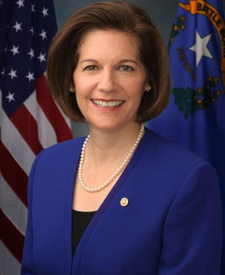
In CommitteeMs. Cortez Masto introduced the following bill; which was read …
Read twice and referred to the Committee on Banking, Housing, …
Introduced in Senate
Stakeholder Effects
cui bono?How this legislation distributes effects. Mention counts reflect frequency, not effect magnitude.
Congressional oversight committees, Federal Home Loan Bank executive officers, Federal Home Loan Banks
Positive-direction: Congressional oversight committees
Negative-direction: Federal Home Loan Bank executive officers, Federal Home Loan Banks, Federal Housing Finance Agency
Certified Community Development Financial Institutions, Community financial institutions receiving FHLB services, Credit unions with NCUA-insured deposits
Bill Structure & Actor Mappings
Who is "The Secretary" in each section?
- "the_banks"
- → Federal Home Loan Banks
- "the_director"
- → Director of the Federal Housing Finance Agency (FHFA)
- "secretary_of_treasury"
- → Secretary of the Treasury (for CDFI certification)
Key Definitions
Terms defined in this bill
An institution with insured deposits under FDIC or NCUA, or qualifying under section 4(a)(5), with less than $1 billion in average total assets over the preceding 3 years; OR a certified Community Development Financial Institution (CDFI)
We use a combination of our own taxonomy and classification in addition to large language models to assess meaning and potential beneficiaries. High confidence means strong textual evidence. Always verify with the original bill text.
Learn more about our methodology