To amend the Children’s Online Privacy Protection Act of 1998 to strengthen protections relating to the online collection, use, and disclosure of personal information of children and teens, and for other purposes.
Analysis under review: This bill has generated analysis that may be too generic or incomplete. Clause-level evidence remains available below.
Summary
What This Bill Does
The Children and Teens' Online Privacy Protection Act (COPPA 2.0) significantly expands federal online privacy protections. It extends COPPA's coverage from children under 13 to include teens ages 13-16, expands the definition of 'personal information' to include biometric data and precise geolocation, and establishes Fair Information Practice Principles limiting how companies can collect and use young people's data. It creates a new Youth Privacy and Marketing Division at the FTC.
Who Benefits and How
Children under 13 and teens ages 13-16 gain stronger privacy protections online. Parents receive enhanced rights to consent to data collection and request deletion of their children's information. Privacy advocates achieve a major expansion of federal online privacy law. The FTC gains new enforcement powers and a dedicated youth privacy division.
Who Bears the Burden and How
Website and app operators must implement new consent mechanisms for teen users, expand data minimization practices, and provide content removal tools. Social media platforms, online games, and apps popular with young users face significantly increased compliance costs. Ad tech and data broker companies lose the ability to collect and monetize teens' personal information without consent. Platforms must establish age verification and implement the new Fair Information Practice Principles.
Key Provisions
- Extends COPPA protections to cover teens ages 13-16 (not just children under 13)
- Prohibits targeted advertising to children and teens without consent
- Establishes Fair Information Practice Principles limiting data collection and use
- Requires operators to provide content/data deletion mechanisms for users and parents
- Creates Youth Privacy and Marketing Division at FTC with annual reporting to Congress
Evidence Chain:
This summary is generated from the full bill text using AI analysis. Expand "Detailed Analysis" below for identified beneficiaries/burden bearers.
At a Glance
What This Bill Does
Strengthens the Children's Online Privacy Protection Act (COPPA) by extending coverage to teens ages 13-16, expanding the definition of personal information, establishing Fair Information Practice Principles, and creating a new Youth Privacy and Marketing Division at the FTC.
Key Policy Areas
Privacy, Consumer Protection, Technology, Child Welfare
Primary Purpose
Strengthens the Children's Online Privacy Protection Act (COPPA) by extending coverage to teens ages 13-16, expanding the definition of personal information, establishing Fair Information Practice Principles, and creating a new Youth Privacy and Marketing Division at the FTC.
Policy Domains
Main - COPPA Amendments
Identified Gains
Contextual inference, no direct clause citation- Children and teens
- Parents
- Privacy advocates
- Federal Trade Commission
Contextual inference, no direct clause citation
Identified Costs
Contextual inference, no direct clause citation- Website and app operators
- Social media platforms
- Online advertising industry
- Data brokers
- Game developers targeting young users
Contextual inference, no direct clause citation
Sponsors

Legislative Progress
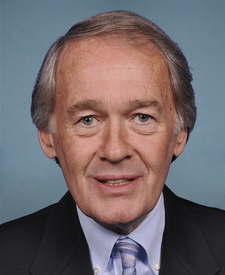
IntroducedMr. Markey (for himself and Mr. Cassidy) introduced the following …
Stakeholder Effects
cui bono?How this legislation distributes effects. Mention counts reflect frequency, not effect magnitude.
App platforms, App store platforms (Apple, Google), Mobile app developers
Federal Trade Commission, Government Accountability Office
Federal Trade Commission faces effects in multiple directions
Law enforcement, justice-system actors, and affected communities
Fintech companies serving teens, Fintech products for teens (banking apps, payment apps)
Bill Structure & Actor Mappings
Who is "The Secretary" in each section?
- "the_commission"
- → Federal Trade Commission
- "the_comptroller_general"
- → Comptroller General of the United States
Key Definitions
Terms defined in this bill
The Federal Trade Commission
Any person who for commercial purposes operates a website, online service, online application, mobile application, or connected device and collects personal information from users
An individual over the age of 12 and under the age of 17
Includes biometric information, precise geolocation information, and any identifier that permits contact or identification of a child or teen
We use a combination of our own taxonomy and classification in addition to large language models to assess meaning and potential beneficiaries. High confidence means strong textual evidence. Always verify with the original bill text.
Learn more about our methodology