PROSPECT Act
Summary
What This Bill Does
The bill creates congressional findings on childcare costs (averaging 24% of household income), student parent population (5.4 million), childcare access gaps at colleges, and community colleges' role in training childcare, defines key terms including community college, minority-serving institution, infant and toddler child care (under age 3), childcare desert, culturally responsive teaching, eligible entities, nontraditional hours, and authorizes $9 billion in appropriations for fiscal years 2026 through 2030 to carry out the infant and toddler childcare access program. It relies on grants, compliance mandates, definition changes, and appropriations. The main policy areas are Education, Higher Education, and Finance.
Who Benefits and How
Student parents with children under age 3 could see lower costs, Student parents at community colleges/MSIs could see lower costs, and Home-based and center-based childcare providers could gain revenue opportunities.
Who Bears the Burden and How
Department of Education would take on compliance duties, Federal government (increased matching) could face higher costs, and Planning grant recipients would take on compliance duties.
Key Provisions
- Creates congressional findings on childcare costs (averaging 24% of household income), student parent population (5.4 million), childcare access gaps at colleges, and community colleges' role in training childcare...
- Defines key terms including community college, minority-serving institution, infant and toddler child care (under age 3), childcare desert, culturally responsive teaching, eligible entities, nontraditional hours...
- Authorizes $9 billion in appropriations for fiscal years 2026 through 2030 to carry out the infant and toddler childcare access program.
- Establishes four grant programs: planning grants, access grants (free childcare for up to 500,000 infants/toddlers), impact grants (community childcare expansion), and pipeline grants (educator training). Requires...
- Establishes competitive grant application requirements including landscape reviews, vision statements, wage commitments (comparable to elementary educators), and selection criteria prioritizing high-need institutions...
Evidence Chain:
This summary is generated from the full bill text using AI analysis. Expand "Detailed Analysis" below for identified beneficiaries/burden bearers with clause-level evidence links.
At a Glance
What This Bill Does
The bill creates congressional findings on childcare costs (averaging 24% of household income), student parent population (5.4 million), childcare access gaps at colleges, and community colleges' role in training childcare, defines key terms including community college, minority-serving institution, infant and toddler child care (under age 3), childcare desert, culturally responsive teaching, eligible entities, nontraditional hours, and authorizes $9 billion in appropriations for fiscal years 2026 through 2030 to carry out the infant and toddler childcare access program.
Key Policy Areas
Education, Higher Education, Finance
Primary Purpose
The bill creates congressional findings on childcare costs (averaging 24% of household income), student parent population (5.4 million), childcare access gaps at colleges, and community colleges' role in training childcare, defines key terms including community college, minority-serving institution, infant and toddler child care (under age 3), childcare desert, culturally responsive teaching, eligible entities, nontraditional hours, and authorizes $9 billion in appropriations for fiscal years 2026 through 2030 to carry out the infant and toddler childcare access program.
Policy Domains
Title I - Infant and Toddler Child Care Access
Identified Gains
- Student parents with children under age 3
- Student parents at community colleges/MSIs
- Home-based and center-based childcare providers
- Eligible entities (community colleges, MSIs, consortia)
- Community colleges and minority-serving institutions
Identified Costs
- Department of Education
- Federal government (increased matching)
- Planning grant recipients
- Higher education institutions with childcare
- Grant applicants (community colleges, MSIs)
Sponsors
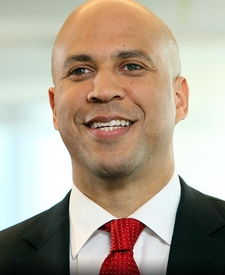
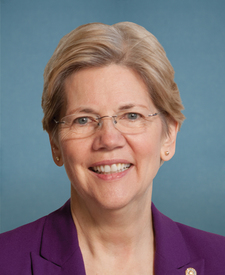
Legislative Progress
In CommitteeMr. Booker (for himself and Ms. Warren) introduced the following …
Read twice and referred to the Committee on Health, Education, …
Introduced in Senate
Stakeholder Effects
cui bono?How this legislation distributes effects. Mention counts reflect frequency, not effect magnitude.
Community colleges and MSIs with ECE programs, Community colleges and minority-serving institutions, Consortia of institutions
Positive-direction: Community colleges and MSIs with ECE programs, Community colleges and minority-serving institutions, Consortia of institutions, Early childhood educator students, Eligible entities (community colleges, MSIs, consortia), Eligible entities receiving grants, Individual community colleges and MSIs, Minority-serving institutions and under-resourced colleges, Student parents at higher education institutions
Negative-direction: Grant applicants (community colleges, MSIs), Grant recipients, Higher education institutions with childcare, Planning grant recipients
CCDBG-funded childcare programs, Childcare staff, Childcare workers
Congressional oversight, Department of Education, Federal government (increased matching)
Department of Education faces effects in multiple directions
Positive-direction: Congressional oversight
Negative-direction: Federal government (increased matching)
Children in campus childcare, College students with children, Protected classes of individuals
States administering CCDBG, States implementing higher infant/toddler childcare payment rates
Positive-direction: States implementing higher infant/toddler childcare payment rates
Negative-direction: States administering CCDBG
Childcare deserts and underserved communities
Bill Structure & Actor Mappings
Who is "The Secretary" in each section?
- "the_secretary"
- → Secretary of Education
Key Definitions
Terms defined in this bill
Public institution providing 2-year program culminating in associate degree acceptable for credit toward baccalaureate degree
An institution described in section 371(a) of the Higher Education Act of 1965 (includes HBCUs, HSIs, Tribal Colleges, etc.)
Child care for children who are under age 3 as of the first day of the academic year
A community determined by the State or tribal entity to have a low supply of quality, affordable infant and toddler child care
Teaching using the cultural characteristics, experiences, and perspectives of ethnically diverse students as conduits for teaching them more effectively
We use a combination of our own taxonomy and classification in addition to large language models to assess meaning and potential beneficiaries. High confidence means strong textual evidence. Always verify with the original bill text.
Learn more about our methodology