To require the Secretary of State to establish a quantum cooperation program to enhance international cooperation in quantum information science.
Summary
What This Bill Does
Requires the State Department to establish a 10-year International Quantum Cooperation Program with $20,000,000 authorized for fiscal year 2026 to fund matching grants for international collaborative quantum research and scientist exchanges with countries that have U.S. quantum cooperation statements or are Five Eyes members, while excluding foreign adversary research programs.
Who Benefits and How
Universities conducting quantum research and eligible quantum nonprofits benefit from matching grants for international collaborative research. International quantum scientists benefit from exchange programs ranging from multi-day visits to multi-year visits. Five Eyes research partners benefit because the reported bill makes them eligible even without a separate quantum cooperation statement. U.S. industry leaders and academic technology experts benefit from consultation channels on program design and priority countries.
Who Bears the Burden and How
State Department science diplomacy staff must establish, coordinate, consult, report, and operate the program for up to 10 years. OSTP, the National Quantum Coordination Office, and National Science and Technology Council quantum subcommittees must coordinate alignment with national quantum strategy and research-security rules. Foreign adversary researchers are barred from funded research programs. Grant applicants must comply with research-security requirements under CHIPS and Science Act subtitle D and NSPM-33 implementation guidance.
Key Provisions
- Establishes a State Department International Quantum Cooperation Program.
- Authorizes competitive matching grants for higher-education institutions, eligible nonprofits, and consortia doing international collaborative quantum research.
- Supports international quantum scientist exchange programs from multi-day to multi-year visits.
- Requires coordination with OSTP, the National Quantum Coordination Office, and National Science and Technology Council quantum bodies.
- Limits funding to countries with U.S. quantum cooperation statements or Five Eyes members and bars foreign adversary research programs.
- Requires annual reports beginning two years after enactment and authorizes $20,000,000 for fiscal year 2026.
Evidence Chain:
This summary is generated from the full bill text using AI analysis. Expand "Detailed Analysis" below for identified beneficiaries/burden bearers with clause-level evidence links.
At a Glance
What This Bill Does
Requires the State Department to establish a 10-year International Quantum Cooperation Program with $20,000,000 authorized for fiscal year 2026 to fund matching grants for international collaborative quantum research and scientist exchanges with countries that have U.S. quantum cooperation statements or are Five Eyes members, while excluding foreign adversary research programs.
Key Policy Areas
Quantum Technology, Science Diplomacy, Research Security
Primary Purpose
Requires the State Department to establish a 10-year International Quantum Cooperation Program with $20,000,000 authorized for fiscal year 2026 to fund matching grants for international collaborative quantum research and scientist exchanges with countries that have U.S. quantum cooperation statements or are Five Eyes members, while excluding foreign adversary research programs.
Policy Domains
House resolution provisions
Identified Gains
- Universities conducting quantum research and eligible quantum nonprofits benefit from matching grants for international collaborative research
- International quantum scientists benefit from exchange programs ranging from multi-day visits to multi-year visits
- Five Eyes research partners benefit because the reported bill makes them eligible even without a separate quantum cooperation statement
- U
- S
Identified Costs
- State Department science diplomacy staff must establish, coordinate, consult, report, and operate the program for up to 10 years
- OSTP, the National Quantum Coordination Office, and National Science and Technology Council quantum subcommittees must coordinate alignment with national quantum strategy and research-security rules
- Foreign adversary researchers are barred from funded research programs
- Grant applicants must comply with research-security requirements under CHIPS and Science Act subtitle D and NSPM-33 implementation guidance
Sponsors
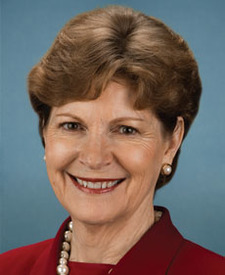
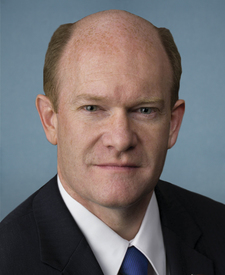
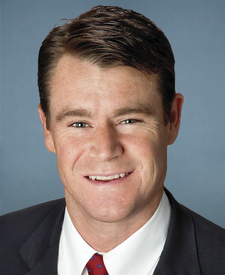
Legislative Progress
ReportedReported by Mr. Risch, with an amendment
Mrs. Shaheen (for herself and Mr. Young) introduced the following …
Mrs. Shaheen (for herself, Mr. Young, and Mr. Coons) introduced …
Stakeholder Effects
cui bono?How this legislation distributes effects. Mention counts reflect frequency, not effect magnitude.
Eligible quantum nonprofits, Foreign adversary researchers, International quantum scientists
Positive-direction: Eligible quantum nonprofits, International quantum scientists
Negative-direction: Foreign adversary researchers, National Quantum Coordination Office
Five Eyes research partners, State Department science diplomats
Positive-direction: Five Eyes research partners
Negative-direction: State Department science diplomats
Bill Structure & Actor Mappings
Who is "The Secretary" in each section?
- "secretary"
- → Secretary of State
Key Definitions
Terms defined in this bill
Use of quantum physics for storage, transmission, manipulation, computing, or measurement of information.
We use a combination of our own taxonomy and classification in addition to large language models to assess meaning and potential beneficiaries. High confidence means strong textual evidence. Always verify with the original bill text.
Learn more about our methodology