To improve commercialization activities in the SBIR and STTR programs, and for other purposes.
Analysis under review: This bill has generated analysis that may be too generic or incomplete. Clause-level evidence remains available below.
Summary
What This Bill Does
This bill strengthens the SBIR and STTR programs that help small businesses turn federally-funded research into commercial products. It shortens review timelines from 1 year to 180 days, requires peer reviewers to assess commercialization potential (not just scientific merit), and mandates each federal agency appoint a Technology Commercialization Official to help awardees bring innovations to market.
Who Benefits and How
Small technology and research companies that receive SBIR/STTR grants benefit significantly. They gain access to up to $6,500 (Phase I) or $50,000 (Phase II) for business and technical assistance, free prioritized patent examination at the USPTO (normally costs fees), and participation in I-Corps entrepreneurship training. The extended program authorization through 2029 provides funding stability.
Who Bears the Burden and How
Federal agencies with SBIR/STTR programs face new administrative requirements: they must designate Technology Commercialization Officials, develop annual commercialization impact assessment reports tracking 11 metrics over 5 years, and submit standardization reports. The USPTO must reserve at least 500 prioritized patent examination slots for SBIR/STTR recipients without collecting fees.
Key Provisions
- Reduces award review timelines from 1 year to 180 days and adds commercialization expertise to peer review panels
- Increases technical/business assistance funding to $6,500 for Phase I and $50,000 for Phase II awards
- Creates free prioritized patent examination program for SBIR/STTR recipients (at least 500 slots per year)
- Requires each federal agency to appoint a Technology Commercialization Official and submit annual commercialization impact reports
Evidence Chain:
This summary is generated from the full bill text using AI analysis. Expand "Detailed Analysis" below for identified beneficiaries/burden bearers.
At a Glance
What This Bill Does
Improves the Small Business Innovation Research (SBIR) and Small Business Technology Transfer (STTR) programs by enhancing commercialization support, expanding technical assistance funding, establishing new reporting requirements, and creating a prioritized patent examination program for small business recipients.
Key Policy Areas
Small Business, Research & Development, Intellectual Property, Federal Procurement
Primary Purpose
Improves the Small Business Innovation Research (SBIR) and Small Business Technology Transfer (STTR) programs by enhancing commercialization support, expanding technical assistance funding, establishing new reporting requirements, and creating a prioritized patent examination program for small business recipients.
Policy Domains
Section 2 - Improvements to Commercialization Selection
Identified Gains
Contextual inference, no direct clause citation- Small technology companies
- SBIR/STTR award recipients
- Research-focused startups
Contextual inference, no direct clause citation
Identified Costs
Contextual inference, no direct clause citation- Federal agencies with SBIR/STTR programs
- Small Business Administration
Contextual inference, no direct clause citation
Section 3 - Improvements to Technical and Business Assistance
Identified Gains
Contextual inference, no direct clause citation- Small technology companies
- SBIR/STTR award recipients
- Innovation consultants and vendors
Contextual inference, no direct clause citation
Identified Costs
Contextual inference, no direct clause citation- Federal agencies with SBIR/STTR programs
- US Patent and Trademark Office
Contextual inference, no direct clause citation
Sponsors
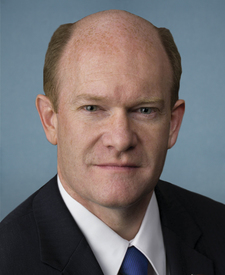
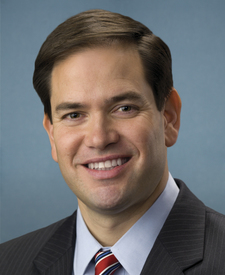

Legislative Progress
ReportedReported by Mr. Cardin, with an amendment
Mr. Coons (for himself and Mr. Rubio) introduced the following …
Mr. Coons (for himself, Mr. Rubio, and Ms. Cantwell) introduced …
Stakeholder Effects
cui bono?How this legislation distributes effects. Mention counts reflect frequency, not effect magnitude.
Small business startups with commercialization potential, Small businesses with 50+ Phase II awards (mega-awardees), Small technology and research companies seeking SBIR/STTR awards
Positive-direction: Small business startups with commercialization potential, Small technology and research companies seeking SBIR/STTR awards, Small technology companies receiving SBIR/STTR Phase I awards, Small technology companies receiving SBIR/STTR Phase II awards
Negative-direction: Small businesses with 50+ Phase II awards (mega-awardees)
Federal agencies with SBIR/STTR programs, National Institutes of Health, Small Business Administration
Business consultants and technical assistance vendors
Bill Structure & Actor Mappings
Who is "The Secretary" in each section?
- "federal_agency"
- → Any Federal agency with an SBIR or STTR program
- "the_administrator"
- → Administrator of the Small Business Administration
- "the_director"
- → Under Secretary of Commerce for Intellectual Property and Director of the USPTO
- "federal_agency"
- → Any Federal agency with an SBIR or STTR program
- "the_administrator"
- → Administrator of the Small Business Administration
Key Definitions
Terms defined in this bill
The Under Secretary of Commerce for Intellectual Property and Director of the USPTO
The United States Patent and Trademark Office
We use a combination of our own taxonomy and classification in addition to large language models to assess meaning and potential beneficiaries. High confidence means strong textual evidence. Always verify with the original bill text.
Learn more about our methodology