NO TIME TO Waste Act);
Analysis under review: This bill has generated analysis that may be too generic or incomplete. Clause-level evidence remains available below.
Summary
The NO TIME TO Waste Act creates a comprehensive federal framework to reduce food loss and waste by 50% by 2030. It establishes a new Office of Food Loss and Waste within the USDA with .5 million per year in funding (FY2026-2030), responsible for research, grant-making, data collection, and policy analysis. The bill creates regional coordinators to facilitate real-time food recovery, authorizes million per year in block grants to states and tribes for food recovery infrastructure, requires federal contractors to donate excess food (upgrading from voluntary encouragement), and launches a national education campaign. It also strengthens interagency coordination between USDA, EPA, and FDA, prioritizes food waste research grants, expands the composting pilot program, and establishes a million per year grant program for public-private partnerships to reduce food waste. Total authorized appropriations are approximately .5 million per year.
Evidence Chain:
This summary is generated from the full bill text using AI analysis. Expand "Detailed Analysis" below for identified beneficiaries/burden bearers.
At a Glance
What This Bill Does
Authorizes the Secretary of Agriculture to establish an Office of Food Loss and Waste in USDA, create regional coordinators, award grants for food recovery infrastructure and public-private partnerships, launch a national education campaign, and strengthen interagency coordination to reduce food loss and waste by 50% by 2030.
Who Benefits
- Food recovery organizations
- State and local governments
- Agricultural producers
Who Bears Costs
- Federal food service contractors (new donation and reporting mandates)
- USDA (new office, coordinators, and grant administration)
Key Policy Areas
{'domain': 'Agriculture', 'evidence': 'Establishes Office of Food Loss and Waste in USDA (Sec. 3), regional coordinators (Sec. 4), research priority grants through USDA competitive programs (Sec. 5(c))'}, {'domain': 'Environment', 'evidence': 'Quantifying greenhouse gas emission reductions from food waste policies (Sec. 3(b)(4)), composting and food waste reduction program amendments (Sec. 6)'}, {'domain': 'Food Safety', 'evidence': 'Commissioner of Food and Drugs defined as key collaborator (Sec. 2(2)), interagency collaboration with FDA (Sec. 5(a))'}
Primary Purpose
Authorizes the Secretary of Agriculture to establish an Office of Food Loss and Waste in USDA, create regional coordinators, award grants for food recovery infrastructure and public-private partnerships, launch a national education campaign, and strengthen interagency coordination to reduce food loss and waste by 50% by 2030.
Policy Domains
Legislative Strategy
"Create a centralized USDA office and regional coordinators to coordinate fragmented food waste reduction efforts, with grants, education, and federal contractor mandates"
Sponsors
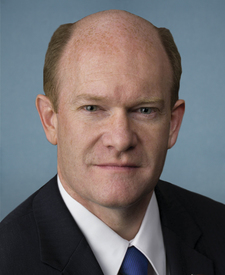

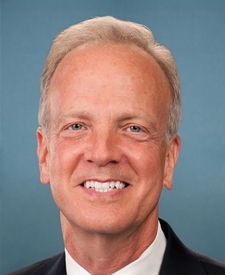
Legislative Progress
In CommitteeMr. Coons (for himself and Mr. Moran) introduced the following …
Read twice and referred to the Committee on Agriculture, Nutrition, …
Introduced in Senate
Stakeholder Effects
cui bono?How this legislation distributes effects. Mention counts reflect frequency, not effect magnitude.
Federal food service contractors, Food industry, Food industry companies
Positive-direction: Food industry, Upcycled food product manufacturers
Negative-direction: Federal food service contractors
Food recovery organizations, Under-resourced applicants
State and local governments, State and tribal governments, Tribal governments
Positive-direction: State and local governments, State and tribal governments, Tribal governments
Negative-direction: USDA
Bill Structure & Actor Mappings
Who is "The Secretary" in each section?
- "Liaison"
- → Food Loss and Waste Reduction Liaison (7 USC 6924)
- "Secretary"
- → Secretary of Agriculture
- "Commissioner"
- → Commissioner of Food and Drugs
- "Administrator"
- → Administrator of the EPA
- "Office"
- → Office of Food Loss and Waste
- "Secretary"
- → Secretary of Agriculture
- "Secretary"
- → Secretary of Agriculture
- "Secretary"
- → Secretary of Agriculture
- "Commissioner"
- → FDA Commissioner
- "Administrator"
- → EPA Administrator
- "Secretary"
- → Secretary of Agriculture
- "Secretary"
- → Secretary of Agriculture
- "Administrator"
- → EPA Administrator
- "Secretary"
- → Secretary of Agriculture
- "Administrator"
- → EPA Administrator
Key Definitions
Terms defined in this bill
Any raw, cooked, processed, or prepared substance, ice, beverage, or ingredient for human consumption
Food that does not reach a consumer due to issues in production, storage, processing, or distribution
Food intended for human consumption but unconsumed at retail or consumption phase
Product created from surplus food, unmarketable food, or food byproducts with verified supply chains and positive environmental impact
We use a combination of our own taxonomy and classification in addition to large language models to assess meaning and potential beneficiaries. High confidence means strong textual evidence. Always verify with the original bill text.
Learn more about our methodology