To authorize the Secretary of the Interior, through the Coastal Program of the United States Fish and Wildlife Service, to work with willing partners and provide support to efforts to assess, protect, restore, and enhance important coastal landscapes that provide fish and wildlife habitat on which certain Federal trust species depend, and for other purposes.
Analysis under review: This bill has generated analysis that may be too generic or incomplete. Clause-level evidence remains available below.
Summary
What This Bill Does
The Coastal Habitat Conservation Act of 2023 provides statutory authorization for the existing Coastal Program within the U.S. Fish and Wildlife Service. The program identifies threats to priority coastal landscapes and provides technical and financial assistance through partnerships with federal, state, local, and tribal governments, NGOs, and private entities for voluntary coastal habitat projects. It authorizes increasing annual appropriations from $20M (FY2024) to $25M (FY2028).
Who Benefits and How
Coastal ecosystems and Federal trust species (migratory birds, endangered species, marine mammals, interjurisdictional fish) benefit from dedicated protection and restoration efforts. State, local, and tribal governments benefit from federal technical and financial assistance for coastal projects. NGOs and conservation organizations benefit from partnership funding opportunities. Coastal communities benefit from healthier, more resilient coastal ecosystems.
Who Bears the Burden and How
The Secretary of the Interior and Fish and Wildlife Service bear program management, annual reporting, and coordination responsibilities. Federal taxpayers bear the cost of $20M-$25M in annual authorizations for FY2024-2028. Private landowners participate voluntarily but may face some constraints from conservation easements.
Key Provisions
- Authorizes FWS Coastal Program for collaborative coastal habitat planning, assessment, protection, restoration, and enhancement (Section 4)
- Provides both technical and financial assistance through grants and cooperative agreements (Section 4)
- Requires annual reports to Congress on program activities, progress, and challenges (Section 5)
- Authorizes $20M-$25M annually for FY2024-2028 (Section 6)
- Covers all U.S. coastal states plus territories from Atlantic, Pacific, Arctic, Gulf of Mexico, and Great Lakes (Section 3)
Evidence Chain:
This summary is generated from the full bill text using AI analysis. Expand "Detailed Analysis" below for identified beneficiaries/burden bearers.
At a Glance
What This Bill Does
Legislatively authorizes the U.S. Fish and Wildlife Service Coastal Program to conduct collaborative coastal habitat planning, assessment, protection, restoration, and enhancement projects in priority coastal landscapes to conserve Federal trust species.
Key Policy Areas
Environment, Wildlife Conservation, Coastal Management
Primary Purpose
Legislatively authorizes the U.S. Fish and Wildlife Service Coastal Program to conduct collaborative coastal habitat planning, assessment, protection, restoration, and enhancement projects in priority coastal landscapes to conserve Federal trust species.
Policy Domains
Coastal Habitat Conservation Act of 2023
Identified Gains
Contextual inference, no direct clause citation- Coastal ecosystems and Federal trust species
- State, local, and tribal governments
- Conservation NGOs and nonprofits
- Coastal communities
Contextual inference, no direct clause citation
Identified Costs
Contextual inference, no direct clause citation- Fish and Wildlife Service
- Federal taxpayers
Contextual inference, no direct clause citation
Sponsors

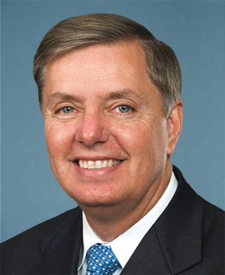
Legislative Progress
ReportedReported by Mr. Carper, without amendment
Mr. Cardin (for himself and Mr. Graham) introduced the following …
Stakeholder Effects
cui bono?How this legislation distributes effects. Mention counts reflect frequency, not effect magnitude.
Congressional oversight committees, Fish and Wildlife Service, Fish and Wildlife Service Coastal Program
Positive-direction: Congressional oversight committees, Fish and Wildlife Service Coastal Program, U.S. Fish and Wildlife Service Coastal Program
Negative-direction: Fish and Wildlife Service, U.S. Fish and Wildlife Service
General public, Taxpayers
Positive-direction: General public
Negative-direction: Taxpayers
All U.S. coastal states and territories, State, local, and tribal governments
Bill Structure & Actor Mappings
Who is "The Secretary" in each section?
- "the_service"
- → United States Fish and Wildlife Service
- "the_secretary"
- → Secretary of the Interior
Key Definitions
Terms defined in this bill
A portion of a coastal ecosystem within or adjacent to a coastal State containing various habitat types including wetlands, rivers, bays, estuaries, seagrass beds, reefs, beaches, dunes, mangroves, and associated uplands.
A State bordering the Atlantic, Pacific, or Arctic Ocean, Gulf of Mexico, Long Island Sound, or Great Lakes, plus DC, Puerto Rico, Guam, American Samoa, CNMI, Micronesia, Marshall Islands, Palau, and USVI.
Migratory birds, threatened/endangered species under ESA, interjurisdictional fish, marine mammals under Secretary management authority, and other species of concern as determined by the Secretary.
We use a combination of our own taxonomy and classification in addition to large language models to assess meaning and potential beneficiaries. High confidence means strong textual evidence. Always verify with the original bill text.
Learn more about our methodology