To provide a consumer protection framework necessary to support the growth of accessible, affordable, and accountable financing options for postsecondary education, and for other purposes.
Analysis under review: This bill has generated analysis that may be too generic or incomplete. Clause-level evidence remains available below.
Summary
What This Bill Does
This bill creates the first federal regulatory framework for Income Share Agreements (ISAs), an alternative to student loans where students receive funding for education and later repay a percentage of their income after graduation. It defines what qualifies as an ISA, sets consumer protection rules, and clarifies how ISAs are treated under existing financial laws.
Who Benefits and How
ISA providers (financial companies, universities, private investors) benefit significantly because the bill exempts ISAs from securities laws, state usury laws, and many state consumer protection regulations, making it easier and cheaper to offer these products. Students gain standardized disclosure requirements and protections like caps on income percentage (20%), protections during military service, and bankruptcy discharge for amounts exceeding what was financed. Employers can now contribute to employee ISA obligations with tax benefits similar to student loan repayment.
Who Bears the Burden and How
State regulators lose significant authority to regulate ISAs as the bill preempts most state laws on interest rates, usury, and lending requirements. Consumer advocates may be concerned that ISAs are explicitly excluded from being treated as loans or securities, potentially reducing consumer protections. Credit bureaus face new regulations on how they must report ISA information.
Key Provisions
- Caps the total income a student can commit to ISAs at 20% of future income
- Exempts ISAs from securities laws and state usury/lending laws
- Creates disclosure requirements similar to Truth in Lending Act
- Provides favorable tax treatment - ISA funds received are not taxable income, and payments above the funded amount can be deducted like student loan interest
- Allows bankruptcy discharge for amounts paid that exceed what was financed
- Requires CFPB to issue regulations and report to Congress every 5 years
Evidence Chain:
This summary is generated from the full bill text using AI analysis. Expand "Detailed Analysis" below for identified beneficiaries/burden bearers.
At a Glance
What This Bill Does
Establishes a comprehensive federal consumer protection framework for Income Share Agreements (ISAs), a form of educational financing where students pay a percentage of their future income after graduation instead of taking traditional loans.
Key Policy Areas
Education, Consumer Protection, Financial Services, Tax Policy
Primary Purpose
Establishes a comprehensive federal consumer protection framework for Income Share Agreements (ISAs), a form of educational financing where students pay a percentage of their future income after graduation instead of taking traditional loans.
Policy Domains
Title I - General Provisions
Identified Gains
Contextual inference, no direct clause citation- ISA providers
- Educational institutions offering ISAs
- Students seeking alternative financing
Contextual inference, no direct clause citation
Identified Costs
Contextual inference, no direct clause citation- ISA providers (compliance requirements)
Contextual inference, no direct clause citation
Title V - Consumer Protections
Identified Gains
Contextual inference, no direct clause citation- ISA recipients
- Military servicemembers
Contextual inference, no direct clause citation
Identified Costs
Contextual inference, no direct clause citation- ISA providers (anti-discrimination compliance)
- Credit bureaus (reporting requirements)
Contextual inference, no direct clause citation
Title II - Tax Treatment
Identified Gains
Contextual inference, no direct clause citation- Students receiving ISA funding
- Employers helping employees with ISA payments
- ISA investors
Contextual inference, no direct clause citation
Identified Costs
Contextual inference, no direct clause citation- Federal Treasury (reduced tax revenue)
Contextual inference, no direct clause citation
Title IV - Treatment Under Other Federal Laws
Identified Gains
Contextual inference, no direct clause citation- ISA providers (regulatory relief)
- Financial institutions
- For-profit colleges
Contextual inference, no direct clause citation
Identified Costs
Contextual inference, no direct clause citation- Securities regulators
- State regulators
Contextual inference, no direct clause citation
Title VI - Relation to State Law
Identified Gains
Contextual inference, no direct clause citation- ISA providers (uniform national market)
Contextual inference, no direct clause citation
Identified Costs
Contextual inference, no direct clause citation- State regulators (preempted authority)
- Consumer advocates
Contextual inference, no direct clause citation
Title III - Disclosures
Identified Gains
Contextual inference, no direct clause citation- Students/consumers considering ISAs
Contextual inference, no direct clause citation
Identified Costs
Contextual inference, no direct clause citation- ISA providers (disclosure compliance costs)
Contextual inference, no direct clause citation
Title VII - Enforcement and Reporting
Identified Gains
Contextual inference, no direct clause citation- Federal regulators
- Congress
Contextual inference, no direct clause citation
Identified Costs
Contextual inference, no direct clause citation- ISA providers (subject to enforcement)
Contextual inference, no direct clause citation
Sponsors
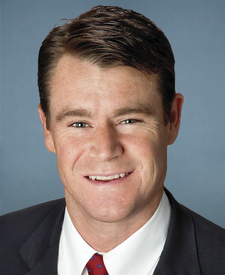
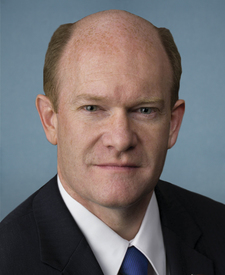
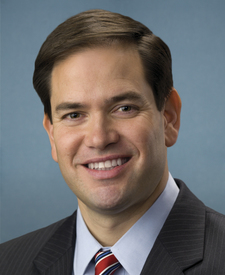
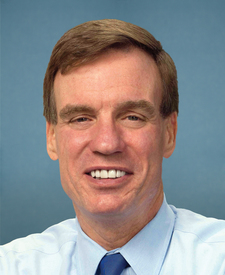
Legislative Progress
IntroducedMr. Young (for himself, Mr. Warner, Mr. Rubio, and Mr. …
Stakeholder Effects
cui bono?How this legislation distributes effects. Mention counts reflect frequency, not effect magnitude.
Educational ISA providers, ISA investors, ISA providers
ISA providers faces effects in multiple directions
Positive-direction: ISA investors, ISA providers needing income verification, ISA providers operating nationally, ISA providers seeking regulatory clarity, Investment companies dealing in ISAs
Negative-direction: Educational ISA providers, ISA providers advertising their products, ISA providers affiliated with sellers, ISA providers furnishing credit information, ISA providers serving military servicemembers, ISA providers serving servicemembers, ISA providers subject to federal banking regulation
ISA applicants and recipients, ISA recipients, ISA recipients exposed to advertising
Positive-direction: ISA applicants and recipients, ISA recipients, ISA recipients exposed to advertising, ISA recipients facing bankruptcy, ISA recipients facing potential default, ISA recipients purchasing goods/services, ISA recipients subject to collection, ISA recipients with retirement or Social Security income, Military servicemembers using educational ISAs, Military servicemembers with educational ISAs, Protected class applicants for ISAs, Students applying for federal financial aid, Students considering educational ISAs, Students considering multiple ISAs, Students receiving ISA funding
Negative-direction: ISA recipients whose tax information may be shared
Bureau of Consumer Financial Protection, Congress, Department of the Treasury
Positive-direction: Congress, Securities regulators
Negative-direction: Bureau of Consumer Financial Protection, Department of the Treasury, Federal Treasury, Federal banking agencies
Colleges and universities offering ISAs, Educational institutions offering ISAs, Educational institutions offering affiliated ISAs
Positive-direction: Educational institutions offering ISAs
Negative-direction: Colleges and universities offering ISAs, Educational institutions offering affiliated ISAs, For-profit colleges and universities
State consumer protection agencies, State insurance regulators, State legislatures and regulators
Bill Structure & Actor Mappings
Who is "The Secretary" in each section?
- "the_bureau"
- → Bureau of Consumer Financial Protection (CFPB)
- "the_secretary"
- → Secretary of the Treasury
- "the_bureau"
- → Bureau of Consumer Financial Protection (CFPB)
- "the_bureau"
- → Bureau of Consumer Financial Protection (CFPB)
- "the_secretary"
- → Secretary of Defense (for Military Lending Act)
- "the_bureau"
- → Bureau of Consumer Financial Protection (CFPB)
- "the_director"
- → Director of CFPB
Note: The Secretary refers to Secretary of the Treasury in Title II (tax treatment) but Secretary of Defense in Section 505 (Military Lending Act)
Key Definitions
Terms defined in this bill
An agreement where an individual receives financing and agrees to pay a percentage of future income for a defined period
The amounts credited or advanced by the ISA provider to or on behalf of the ISA recipient
An ISA where funds are used for postsecondary educational expenses at an eligible institution
The method for calculating ISA payments, either a fixed percentage of income, a schedule of income percentages, or a schedule of fixed amounts
Any person who extends an income share agreement to another individual
We use a combination of our own taxonomy and classification in addition to large language models to assess meaning and potential beneficiaries. High confidence means strong textual evidence. Always verify with the original bill text.
Learn more about our methodology