DETERRENT Act
Analysis under review: This bill has generated analysis that may be too generic or incomplete. Clause-level evidence remains available below.
Summary
What This Bill Does
The bill requires overhaul of Section 117 foreign gift disclosure: lower threshold to $50K, mandatory disclosure of all gifts from countries of concern regardless of value, public database, interagency intel sharing, requires rewritten Section 117: detailed disclosure contents including gift values, contract terms, foreign source identification, public database with searchable records, interagency sharing with 11 federal agencies, and requires prohibition on university contracts with foreign countries and entities of concern, with limited 1-year waiver process requiring interagency consultation. It relies on compliance mandates, reporting requirements, and trade restrictions. The main policy areas are Education, Foreign Policy, and Defense.
Who Benefits and How
US research security would be affected and US national security agencies (FBI, CIA, DNI) would be affected.
Who Bears the Burden and How
Institutions of higher education would take on compliance duties, Department of Education would take on compliance duties, and University faculty and staff (covered individuals) would take on compliance duties.
Key Provisions
- Requires overhaul of Section 117 foreign gift disclosure: lower threshold to $50K, mandatory disclosure of all gifts from countries of concern regardless of value, public database, interagency intel sharing.
- Requires rewritten Section 117: detailed disclosure contents including gift values, contract terms, foreign source identification, public database with searchable records, interagency sharing with 11 federal agencies.
- Requires prohibition on university contracts with foreign countries and entities of concern, with limited 1-year waiver process requiring interagency consultation.
- Requires new Section 117B requiring major research universities to maintain faculty/staff foreign gift disclosure policies, public databases, and espionage risk management plans.
- Requires section 117B text: institutional disclosure policies for covered individuals, public searchable database of faculty foreign gifts/contracts, espionage management plans.
Evidence Chain:
This summary is generated from the full bill text using AI analysis. Expand "Detailed Analysis" below for identified beneficiaries/burden bearers with clause-level evidence links.
At a Glance
What This Bill Does
The bill requires overhaul of Section 117 foreign gift disclosure: lower threshold to $50K, mandatory disclosure of all gifts from countries of concern regardless of value, public database, interagency intel sharing, requires rewritten Section 117: detailed disclosure contents including gift values, contract terms, foreign source identification, public database with searchable records, interagency sharing with 11 federal agencies, and requires prohibition on university contracts with foreign countries and entities of concern, with limited 1-year waiver process requiring interagency consultation.
Key Policy Areas
Education, Foreign Policy, Defense
Primary Purpose
The bill requires overhaul of Section 117 foreign gift disclosure: lower threshold to $50K, mandatory disclosure of all gifts from countries of concern regardless of value, public database, interagency intel sharing, requires rewritten Section 117: detailed disclosure contents including gift values, contract terms, foreign source identification, public database with searchable records, interagency sharing with 11 federal agencies, and requires prohibition on university contracts with foreign countries and entities of concern, with limited 1-year waiver process requiring interagency consultation.
Policy Domains
Section 2 - Foreign Gift Disclosure (Section 117 rewrite)
Identified Gains
- US research security
- US national security agencies (FBI, CIA, DNI)
Identified Costs
- Institutions of higher education
- Department of Education
- University faculty and staff (covered individuals)
- Universities with Chinese/Russian/Iranian research partnerships
- Universities receiving foreign gifts
Sponsors
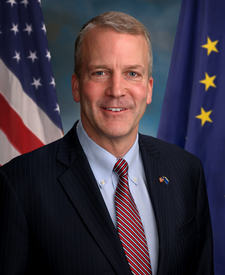
Legislative Progress
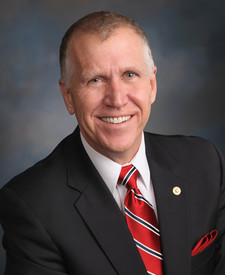
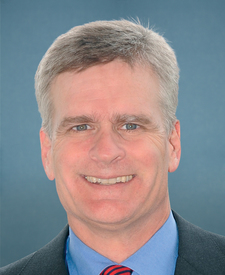
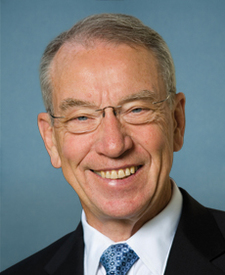
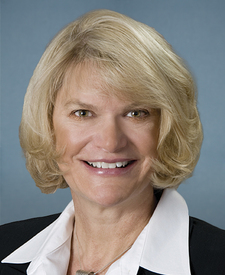
In CommitteeMr. Tillis (for himself, Mr. Cassidy, Mrs. Blackburn, Mrs. Capito, …
Read twice and referred to the Committee on Health, Education, …
Introduced in Senate
Stakeholder Effects
cui bono?How this legislation distributes effects. Mention counts reflect frequency, not effect magnitude.
Institutions of higher education, Major research universities (>M federal research funding), Non-compliant universities
DOJ and Department of Education, Department of Education, US national security agencies (FBI, CIA, DNI)
Positive-direction: US national security agencies (FBI, CIA, DNI)
Negative-direction: DOJ and Department of Education, Department of Education
Chinese academic institutions and Confucius Institutes, Foreign governments and entities providing university funding
Bill Structure & Actor Mappings
Who is "The Secretary" in each section?
- "the_secretary"
- → Secretary of Education
- "the_secretary"
- → Secretary of Education
- "the_secretary"
- → Secretary of Education
- "the_attorney_general"
- → Attorney General
Key Definitions
Terms defined in this bill
Foreign governments, foreign legal entities, entities controlled by foreign sources, non-citizen natural persons, international organizations, foreign political organizations, agents of foreign principals
Any covered nation under 10 USC 4872 (China, Russia, Iran, North Korea), plus countries the Secretary determines detrimental to US national security
Per 42 USC 19221(a), plus entities on the DOD list under the McCain NDAA
We use a combination of our own taxonomy and classification in addition to large language models to assess meaning and potential beneficiaries. High confidence means strong textual evidence. Always verify with the original bill text.
Learn more about our methodology